Contact Info
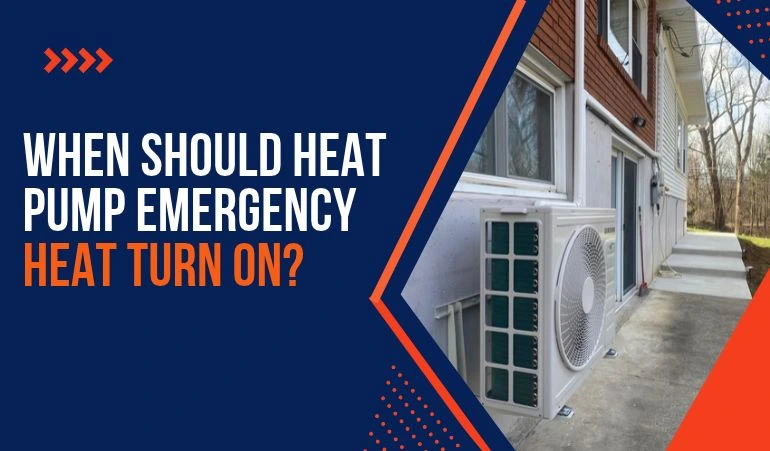
When homeowners notice that emergency heat has turned on on their heat pump thermostat, they associate it with enhanced warmth and more powerful operation. Some also consider it an alarming sign of higher bills. We have also witnessed some homeowners rushing to turn it off when it is on. There are only a few who truly understand what emergency heat is, how it works, and when to turn it on.
This blog post discusses all that stuff. The core question it answers is "When should the heat pump's emergency heat turn on?"
A normal heat pump system relies on two ways of heating for winter comfort. The first one is the heat pump system itself. It takes heat from the cold outside environment and sends it to the inside environment. The second one is the electrical coils. In fact, there are some electrical coils in the heat pump system that serve as a backup heat source. When additional heat is needed, these coils turn off the actual heat system and generate heat using glowing red wires inside the toaster. As the electrical backup is much less energy-efficient than the actual heat pump system, you can expect to pay significantly higher energy bills.
Though traditional heat pumps offered manual control, modern heat pumps largely switch between normal and auxiliary heat automatically, depending on the climate and heating needs. Emergency heat still requires manual control. Here are some conditions when emergency heat is required.
Freezing or Extremely Low Outdoor Temperatures
When the outdoor air drops below freezing, the heat pump struggles to keep up the temperature. The result is that emergency heat takes over to keep the indoor space comfortable when the standard heating process fails.
Large Thermostat Temperature Adjustments
If you increase the temperature on the thermostat at once by several degrees, it signals the system to turn emergency heat on to meet the new, increased heating demands.
When frost is built up on the outdoor evaporator coils, the system runs a defrost cycle to melt the frost on the coil surface. While the heat pump’s normal heating mechanism works to remove the frost, the emergency heat works to prevent the blower motor fans from blowing cold air in the rooms.
Mechanical or System Malfunctions
Some issues in internal units also trigger emergency heat. For example, issues in the compressor, airflow obstruction, or severe performance issues that make the heat pump struggle to keep the space warm can trigger emergency backup heat, according to Climate.
Airflow Obstructions
Clogged air filters or blockages near the outdoor unit block the airflow of the heat pump system. As a result, the system struggles to meet the space's heating needs, which is why emergency heating turns on.
Several myths surround heat pumps’ emergency heat. Here is a clarification of what is a myth and what is a fact, based on Lehigh HVAC’s certified technicians’ instructions.
Claim / Feature |
Myth |
Fact |
|---|---|---|
|
Heating Speed |
Heats homes faster |
Provides quick heat but wastes energy |
|
Manual Control |
Turn it on only when the primary heating system is not working |
Turn it on when demand is high in freezing temperatures |
|
Energy Use |
Uses the same power as standard heat |
Can double or triple heating costs |
|
System Failure |
Means the heat pump is broken |
Also turns on during defrosting or extreme cold |
|
Thermostat Setting |
Leave emergency heat on all winter |
Only use when the primary system fails |
|
Outdoor Unit |
Runs simultaneously with heat strips |
Shuts down completely in emergency heat mode |
|
Air Temperature |
Blows cooler air than normal heating |
Delivers hotter supply air directly from coils |
Lehigh HVAC is a professional agency in Pennsylvania with on-demand heating services. From Allentown to Bethlehem, Carbon County, Stroudsburg, and Easton, we serve everywhere. If your heat pump is acting up or emergency heat turns on when not needed, you can reach us with a call. Book our heat pump service and find us right there at your scheduled time. Discuss your concerns at 484-961-7044.