Contact Info
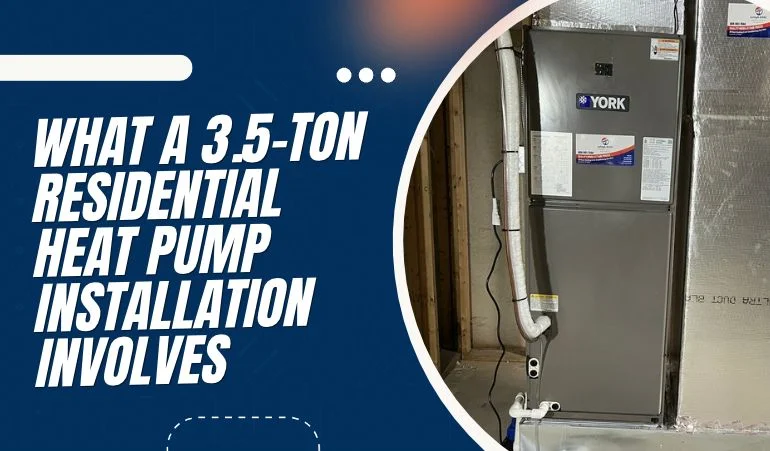
A 3.5-ton residential heat pump installation involves evaluating the property's heating and cooling requirements, selecting compatible equipment, planning air distribution, and verifying system operation after installation, beyond just mounting the equipment and connecting electrical supply. After working with thousands of residential and commercial customers at Lehigh HVAC, we understand that a residential heat pump installation project requires a very meticulous approach, and it starts a lot before buying the unit or considering the model.
If you want to take a look at how Lehigh HVAC actually completes such a residential heat pump installation project from start to finish, take a look at the Galip Residence case study. If you are hungry for more about what to consider, keep reading the following sections.
Start by considering the home’s heating and cooling requirements. It involves considering the building's layout, insulation, windows, air leakage, and local design conditions. Lehigh HVAC technicians perform ACCA Manual J load calculations to find the exact heating and cooling requirements of the home. This step helps us choose the right HVAC appliance according to the requirements.
Select the heat pump size, model, brand, power supply, and efficiency based on the results of the Manual J load calculation. A 3.5-ton heat pump size is the right fit for an average-sized home. However, the size would be different for a different home or a commercial space. Generally, the equipment size, efficiency, and capacity are chosen after completely understanding the heating and cooling requirements of the space.
For ducted heat pump systems, technicians need to plan for the ductwork inside the home. The technicians decide if the existing ducts can accommodate the airflow requirements of the new system. The planning includes
Lehigh HVAC follows ACCA Manual D load calculations to evaluate the exact ductwork requirements of the space and customize it according to the updated requirements.
A residential heat pump system usually comprises two components: an outdoor system and an indoor system. The outdoor system is placed outside and handles the actual air conditioning process. While mounting it, the technicians verify if its placement is accurate. Furthermore, they also verify if the unit is placed at a sufficient height to prevent from the direct damage due to snow storms. The same meticulous approach is required for the indoor air handler unit. The technicians verify if it is placed in the right position so the flow of conditioned air is towards the right zones where it is actually required.
Once the ductwork planning and layout are decided, the next step is to install the ductwork and connect it with the HVAC components. This step deserves an equally careful approach. The technicians verify that there are no excessive bends, connections, or transitions between the duct pathways. They also insulate the ducts so they stay protected from the adverse effects of humidity and mechanical damage.
Just like any other residential HVAC project, a heat pump installation also requires complete system commissioning and testing. The technicians put the systems into practice. They run the heat pump against the actual indoor environment and monitor the change in temperature, humidity, and indoor air conditions as a result of running the newly installed system. They also confirm if the system now performs as per its capacity and efficiency requirements.
Lehigh HVAC follows professional standards of the HVAC industry and workmanship on every project. Our NATE-Certified team puts their heart into every project, and that’s the reason we have the best customer satisfaction rate in Pennsylvania. If you are looking for a reliable service provider for your residential HVAC project, get in touch with us today.