Contact Info
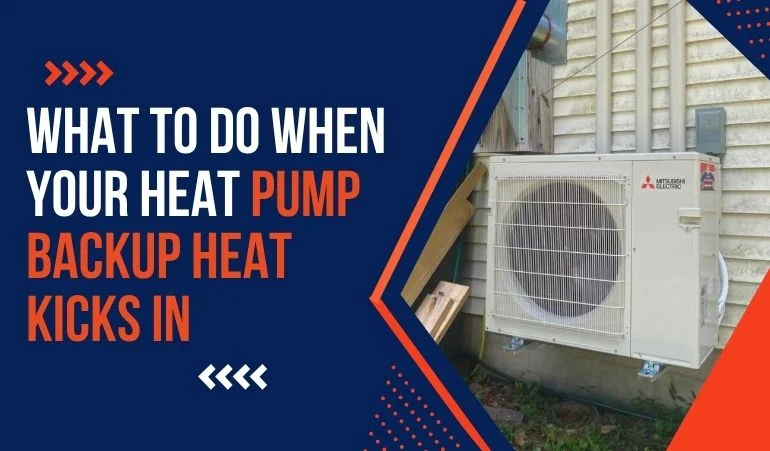
Living in New Jersey and using an HVAC system for winter comfort, you must have noticed signs like “AUX HEAT,” “EM HEAT,” or “BACKUP HEAT” on your heat pump thermostats. Many homeowners consider them a red flag and rush to emergency services. Some perceive them as random indications and don’t pay attention at all. Neither of them is an ideal practice. How you should deal with such issues is a different approach.
In this blog, we will explore how often heat pump backup runs, why it runs, and whether the heat pump returns to normal operation afterward.
A heat pump’s job is to keep the home comfortable regardless of the temperature outside. In pursuing this goal, it sometimes falls short of the energy needed to compensate for heat loss. This is where it needs a backup source. On normal days with milder temperatures, the heat pump extracts heat from the surrounding outdoor air. As the temperature drops below freezing, the system automatically switches to the backup energy source to maintain heat. If a backup source is not available, the system struggles to keep your home warm. Here are secondary reasons why having backup heat is important.
Prevents indoor temperatures from dropping during defrost cycles when frost builds up on outdoor coils
Protects internal system components and plumbing pipes from freezing during extreme cold spells
Helps heat the home quickly when raising the thermostat setting by several degrees at once
Provides supplementary heating when outdoor temperatures drop below the heat pump's balance point
The heat pump itself satisfies the thermostat signal most of the time. But when it alone can’t send that level of heat inside the space, backup heat turns on automatically. Here is when it happens.
Outdoor temperatures become very low
You raise the thermostat several degrees
The home loses heat quickly
The heat pump is temporarily defrosting
The system cannot produce enough heat
The heat pump has a mechanical or airflow problem
The temperature at which the heat pump backup activates depends on the temperature, thermostat setting, and system capacity. If backup doesn’t kick on a specific day, it doesn’t mean there is an issue with the backup. It is possible that the heat pump is itself good at handling those heating needs.
When backup heat activates, don’t panic. Instead, follow this step-by-step guide by Lehigh HVAC.
If you recently increased the thermostat setting by a few degrees, this sign is likely visible. Give some time for the system to activate and return to its original, smooth working condition. Don’t change the thermostat setting again and again, as it puts a burden on the system. The local utilities in New Jersey recommend keeping the temperature in the lower comfortable range to conserve energy and keep energy bills under control.
Dirty or clogged air filters can also be the cause. Check the air filters. If you find signs of buildup or if it is over 3 months since you last changed the filters, this is likely the cause. Replace the filters immediately, and it will likely fix the issue.
Approach the outdoor unit. Check if it is covered by leaves or snow, or if there is any other obstruction around it. If so is the case, remove the obstructions and make the outdoor unit completely free for airflow.
This is the point where homeowners should pay specific attention. If the thermostat shows AUX heat but the system easily achieves the desired temperature set on the thermostat, there is nothing to worry. But if you notice that the system is struggling to keep the rooms at a comfortable temperature, there is some issue with the backup heat.
Call your local, certified HVAC contractor when you suspect being out of warmth or when you risk major problems. Homeowners and business managers in New Jersey can give Lehigh HVAC a call at 848-361-4707 for reliable heat pump services.