Contact Info
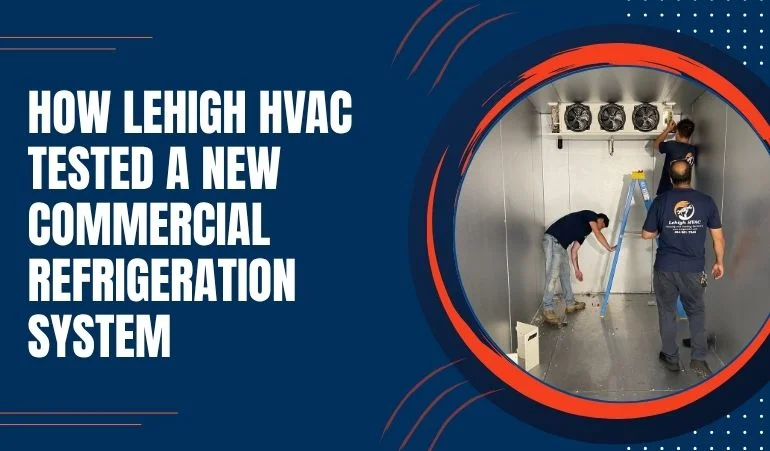
Installing a commercial refrigeration system is only one part of the project. After the installation is complete, technicians need to verify the equipment’s normal operation. Every component is put to the test and made to run in real conditions, and its efficiency is verified. This is the crucial part of the project, as it helps identify issues earlier and prevent emergency failures.
Lehigh HVAC ensured complete system commissioning and verification at Flaming Hot Halal Grill in Pennsylvania. The team followed quality assurance protocols and ensured that the whole project was in accordance with the professional standards of commercial refrigeration in PA. This blog discloses our complete approach from start to finish.
Just after the equipment was installed, the team verified the refrigerant levels, inspected for any possibility of refrigerant leaks, and ensured that all the related components were integrated correctly.
The inspection process included:
Checking refrigerant piping and connection points.
Inspecting joints, fittings, and service valves.
Performing the required pressure and leak tests.
Verifying that the system has been properly evacuated.
Confirming the correct refrigerant type and charge.
The compressor and condenser play important roles in maintaining the refrigeration cycle. Both need to operate within their specified conditions to support effective heat removal. During startup, technicians checked whether the compressor starts correctly and whether the condenser fans operate as intended. It was also checked and ensured that the temperature, pressure, and the power supply were all correct.
The evaporator absorbs heat from the refrigerated space. Its performance depends on proper refrigerant flow, coil condition, and adequate airflow.
During testing, we inspected:
Evaporator fan operation and airflow.
Coil condition and possible obstructions.
Refrigerant conditions at the evaporator.
Drainage and condensate removal.
Defrost operation, where applicable.
One of the most important parts of refrigeration commissioning is checking whether the system can reach and maintain its intended temperature. After startup, technicians monitor the refrigerated space as the system removes heat.
Commercial refrigeration systems use controls to regulate temperatures and manage equipment operation. Before handover, we verified the relevant control settings and safety functions.
These checks included:
Thermostat or controller accuracy.
Temperature setpoints and operating differentials.
Compressor cycling and fan controls.
Defrost scheduling and operation.
High- and low-pressure protection.
Temperature alarms, where installed.
For Flaming Hot Halal Grill, Lehigh HVAC handled the commercial refrigeration project from site assessment and installation planning through equipment installation, system connections, configuration, testing, and commissioning. The final testing stage was an important part of completing the project. Rather than stopping after installing and connecting the refrigeration equipment, the team included system verification before considering the work complete.
A new commercial refrigeration system needs more than correctly installed equipment. Its connections, controls, refrigerant circuit, and cooling performance all need appropriate verification.
Lehigh HVAC provides commercial refrigeration installation and upgrade services for businesses across Pennsylvania. Whether you're installing a new system or replacing existing equipment, proper planning, installation, and commissioning help prepare your refrigeration system for daily operation.
Contact us today to discuss your commercial refrigeration project.