Contact Info
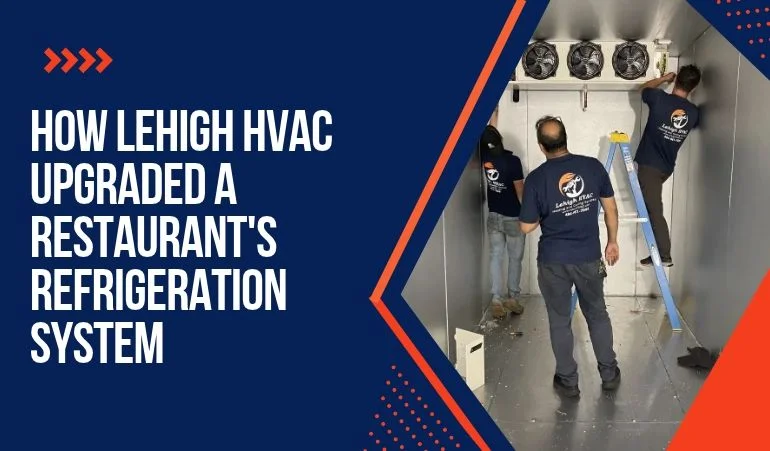
A restaurant relies on a refrigeration system to preserve its perishable goods. From dairy products to vegetables and bakery items, everything requires a stable refrigeration temperature to stay fresh and maintain its nutritional value.
When Flaming Hot Halal Grill required a complete refrigeration system for its customers, they called Lehigh HVAC, one of the most reliable service providers in the region. The team evaluated the complete system and provided an end-to-end solution that ensured complete refrigeration and the safety of goods. In the following sections, you will learn about how we approached the project, how each step went on, and how we finished it.
To have a closer look at the case study, read the details in "Commercial Refrigeration Upgrade at Flaming Hot Halal Grill."
The real challenge was not to set up the unit according to code compliance rules but to set it up around restaurant operations. The client demanded that there should be no disturbance to the culinary work, staff activities, and the customer experience. The team listened to the client's details and nodded their heads in "YES."
The best time for the service was chosen as per the client's convenience and when there was minimal customer presence in the facility. The team assembled the equipment, managed equipment rentals, and made a clear strategy under the supervision of a senior HVAC engineer.
Once the initial preparation was complete, the team moved to the actual WH refrigeration installation. Instead of treating each component separately, we considered it a coordinated project and made sure that every component works in coordination and can be managed through a centralized control system.
Here is what we focused on most:
Mounting and securing the evaporator and condenser units for optimal performance
Installing heavy-duty refrigerant lines with proper insulation to maintain thermal efficiency
Integrating a centralized control system to regulate and monitor temperatures accurately
Wiring high-efficiency electrical connections in full compliance with local safety standards
Sealing walk-in cooler panels to prevent air leaks and energy loss
Testing airflow and pressure levels to ensure seamless system operation
Soon after the team finished setting up the unit and making the required connections, the quality assurance team started their work. Every component was inspected to verify its operation, coordination with the rest of the parts, and management through a centralized control system.
The quality plan included consideration of:
Calibrating temperature sensors and thermostat settings for precise thermal regulation
Conducting thorough electrical safety and voltage stability checks across all circuits
Performing pressure and leak testing on all refrigerant lines and connection joints
Verifying proper airflow distribution and evaporator fan operation inside the cooler
Evaluating centralized control system responsiveness to temperature adjustments and alerts
Assessing operational noise and equipment vibration levels to ensure smooth running
As we approached the completion of the project, we focused on the results that the client had expected and shared with the company before starting the project. We ran the system, placed goods and vegetables in it, and monitored the temperature closely. Once we were confident about the system performance, we handed over the equipment manual to the client, which included all the information about how to tackle if the unit starts acting up. We also took the management team on a walkthrough and explained everything.
Here is a glimpse of what the project included.
Site assessment and installation planning
Commercial refrigeration equipment installation
Required system connections
Equipment configuration and startup
Testing and commissioning
If you want a commercial refrigeration installation service, feel free to reach out to us. For your project, we'll ensure reliable equipment operation, energy efficiency, and code compliance with Pennsylvania’s regulatory authorities.