Contact Info
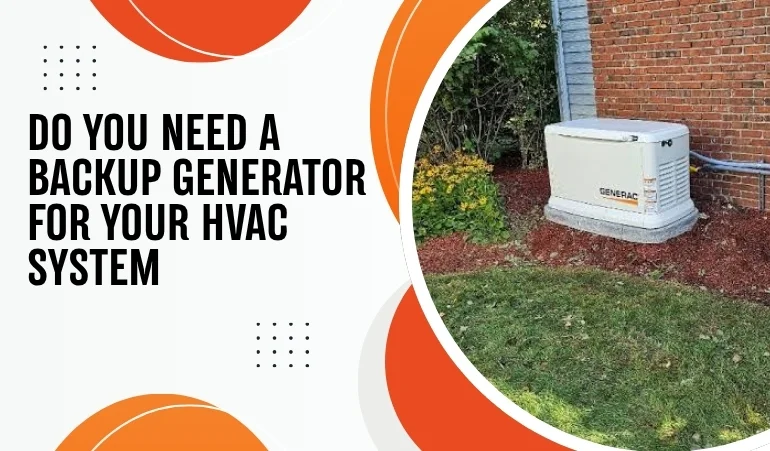
Power outages can strike any time in New Jersey. If it happens on a cold January night or a blazing July noon, it can make life uncomfortable. You crave comfort, but it is impossible without power backup. This nightmare influences many homeowners and business owners to choose a power backup before an inconvenience happens. If you are thinking the same way, this blog has some useful information. It explores whether a backup generator is worth it for New Jersey's climate and which generator options make sense.
Power backup is important for both residential and commercial HVAC systems. For residential, it removes uncertainty. You have peace of mind that if a power surge occurs due to a storm or grid maintenance, your HVAC won’t stop. For businesses, it keeps staff and customers comfortable every time. If you deal with perishable goods that need refrigeration, power backup is non-negotiable. It keeps your stock safe even when power goes out for extended hours.
We know that a generator removes uncertainty and adds peace of mind. But this doesn’t make a generator a must-have for everyone. Some scenarios make a generator as essential as a functional HVAC. Here are some of those scenarios.
You Have a Vulnerable Family Member
If you have a senior, minor, or patient in your family, a power backup is essential. Even a few minutes of discomfort can have drastic health effects. Power backup becomes extremely essential if you have a patient with a critical illness.
You Encounter Frequent Power Outages
If you regularly encounter power outages, a power backup is essential. It prevents the system from turning on and off due to power surges and maintains steady performance. A better option is to choose an HVAC system with a different power source, such as an oil or gas furnace for winter comfort.
Your Business Relies on Refrigeration
If you deal with sensitive items such as medicine, bakery items, or vegetables and fruits, a power backup is compulsory. Extended power outages can put goods at risk of damage.
Generators have many types, depending on fuel type, capacity, brand, and mechanism. For HVAC backup, two generator types make the most sense.
These are permanently installed outdoor HVAC units that start automatically when there is a power outage. These systems are usually used for running heavy HVAC units such as central air conditioners, furnaces, boilers, commercial rooftop units, or walk-in coolers. The capacity and working mechanism may vary with the model and the equipment specifications. You should ideally choose this unit type if you have a large home or your business relies heavily on the HVAC system.
As the name indicates, these are fuel-powered, portable machines that generate on-demand power. The machine uses raw fuel such as oil or gas and generates heat energy from combustion. This energy is converted into electrical output, which is then used to run the equipment.
Not every generator is the same, and not every one is suitable for your needs. Here is what Lehigh HVAC recommends when choosing one for your residential or commercial needs.
If your HVAC relies on electricity, a backup generator is usually sought after. This is essential to keep HVAC running when power is out for extended periods. Having a power backup is especially non-negotiable for businesses dealing with sensitive products or perishable goods, or families with patients, kids, or senior members. When choosing the right unit, you have two choices. Either you choose a portable unit, or you buy a home standby unit. Regardless of what you choose, make sure it has enough capacity to deliver the power required.
Contact Lehigh HVAC for professional HVAC services anywhere in New Jersey.