Contact Info
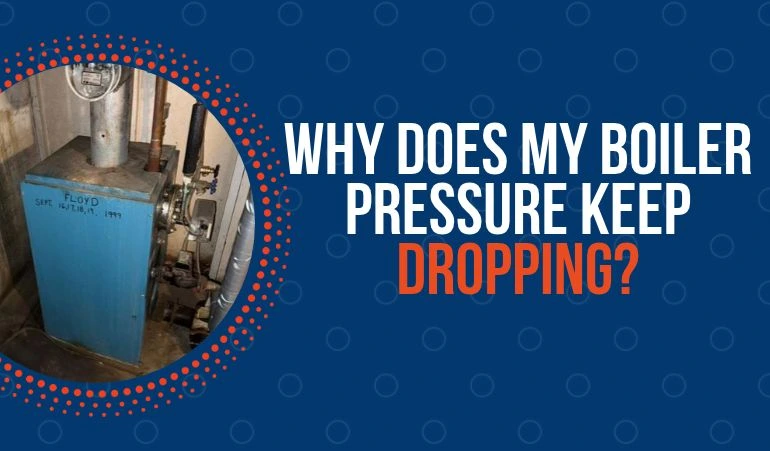
If you are a tenant or a business facility owner who looks after the HVAC appliances at the business facility, you must have at least once noticed a lower-than-normal pressure on the boiler pressure gauge. Though you can confirm lower pressure, it doesn’t usually disclose the underlying cause of a pressure drop. And if you leave this lower pressure ignored, it can leave some areas totally deprived of comfort, especially the upper floors of the building. This blog covers the primary causes of why pressure keeps on dropping for your commercial boiler system.
Before specifically discussing the causes of lower boiler pressure, let’s understand at what pressure your commercial boiler should ideally sit. The normal boiler pressure range for a commercial HVAC system in New Jersey is 12 to 15 PSI in cold mode and 15 to 25 PSI in heating mode. These are the values for the New Jersey climate only and vary greatly with respect to the local climate, temperature in the surrounding areas, and the preferred indoor temperatures.
When the pressure drops below 10 PSI, the system struggles to keep every room at a comfortable temperature.
Beyond just looking at a digital display, several other signs show your boiler pressure is dropping. Here are some of them, briefly summarized.
Radiators feeling cold at the top or taking longer to warm up
Unusual noises, such as banging, gurgling, or whistling from the system
Frequent boiler shut-offs or error codes displayed on the control panel
Visible water leaks or damp patches near pipes, radiators, or the boiler
Inconsistent heating across different areas or floors of the building
Several components can lead to boiler pressure drops. Some of those causes are listed here.
When you bleed radiators to remove the trapped air from the vessels, a small amount of water also goes outside during this process. If you carry out the bleeding radiator process too frequently, it results in a water shortage inside the pipes and causes the boiler pressure to drop.
Leaks and cracks in the pipes or in the internal components that come in direct contact with the water supply provide a way for water to escape outside. This causes drastic pressure drops and requires immediate attention to restore normal boiler performance.
Aging causes internal components to wear over time. Apart from aging, the second main thing is corrosion. If any of these issues are present in your boiler system, the result is the same: boiler pressure less than 12 PSI.
Neither lower nor higher boiler pressure is safe for the heating appliance. That’s why it is recommended to keep it in the normal, recommended range for smooth performance and consistent warmth. Here is a brief comparison of how lower and higher pressure can create issues.
Low Boiler Pressure |
High Boiler Pressure |
|
Radiators may not heat properly, leaving rooms cold. |
The boiler may shut down if pressure exceeds its safety limits. |
|
Hot water supply may become inconsistent in some systems. |
Hot water may stop if the boiler shuts down. |
|
Often caused by water leaks, bleeding radiators, or other system issues. |
This can often be caused by overfilling, a faulty filling loop, or an expansion vessel problem. |
|
May prevent the boiler from operating normally. |
Can strain components and contribute to leaks. |
|
Check the pressure gauge and follow the manufacturer's instructions before repressurizing. |
Stop adding water and contact a qualified heating engineer if pressure remains high. |
If your boiler is failing to keep your business place at the required temperature or if you notice some cold spots, this is the time to call a professional for boiler repairs. Being an NJ business owner, it is extremely easy to get your heating restored at a reasonable price. Call Lehigh HVAC at 848-361-4707, discuss your concerns, and schedule your preferred time for service.