Contact Info
Surviving the cold in New Jersey without a functional boiler looks like a nightmare. But if you don’t pay attention to your heating system, this nightmare can actually come true. We have noticed many homeowners install their boilers and forget them, while these systems keep working, silently keeping your water warm and your home at a comfortable temperature. If boiler pressure crosses the upper or lower limit, major problems result. From efficiency problems and higher bills to complete system failure, you may experience emergencies. That’s why monitoring pressure is essential.
This post explains how to check boiler water pressure at home. It also covers insights and tips on how to keep the pressure in the normal range.
The ideal range varies by system type and make and model. In New Jersey, a boiler pressure should be 1 to 1.5 bar when heating is off and 1.5 to 2 bar when heating is on. The higher pressure when the system is running is because warm water takes up more volume and puts more pressure. But this pressure should not be so high as to trigger safety switches or cause leakage from the relief valve.
The individual process may vary based on the boiler type and brand. In most cases, the process explained below works.
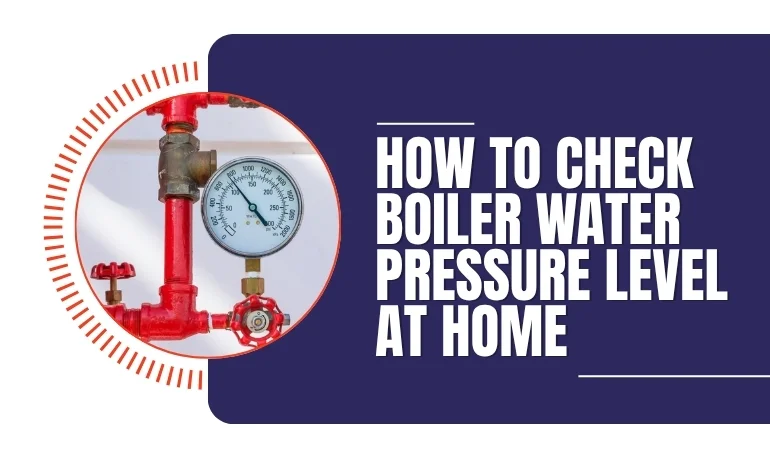
A pressure gauge is a round dial placed at the front of the boiler. It has numbering from 0 to 3 and shows water pressure. The reading is usually shown in red or green. Red means the pressure is out of the normal range. Green means the pressure is within the range. In some old boiler models, this pressure gauge might be located underneath, in the pipework.
For a boiler with a digital gauge, the number the needle points to shows the pressure at that moment. If the needle points above 2, the boiler pressure is too high and can soon trigger the safety switch, shutting the system off. If the needle points below 1, the pressure is too low, making your heating system struggle to provide desired comfort.
Don’t just settle for the reading. Go one step further and link abnormal values to a cause. Lower pressure usually indicates water loss or failure to refill. Higher pressure indicates expansion tank failure or overfilling due to an open fill valve. Both conditions are dangerous and strain components, sometimes causing complete equipment failure.
Fix these underlying causes before you set the pressure to normal.
If you notice declining boiler pressure due to small leaks and bleeding, setting it to normal is essential. You can easily fix it at home yourself. But if you have an oil or gas boiler, calling a professional is a better choice to prevent risks.
Here is how to raise boiler pressure to normal.
Turn off the boiler and allow the heating system to cool completely
Locate the filling loop, which is a flexible silver pipe with one or two valves
Attach the filling loop securely to the valves if it is not already connected
Open the valves slowly by turning the handles to let water enter the system
Watch the pressure gauge until the needle rises into the recommended green zone
Close both valves fully as soon as the pressure reaches the correct level
Turn the boiler back on and check for any leaks around the filling loop connections
Bleed your radiators if the pressure drops again, then repeat this repressurizing process
If you add too much water to the boiler or the fill valve remains open, pressure can increase. You can easily bring this pressure back to normal through the relief valve.
First, shut off the system and let it cool. Then check the fill valve. If it is open, close it securely. Next, pick up the radiator key, locate the valve, and bleed the radiator.
To learn step-by-step how to bleed a boiler radiator safely, read our guide below.
👉 How to Bleed Radiators Yourself Without Making a Mess
Lehigh HVAC is a professional agency serving New Jersey with fast, affordable, and same-day HVAC services. We work with almost all boiler makes and models and know the nitty-gritty details. Contact us at 848-361-4707 to book a service.