Contact Info
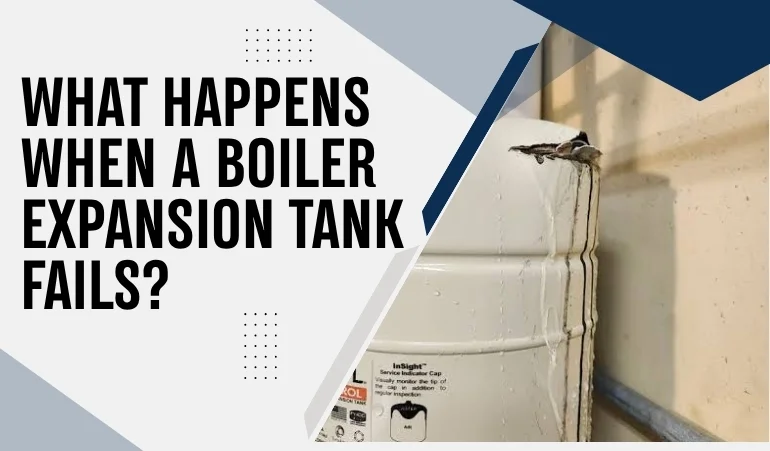
If you have a gas or oil boiler in your Pennsylvania home, you should know the importance of the expansion tank. This component absorbs the extra water volume in the boiler compartment. Now imagine: if the expansion tank fails, where will that water volume go? It will strain valves, pipes, and other critical boiler components, including the radiator, pump, and ignition system. That’s why information on this critical boiler component is essential for both Pennsylvania homeowners and business owners. It helps you fix minor issues yourself. For complex issues, it helps you take timely safety measures to prevent further damage.
This blog educates Pennsylvania homeowners and business owners about expansion tanks, how they work, and what happens when they fail.
If an expansion tank isn’t working as intended, the consequences can go far beyond the leakage. Here is what we have observed at Lehigh HVAC ourselves.
If the expansion tank doesn’t absorb extra volume, pressure spikes are the first and most obvious signs. That extra volume puts pressure on housing walls, associated components, and valves. You notice high pressure when the system heats up and reduced pressure when the system cools.
A relief valve is a safety valve that automatically opens and releases excess water when pressure spikes. When your expansion tank fails to absorb extra water, that excess hits the relief valve, causing it to open to prevent major component damage.
In normal function, the tank sounds hollow on tap. But when the expansion tank fails and pressure increases, the internal tank bladder ruptures. It shifts the normal hollow tap sound to a dull, hard sound. This is because the internal tank bladder has already ruptured and filled the tank with water.
Modern boilers come with safety features. If pressure is too low or too high, they automatically close the system. So if you have installed any make and model of modern boiler, you may experience a complete system shutdown because the expansion valve has refused to absorb extra pressure.
This is a direct effect of increased pressure. When pressure spikes, all nearby components experience the strain. From valves to pipes, walls, radiators, circulator pumps, and even the ignition chamber, every component experiences strain. Prolonged strain promotes equipment wear, aging, and a shorter boiler lifespan.
An expansion tank doesn’t just fail suddenly. It takes weeks or months to reach a point where it can no longer absorb extra pressure. During that period, it shows several warning signs you can notice and fix it before it fails.
Here are warning signs it may show at frequent intervals.
Water leaks dripping from the relief valve or the tank's connections.
Fluctuating pressure spikes on your boiler's pressure gauge when the heat is running.
The relief valve is constantly weeping or releasing bursts of water to relieve high pressure.
A full tank that makes a dull, thudding sound when you tap the top half.
Cold radiators or poor heating performance throughout your home due to air pockets or improper pressure.
The average lifespan of a boiler expansion tank in Pennsylvania is 5 to 10 years. But not all tanks survive this long. Some with wear or higher pressures break down and demand replacement earlier. Replacing it costs $200 to $500, depending on the boiler type. Here are a few tips to keep your components in top condition.
Bleed excess air or water from the system during your annual routine inspection
Maintain the manufacturer-recommended water pressure by checking the pressure gauge regularly
Test the air charge valve with a tire gauge to ensure correct PSI
Tap the tank gently to confirm the top half sounds hollow and full of air
Inspect the exterior shell and connection points for any signs of rust or leaks
Replace the internal bladder or the entire tank if water leaks from the air valve
A faulty expansion tank shouldn’t leave your family or business staff deprived of warmth. That’s why Lehigh HVAC technicians remain active and responsive, ready for same-day services. Contact us at 484-961-7044 to book a service.