Contact Info
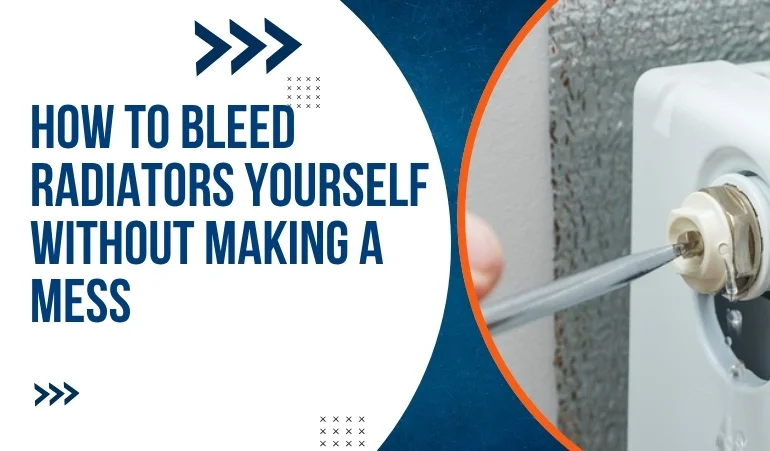
If you notice reduced boiler performance and a colder radiator top with a relatively warm bottom, you likely have trapped air in the radiator. This is frequently encountered during winter. The solution is to bleed your boiler radiator at the bleed valve. The good news is that you don’t necessarily need to call a professional for this purpose. You can do this task yourself within 20 to 30 minutes. All you need is a few tools and the right strategy.
This post explains how to bleed your boiler radiator without creating a mess. The guide is specifically useful for New Jersey HVAC customers.
Your boiler radiators receive the warm water from the central boiler and distribute its heat evenly throughout the home. Over time, air enters these metal tubes through bubbles and forms air packets. These air packets then restrict normal water flow through the tubes, leading to inefficient home comfort. Bleeding a boiler radiator releases trapped air and ensures efficient heat transfer from the water inside the tubes to the outside environment.
Bleed your boiler radiators at least once every year to keep them running smoothly. The ideal time is early autumn, as it prepares your boiler for efficient performance throughout the whole winter season. Bleeding removes trapped air in the metal vessels and ensures water flows smoothly throughout the entire boiler.
Bleeding a boiler radiator requires basic tools and safety equipment. Here is what you should have before you reach the radiator itself.
Bleed Key
It is used to open the bleed valve and rotate it to release trapped air.
Flathead Screwdriver
For some older boiler models, a screwdriver is sufficient to open the valve.
Large Towels
Towels are placed on the floor to prevent water from dripping onto the floor.
Small Container
A small bowl or cup is placed directly underneath the valve to catch drips of water.
Work Gloves
Wear heat-resistant gloves to protect your hands while touching the warm radiator lines.
Follow the step-by-step approach recommended by Lehigh HVAC experts to bleed your boiler radiators.
Start by gathering all the tools, equipment, and supplies mentioned in the above section. Place these tools close so you don’t have to move steps, pick up the tool, and then come to the radiator. Additionally, check if all the supplies are working
This is the most critical step. Though many homeowners say turning the boiler off is not necessary, it is still an essential step to prevent safety risks. Always turn off the boiler at the circuit level before you proceed with any major repair work on the system.
Locate the bleed valve, which is most commonly located near the top end of the radiator. The exact location can vary depending on the model and brand. You can confirm it by checking whether it opens with a key or a screwdriver and is capable of spinning.
Pick a cup, bowl, or container, and place it underneath the bleed valve. Make sure the placement is correct so every water drop sprouting from the valve comes straight to the bowl, without creating any mess around.
Rotate the valve clockwise until you hear the hissing sound. This is the sound of releasing trapped air outside. Be close to the valve and keep releasing air until all the air is removed and water starts leaking from the opened valve. Now, close the valve after you have released all the trapped air. Once you have completed the process for one radiator, repeat it for every radiator so your boiler system is ready for reliable winter performance.
If you need professional boiler repair services anywhere in New Jersey, contact Lehigh HVAC. Our certified team provides expert, same-day service at a market-competitive price. Give us a call at 848-361-4707.