
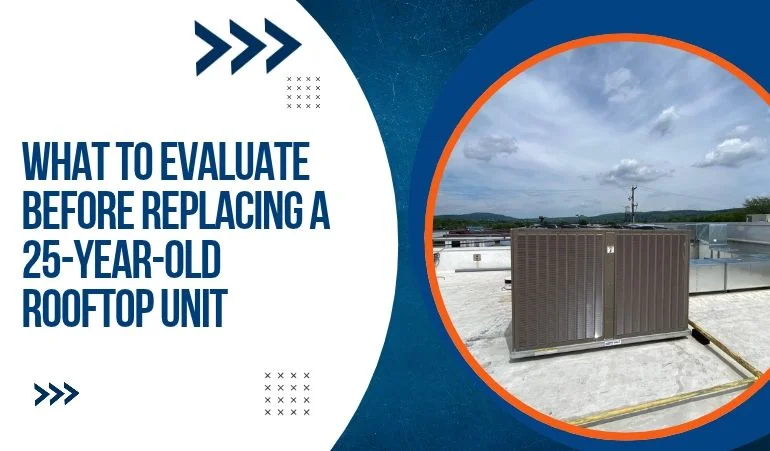
What to Evaluate Before Replacing a 25-Year-Old Rooftop Unit
Learn what factors to evaluate before replacing a 25-year-old commercial rooftop unit in Pennsylvania. See how Lehigh HVAC completed the project.
Read MoreContact Info
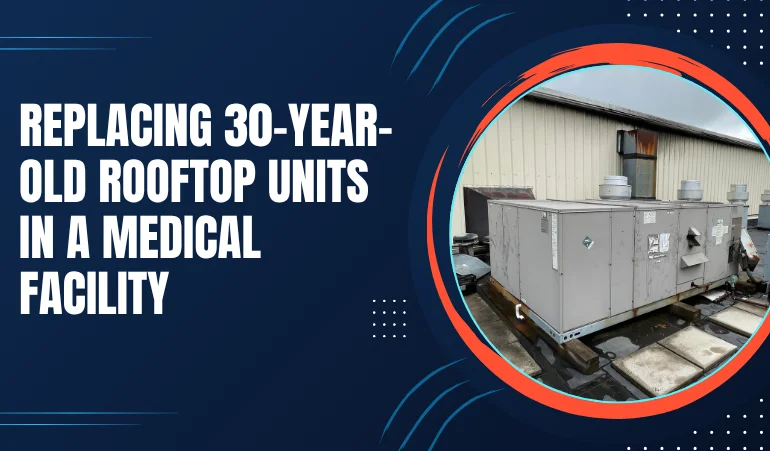
Commercial HVAC equipment does not remain reliable forever. After decades of operation, rooftop units can develop component failures, require increasingly difficult repairs, and struggle to meet a building's current heating and cooling requirements. In a medical facility, these concerns deserve particular attention because indoor comfort and dependable HVAC operation matter to staff, patients, and visitors.
Lehigh HVAC recently completed a similar project. It was a medical facility in Pennsylvania, Precision Medical, with 30-year-old Trane equipment. The client demanded a more reliable heating and cooling solution. Lehigh HVAC suggested four rooftop units of varying sizes and capacities according to the space symmetry and square footage. This blog explores how replacing aging rooftop units takes place, along with a practical example of how Lehigh HVAC completed it.
Medical facilities have different operational requirements from many ordinary commercial buildings. Patient areas, offices, examination rooms, and other spaces may have different occupancy patterns and environmental requirements.
Here are some concerns worth considering for aging units at medical facilities.
Frequent breakdowns: Worn components can increase the likelihood of unexpected equipment failures.
Unreliable temperature control: Declining system performance can make it harder to maintain consistent indoor temperatures.
Rising maintenance requirements: Older equipment may require more frequent service and replacement parts.
Electrical concerns: Existing connections and components may need correction or upgrading.
Outdated equipment: Older systems may not match the building's current operational requirements.
These issues do not automatically mean every aging unit needs immediate replacement. A professional assessment helps determine whether continued repairs are reasonable or whether replacement is the better long-term decision.
Replacing aging rooftop units requires a careful strategy. Furthermore, every step must be verified for quality according to professional standards. And this is exactly what Lehigh HVAC focuses on for its commercial projects.
The first step is inspecting the existing rooftop units. Age provides useful context, but the actual condition of the equipment tells you more about its remaining service potential.
During an assessment, you must examine:
Component |
What to evaluate |
|
Compressor |
Operating condition and signs of failure |
|
Coils |
Corrosion, damage, and refrigerant circuit condition |
|
Motors |
Noise, wear, and operating performance |
|
Electrical components |
Connections, wiring, and control components |
|
Cabinet |
Physical damage and deterioration |
|
Drainage |
Condensate removal and possible blockages |
A medical facility may have different heating, cooling, and ventilation requirements depending on how its spaces are used. Before selecting replacement equipment, contractors should understand the building's current requirements rather than simply matching the specifications of the old units.
We recommend considering the following factors:
The areas served by each rooftop unit.
Current heating and cooling loads.
Occupancy patterns and operating schedules.
Existing ventilation arrangements.
Applicable mechanical and building code requirements.
Replacing old equipment does not automatically resolve problems with the building's electrical infrastructure. The replacement units must be compatible with the available electrical supply, connections, and protective components. Contractors should identify any deficiencies before installation and include necessary corrections in the project scope.
At Precision Medical, our project involved four compromised Trane rooftop units that were approximately 30 years old. Alongside replacing the equipment, we also completed the required electrical corrections.
New equipment needs suitable connections to the building's existing air distribution system. If the ductwork is damaged, poorly matched, or unsuitable for the replacement equipment, installation alone may not deliver the expected results.
Here is what contractors should examine regarding ductwork:
Existing duct connections and dimensions.
Signs of leakage or physical deterioration.
Air distribution requirements.
Compatibility with the replacement equipment.
Access for future inspection and maintenance.
A replacement project is incomplete when the new rooftop units are physically installed. Each system needs appropriate startup checks and commissioning. We include equipment operation, electrical connections, controls, and relevant mechanical components in the final verification process. When several units are installed, each one is verified separately. For medical facilities, the commissioning scope should also account for any building-specific ventilation or environmental requirements that apply to the spaces served.
Replacing aging rooftop units requires more than selecting new equipment. Contractors must evaluate the existing systems, understand the building's requirements, and account for electrical and ductwork compatibility. At Lehigh HVAC, we provide commercial rooftop unit replacement and installation services across Pennsylvania and New Jersey. Contact our team to discuss your facility's HVAC requirements and request an estimate.
Learn what factors to evaluate before replacing a 25-year-old commercial rooftop unit in Pennsylvania. See how Lehigh HVAC completed the project.
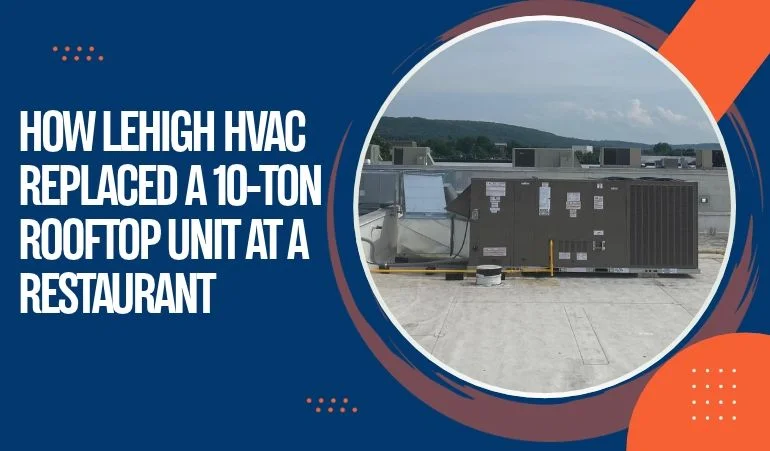
Read MoreLearn how Lehigh HVAC successfully replaced a 25-year-old 10-ton rooftop unit at Flaming Hot Halal Grill to boost energy efficiency and indoor comfort.
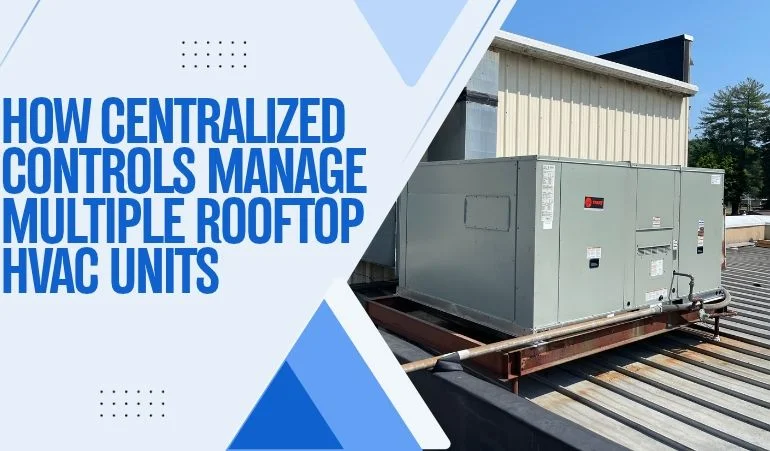
Read MoreDiscover how centralized HVAC controls help commercial properties manage multiple rooftop units, coordinate heating and cooling, and simplify daily operations.
Read MoreRead all the rave reviews that our satisfied customers have posted for our brilliant services