Contact Info
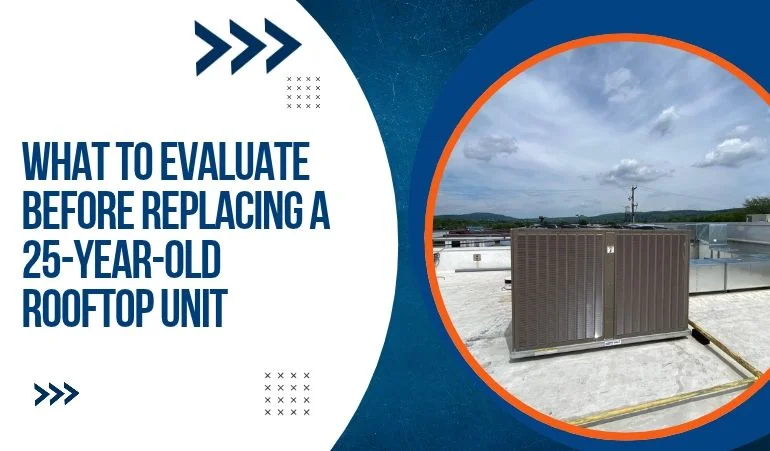
A commercial rooftop unit in service for over 20 years is nearing the end of its life. It can stop working at any time, leaving the business without cooling or heating. However, age is not the only factor in deciding whether to rely on the existing unit or purchase a new one. Equipment condition, repair history, operating performance, and the building's current heating and cooling requirements need to be considered in order to make the right decision.
In Pennsylvania, Lehigh HVAC encountered a similar project. It was a 5,000-square-foot restaurant, Flaming Hot Halal Grill, having an old rooftop unit in service for the last 25 years. The business owner noticed performance- and efficiency-related concerns and contacted Lehigh HVAC for a reliable solution. The team took a look at the equipment inside and out and evaluated every component's condition and performance against professional workmanship standards. Finally, the team replaced the system, choosing the equipment that better met the space’s requirements.
In this post, we will take a look at what to evaluate in a 25-year-old system before replacement. If you are curious about how the complete project went from start to finish, read the full case study at "Commercial RTU Replacement at Flaming Hot Halal Grill."
Commercial rooftop units experience wear and tear over time. That’s why the equipment condition is a legitimate way to guess how reliable it is. Beyond just age, take a look at the equipment condition, specifically equipment such as compressors, motor components, and coils. Here is what to notice.
Cabinet and structural condition
Coil condition and refrigerant circuit
Compressor and motor performance
Electrical connections and components
Drainage and condensate management
Signs of corrosion or physical damage
If these components are in good condition, you can likely say the equipment is reliable for a few upcoming years.
A worn unit usually demands repairs more frequently. And when these repairs involve critical internal components, such as compressors, they become a headache over time. Before you suggest another repair to the client, ask a few questions.
How frequently the unit breaks down
Which components have failed
Whether replacement parts remain available
The estimated cost of upcoming repairs
How much downtime the equipment causes
Compare the likely cost of repairs with the total cost of unit replacement.
Lehigh HVAC Approach
At Lehigh HVAC, we apply a rule of thumb in such situations. If the total repair cost exceeds or becomes equal to the installation cost of the new unit, we recommend new rooftop installation instead of repairs.
How a unit works doesn’t just depend on the repair bills and the system age. It also depends on the performance, capacity, and energy efficiency. If the components look good on the outside but consume more energy than required and cost more than normal energy bills, replacement is likely a better decision.
The compressor is the main component of a rooftop unit. If it is faulty, the unit fails to perform reliably and keep the space at the comfort level it deserves. Beyond the compressor, refrigerant problems are also a headache. If there are even minor leaks in the walls containing refrigerant, there is a high risk of leakage and accidental hazards. So when you notice similar problems, the ideal approach would be an HVAC replacement instead of another costly repair bill.
Take a look at the updated HVAC rules by the local municipality. Verify if the current rooftop unit follows these rules. If not, replacement becomes compulsory in order to stay compliant with the HVAC regulatory authorities. Make sure you hire a knowledgeable and insured technician who truly knows the up-to-date HVAC guidelines from the regulatory authorities.
In the above context, Lehigh HVAC completely evaluated the 25-year-old rooftop unit at the client site and found that the old unit was costing more in energy bills and repair service calls than the investment required for a new unit. That’s why the team suggested rooftop unit replacement as a solution.
Got a commercial HVAC project for which you need a reliable service provider? Lehigh HVAC could be a top option, as we are experienced, knowledgeable, and the word-of-mouth choice for 300+ real HVAC clients from Pennsylvania. Schedule a free discussion call to learn more about how we can contribute to your projects.