Contact Info
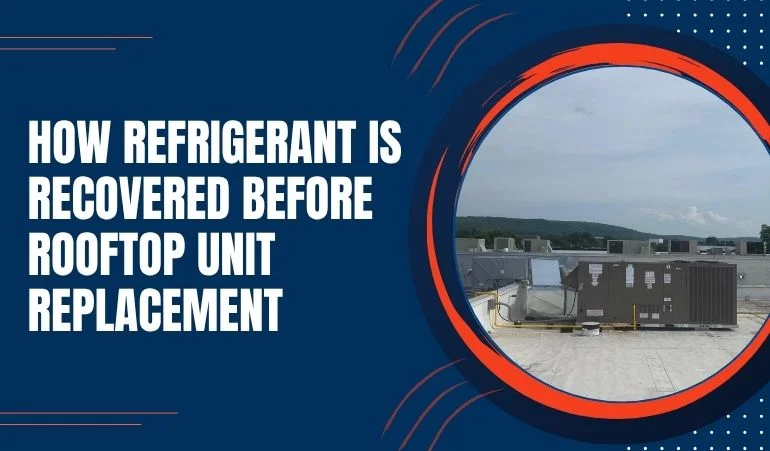
Before technicians remove the rooftop unit, it is compulsory to recover refrigerant. It is important to know that if refrigerant is released into the environment as it is, it creates several health hazards and safety risks. The step is particularly important when replacing aging equipment with compressor or refrigerant leakage concerns.
At Flaming Hot Halal Grill, a 5,000-square-foot restaurant in Pennsylvania, Lehigh HVAC replaced a 10-ton rooftop unit that had been operating for more than 25 years. Refrigerant recovery was part of the work required before removing the existing equipment. Here’s how the team approached the work and completed it efficiently.
Refrigerant is one of the most important components in a commercial HVAC system. It changes its state from gas to liquid and then back to vapor. In the meantime, the heat energy is transferred from inside to outside or outside to inside, depending on the unit type.
When the equipment has seen its good days, its refrigerant is first contained to prevent accidental leakage and hazards.
Proper recovery also helps:
Prevent intentional refrigerant release
Support compliant equipment removal
Keep refrigerant contained for proper handling
Prepare the system for disconnection
Reduce environmental risks
In Pennsylvania, refrigerant handling is regulated by EPA Section 608. So make sure your technicians understand this requirement completely.
While working at our recent project at Flaming Hot Halal Grill in Pennsylvania, we followed a professional approach recommended by the EPA. Here is what we recommend for your future projects.
Technicians first identify the refrigerant used in the existing rooftop unit. This information helps determine the appropriate recovery equipment, cylinder requirements, and handling procedures for safe recovery.
Technicians use a compatible recovery machine, hoses, gauges, and an approved recovery cylinder. They ensure the equipment is suitable for the refrigerant being recovered and the system's operating conditions.
Technicians connect the recovery equipment to the appropriate service ports on the rooftop unit. The connections allow refrigerant to move from the HVAC system into the recovery cylinder without being released into the atmosphere.
The recovery machine transfers refrigerant from the rooftop unit into the designated cylinder. Technicians monitor the process and follow the applicable recovery requirements. The required recovery level depends on the equipment and refrigerant regulations.
Before disconnecting and removing the old RTU, technicians verify that refrigerant has been recovered to the required level. They then proceed with the remaining equipment disconnection and removal work.
The recovered refrigerant must remain properly contained and be handled according to applicable regulations. Depending on its condition and intended use, it may be reclaimed, recycled where permitted, or sent for proper disposal.
Refrigerant removal is a very critical task in commercial RTU replacement. It demands a meticulous approach and a commitment to professional standards, along with the right tools and equipment to contain refrigerant safely. To learn more about how Lehigh HVAC completed this, read our full case study at Flaming Hot Halal Grill. To learn more about our commercial rooftop unit installation services, contact us at 484-961-7044.