Contact Info
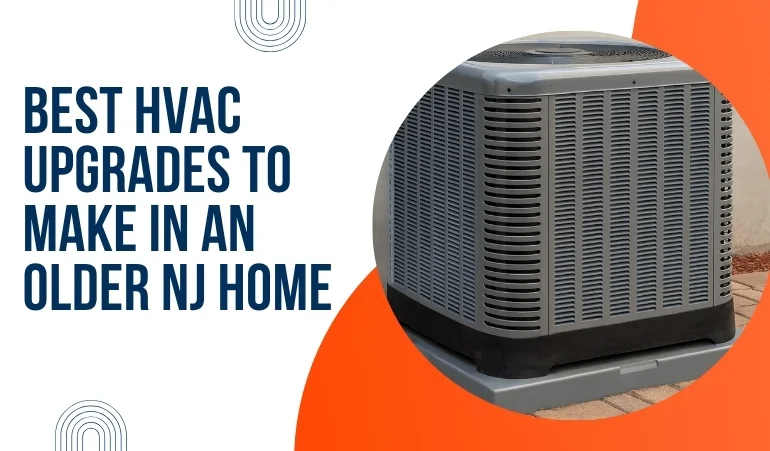
The best HVAC upgrade for New Jersey is not the one that uses advanced components or luxury accessories. It is the one that keeps your home comfortable, whether it is too hot or too cold outside. After all, you need your loved family members to enjoy the comfort they deserve, not the lavish equipment itself.
In this blog, we will suggest the best HVAC upgrades for your New Jersey home. The purpose is to ensure reliable comfort all year long, ensuring you pay justifiable energy bills each month.
New Jersey's climate is a direct enemy of HVAC systems. From humidity in summers to heavy winds and snow in winter, everything plays its part to the maximum. Your equipment continuously experiences extreme weather conditions that cause enhanced wear and tear and equipment damage. The lone HVAC unit might struggle to ensure complete comfort if it is kept without retrofitting and upgrades. But when you install some additional components that complement the HVAC performance, you are closer to enjoying the thermal stability you have dreamed of.
Upgrades are focused on year-round comfort rather than seasonal or other purposes. The following are some of the best choices in this regard.
It is not just an HVAC upgrade but a basic shift that you need most essentially to ensure you maintain temperature levels in a comfortable range in your living space. Take a look at your current system. If it is an air conditioner, its SEER2 ratings should be at least higher than 14. If it is a heating appliance such as a furnace, its AFUE should be more than 81%. These efficiencies ensure your equipment has the capacity to handle even the worst temperatures in your region.
If your equipment is nearing its end-of-life stage, demands frequent repairs, or just struggles to keep temperature in the normal range, first replace it with one that is highly efficient.
The Good News
Replacing the HVAC with an energy efficiency model gives you a chance to get up to 50% of your investment back through rebates and energy incentives. Feel free to contact Lehigh HVAC to check your eligibility for available programs.
Temperature in the normal range alone is not sufficient to help you feel comfortable. You also need ventilation to make you truly feel comfortable. It is because if ventilation is not fully optimized, the air inside the home feels clammy. Your HVAC system, as a result, works harder than usual, as now it has to both maintain the temperature in a comfortable range and also expel humidity. But when you ensure ventilation, the humidity remains normal, and that’s why you enjoy better comfort.
Note: Take humidity seriously. Almost half of your air conditioner’s energy is spent on humidity control in NJ summers instead of cooling itself.
Curious about humidity control? Dive deeper by exploring "How to Control Humidity in Your Home with Your HVAC System."
You might have already heard about HVAC zoning. These are the systems that offer you personalized temperature control in your house. This is a great benefit if you have a larger house with many rooms, a store room, a kitchen, and some other low-traffic areas. When your system is without zonal control, the conditioned air is evenly distributed throughout the entire space. It makes your HVAC work harder to maintain the desired temperature range.
When you install zoning dampers and a separate thermostat, you can set the temperature in various rooms according to your choice and the requirements. For example, you can prioritize heating or cooling in the living room, guest room, or wherever you spend most of the time. And you can just deprive some low-traffic areas, such as attics, crawl spaces, and storage rooms, of the comfort, or just give these areas the least priority.
Ordinary thermostats require manual settings. You put a value on the screen, and it directs the central control board to continue the air conditioning process until that specific temperature is achieved. On the other hand, programmable thermostats are smart models that learn themselves. They learn from your lifestyle habits, HVAC usage, and preferences, and then automatically adjust the temperature changes accordingly.
For example, it will increase the temperature by a few degrees when you are not at home (in summer). It will lower energy bills without having a big impact on the comfort level itself.
Upgrading your HVAC is not a one-time process. You need to take small steps regularly according to your budget. For example, if this month you invested in replacing the thermostat with the programmable model, prioritize zoning for the next month. When you distribute your HVAC upgrades according to budget flexibility, you achieve your goals without facing a financial burden. And this not only pays via better sleep at night or more cooling on a day, but it also helps you save up to 10 to 15% annually in energy bills.
Contact Lehigh HVAC for every HVAC upgrade in New Jersey.