Contact Info
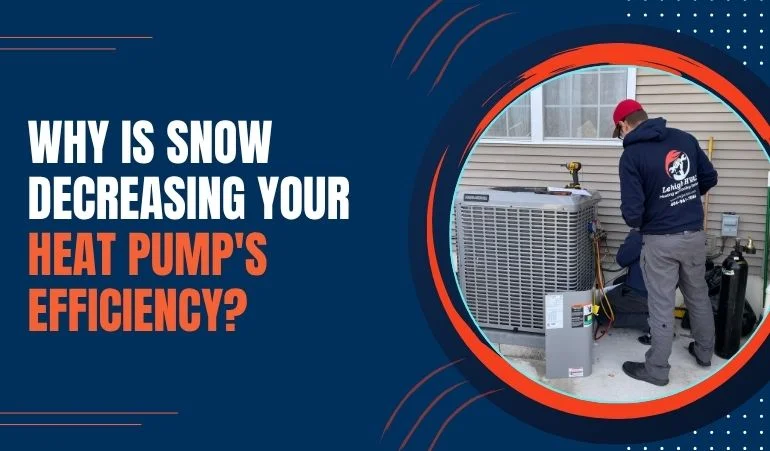
Pennsylvania experiences cold weather, freezing rain, and heavy snowfall during the winter season. Heat pumps are a reliable way to keep homes warm and comfortable, and homeowners all the way down to Philadelphia rely on them. However, winter storms can make it challenging for your heating system to operate efficiently. Snow and ice accumulation around your outdoor unit restricts airflow and increases the workload on your system. Understanding how snow affects heat pump performance can help you take simple, effective steps to protect your equipment, avoid unexpected repair costs, and keep energy bills low throughout the season.
Heat pumps extract heat from the outside air and transfer it indoors. Even in sub-freezing temperatures, thermal energy remains present in outdoor air. To draw in this heat, the outdoor unit requires continuous, unobstructed airflow through its metal fins and coils. If the air pathway becomes blocked by deep snow or covered by heavy, wet snow, airflow is severely restricted. Without proper circulation, the system cannot absorb enough heat, forcing the heat pump to run longer and consume significantly more electricity to maintain a comfortable indoor temperature.
Snow accumulation might not seem like an immediate problem, but it quickly causes operational issues for your outdoor unit. Identifying early warning signs can help prevent unnecessary strain on your system and avoid sky-high electricity bills. Key indicators that your heat pump requires attention include:
Starved of Outdoor Thermal Energy
When supply vents blow lukewarm or cool air while the thermostat calls for heat, the unit may be unable to extract sufficient thermal energy from the outdoor air.
Constant Running
If the heat pump runs continuously without reaching the set temperature, outdoor airflow is likely severely restricted.
Auxiliary Heat Light On
When the outdoor unit struggles to keep up, thermostats activate auxiliary or emergency electric resistance heat. While this maintains indoor temperature, electric backup heat is significantly more expensive to run.
Rattling or Buzzing Noises
Unusual rattling or buzzing sounds often indicate that ice or heavy snow is contacting the fan blades.
Condition |
Impact on Heat Pump |
How It's Managed |
Required Action |
|---|---|---|---|
|
Light Snow |
Minimal impact |
Auto defrost |
Routine clearing |
|
Heavy Wet Snow |
Blocks airflow |
Manual removal |
Brush away |
|
Freezing Rain / Ice |
Locks fan/motor |
Requires thaw |
Switch to backup |
Routine winter maintenance ensures your heat pump remains safe and operational during cold weather:
Gently clear snow from around the unit after each snowfall to maintain proper airflow.
Keep at least three feet of clear space around all sides of the outdoor unit.
Never use sharp objects like knives or screwdrivers to scrape ice, as they can damage delicate coil fins.
Ensure water dripping from roof gutters does not fall directly onto the unit and freeze.
Book annual professional inspections to ensure optimal system efficiency and safety throughout winter.
Preparing your heating system in advance makes winter maintenance much easier. Consider these practical solutions to keep your system performing efficiently all season long:
Install heat pumps on risers or elevated platforms 4 to 8 inches above the local average snowfall level
A dedicated heat pump canopy protects the unit from falling snow and ice while maintaining proper airflow clearance
A dirty indoor air filter combined with restricted outdoor airflow doubles the strain on your compressor, severely reducing efficiency
Clean leaky or overflowing gutters to prevent meltwater from dripping onto the unit and freezing into thick ice sheets
Lehigh HVAC is a professional agency specializing in heating and cooling services. We serve the entire state of Pennsylvania, from Allentown to Bethlehem, Carbon County, and Stroudsburg. Contact us for trustworthy heat pump services.