Contact Info
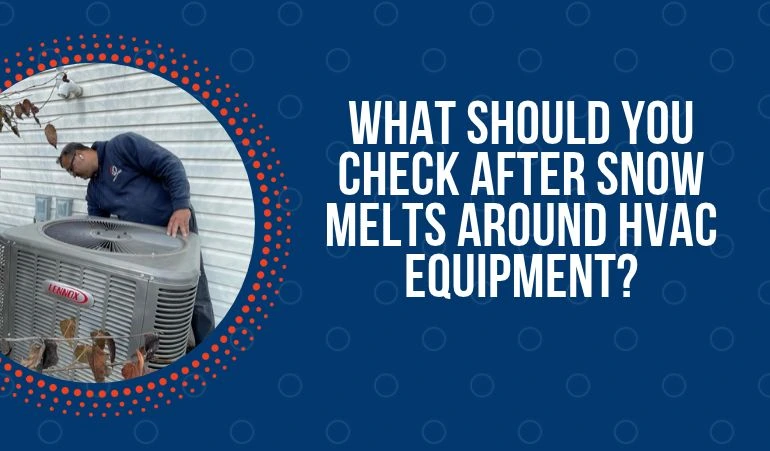
Snowstorms are common in New Jersey. The state averages about 25.9 inches statewide, though the value differs with respect to region and climate. The snow blocks airflow around the outdoor unit; if necessary preventive measures are not taken, and if the unit does not sit at a sufficient height to prevent damage caused by snowstorms. After the storm passes and the snow melts around the outdoor unit, you need to carefully inspect the system and follow specific troubleshooting steps before turning it on without checking.
This blog post is designed to answer one important question: what to do after snow melts around an HVAC unit? The answer involves multiple steps, briefly summarized in the sections below.
Approach the outdoor unit and look for signs of mud, standing water, and puddles around its base. These are the direct signs that there are some issues in the drainage system still present. While inspecting the area around the outdoor unit, look for the following visible causes.
Water pooling beneath the equipment
Mud or erosion around the mounting pad
Drainage flowing toward the foundation
If some of these signs are visible, call your local HVAC pros to inspect your HVAC drainage and fix it right there.
You find ice melted around the HVAC unit; it doesn't mean all the ice is gone. There is a high probability that you can find lingering ice still present around the fins, cabinet, coils, outdoor base, and the fans. This ice must be cleared before you turn the heating appliance back on. At this point, keep in mind that a slight frost is normal during heat pump operation, and it should not be confused with the ice pieces. If you find ice present, call an HVAC technician immediately to wipe it out to ensure normal equipment operation.
Melted ice leaves behind wet leaves, twigs, mud, and other debris as well. This debris blocks airflow and creates problems for normal HVAC operation. Make sure you clear all the debris and buildup completely so the airflow is optimized and the system performs as intended. Never use sharp-edged objects, such as knives, scissors, or hammers, to remove the buildup forcefully. Instead, let the professionals do it using risk-free methods.
A snowstorm can also affect the indoor unit. Water can also seep inside through the cracks, leaks, and fissures in the walls. Specifically, you might see moisture in basements, utility rooms, and foundations soon after the ice melts. Though not every time, the water seeping inside or the musty odors due to moisture are the result of the outdoor snow melting. Occasionally, it can also be due to plumbing leaks inside. Regardless of the cause, pay attention to the leakage problems, especially if the moisture is around electrical components.
Once you are sure all the ice is removed safely and the unit now seems undamaged, check for the other warning signs. Turn the unit on, keep it running for a few minutes, and notice if there are unusual sounds, reduced heating output, repeated shutdowns, or excessive ice buildup around components. If you find some of the components with unusual sounds, get them fixed immediately before the issue becomes complex.
If your heat pump, furnace, or boiler looks good after melted snow but somehow you are not satisfied with its performance, the core issue likely went unnoticed during your manual inspection. Contact Lehigh HVAC for a detailed HVAC inspection service in New Jersey backed by advanced equipment and a step-by-step approach. As a result, you will get a report listing any possible issues present in your system and the troubleshooting steps. Book your appointment today.