Contact Info
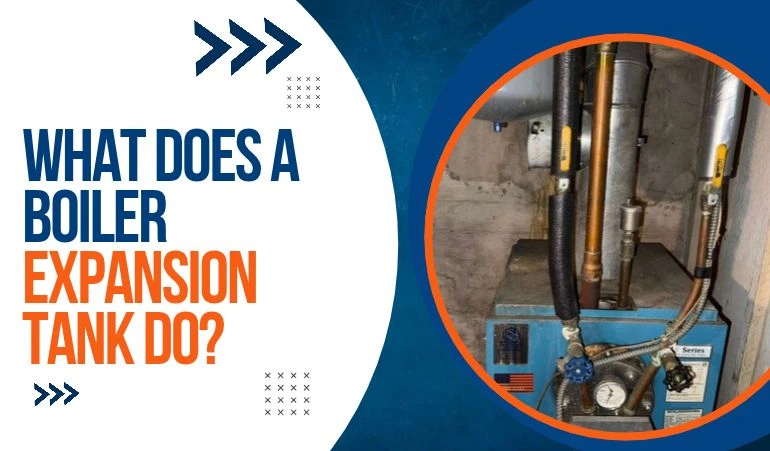
When winter turns harsh in New Jersey, you crave warmth and turn your boiler on. The boiler generates heat by burning fuel and distributes it through flowing water into your homes, offices, or commercial facilities. Inside the boiler, a critical internal component often goes unnoticed until it starts acting up and makes the entire heating process non-functional. That’s a boiler’s expansion tank. It absorbs extra pressure when the boiler heats the water. If it fails, that increased pressure puts strain on the heat exchangers and pipework and creates leakage problems, along with component failure.
In this blog post, we will explore how a boiler expansion tank works and other relevant information.
To understand what a boiler expansion tank is and how it works, let’s first look at how a boiler works. A boiler burns fuel to warm water, which then flows in the radiator lines and distributes heat in the rooms. When water is warmed, it expands and exerts more pressure on the chamber. That extra pressure should go somewhere; otherwise, it will put strain on the components. A boiler expansion tank is the component that absorbs extra water pressure.
Now let’s think another way. If the expansion tank fails to absorb pressure, component damage and leakage problems will occur immediately, leaving your family members or business employees without heat.
Fortunately, your system displays several signs before it fails. You just need to watch the components and see if anything seems off. Check for the following signs to confirm that your boiler’s expansion tank is failing.
Fluctuating or consistently high pressure readings on the gauge
Water leaking or dripping from the pressure relief valve
Bang, clang, or water hammer noises coming from the pipes
The tank feels full, heavy, or completely cold to the touch
Visible rust, corrosion, or water pooling underneath the tank
Frequent loss of boiler pressure or system shutdowns
Once you confirm that your boiler expansion tank is faulty, the next step is to decide whether to book a boiler repair service or replace the expansion tank. The table below lists a brief comparison to make the decision easier.
Factor |
Repair |
Replace |
|---|---|---|
|
Tank Issue |
Low air pressure, loose Schrader valve |
Ruptured bladder/diaphragm, waterlogging |
|
Tank Condition |
Minor surface wear, structural shell intact |
Visible rust, corrosion, active leaks |
|
Tank Age |
Under 5–8 years old |
Over 5–10 years old |
|
Cost Comparison |
A simple service call fixes the problem |
Replacement is more cost-effective long-term |
If you want to learn about the consequences if it is left ignored, explore our other guide on "What Happens When a Boiler Expansion Tank Fails?"
The encouraging news is that you can prevent both expansion tank repairs and replacements by monitoring the component closely and providing the right care whenever it needs it. Here is what Lehigh HVAC recommends in this regard.
Schedule annual professional boiler maintenance before the winter season
Check tank air charge and Schrader valve pressure regularly
Monitor system pressure gauges for unusual spikes or drops
Inspect the tank exterior periodically for rust, leaks, or corrosion
Address minor leaks or pressure fluctuations immediately
Test the pressure relief valve periodically to ensure proper operation
Keep the area around the expansion tank clean and clear of clutter
Replace aging tanks proactively before complete failure occurs
Lehigh HVAC is a licensed, experienced, and reliable HVAC company, dedicated to keeping New Jersey homeowners and facility managers warm during freezing winters. Our boiler services include fast repairs, same-day installations, regular maintenance agreements, and complete system tune-ups. If your boiler is not working as intended and you suspect the expansion tank as the possible cause, call us at 848-361-4707 to get it fixed fast.