Contact Info
Managing multiple rooftop units through separate control systems can be difficult. The team has to manage every HVAC temperature according to the space requirements manually. On the other hand, when you integrate all units with the same control system, you get a more streamlined way to manage those units. While centralized HVAC control through a single control system looks good to every property owner, it is not that easy. It is a separate HVAC project that requires labor hours, planning, strategy, and a meticulous approach.
Lehigh HVAC experienced a similar project at Pocono Palace Resort in Pennsylvania. The team approached the project with precision and care, so the customers never feel discomfort again. Read the following sections to know how the project went from start to end.
A properly integrated control system makes it easier to manage multiple rooftop units without relying entirely on separate equipment interfaces. For hospitality properties, this can simplify everyday HVAC adjustments and provide a more organized approach to managing heating and cooling requirements.
However, the actual benefits depend on the controller's capabilities, equipment compatibility, and how the system is configured.
A compatible control system is required to connect all rooftop components and make them work correctly. When working the right way, it manages heating, cooling, and ventilation as well.
The exact connection method depends on the equipment and controller being used. Some systems rely on dedicated communication protocols, while others use compatible control interfaces and network connections.
For a three-unit installation, the control arrangement needs to recognize and communicate with each rooftop unit individually. This specific setting allows the control system to work in coordination instead of managing each unit separately.
Not every commercial rooftop unit can connect directly to every Wi-Fi controller. Compatibility and communication requirements should be evaluated before selecting or integrating a control system.
Here are some important considerations:
The first step is determining whether the selected control system supports the rooftop units. Equipment manufacturers use different control arrangements, communication protocols, and connection requirements. The controller must be compatible with the equipment and support the functions the property intends to manage. Otherwise, some operating features may remain unavailable through the centralized interface.
When multiple RTUs are connected to a shared control setup, reliable communication becomes important. Each unit needs to communicate with the control system so that supported settings and operating commands can be transmitted correctly. The network arrangement, communication interfaces, and connection requirements should be reviewed to avoid connectivity problems.
Even when three rooftop units are connected to the same control system, they may serve different areas and have different operating requirements. Each unit should be configured according to its designated application. This helps prevent confusion when adjusting settings or managing equipment through the shared interface.
The control interface should be configured to make everyday operation straightforward for the property's staff. Depending on the controller's capabilities, this may include temperature adjustments, operating schedules, and access to equipment status. Available functions vary by system, so they should be confirmed before integration.
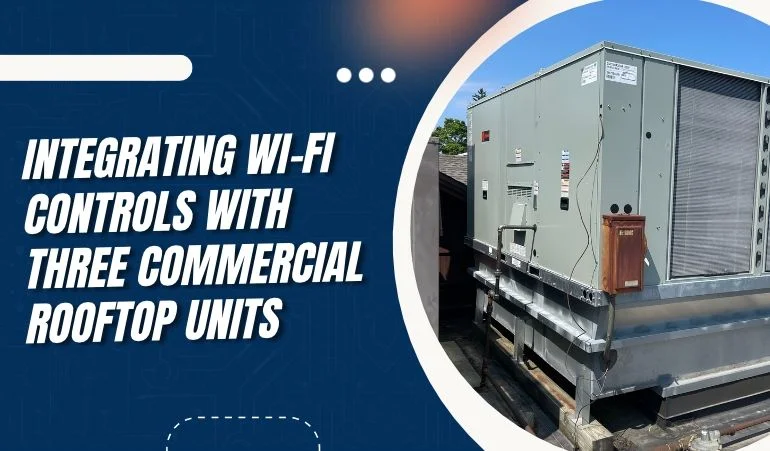
The Pocono Palace Resort project involved three new commercial rooftop units and a Wi-Fi-enabled HVAC management setup.
After completing the equipment installation, Lehigh HVAC connected the rooftop units to the centralized control arrangement. The integration addressed the property's requirement for more convenient management of its commercial heating and cooling equipment. The team also tested the equipment and control setup to check communication, system response, and coordinated operation. If you are looking for HVAC service in Pennsylvania, contact Lehigh HVAC at 484-961-7044.