Contact Info
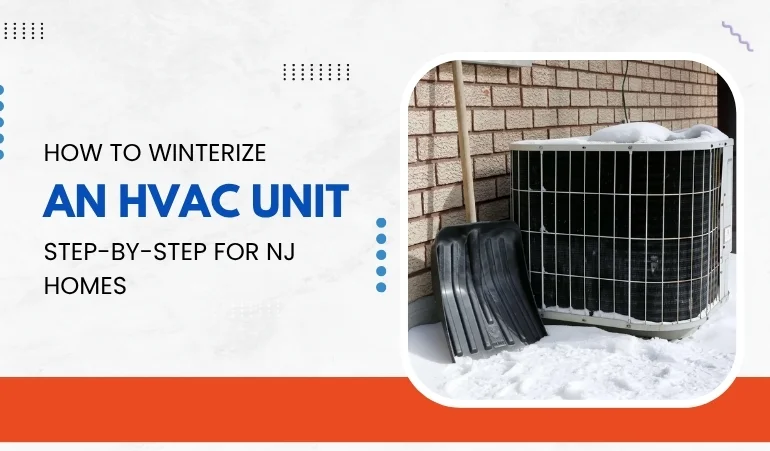
Your HVAC system does a great job keeping you cool and cozy all summer long. It needs a break and refresh before it gets ready for the heating season ahead. Winterizing an HVAC system includes all the steps and practices that are carried out to make an HVAC unit ready for reliable operation all winter.
Winterizing your HVAC system is not optional; it is a must-do step to prevent mid-winter breakdowns. In this blog, we will explore how homeowners in New Jersey can winterize their HVAC systems and make them ready to handle the winter woes efficiently.
Follow the steps mentioned below to ensure your HVAC system gets prepared for the heating season.
This is what you should do at your earliest convenience, soon after the summer is gone. Hire certified professionals and get your system completely maintained. Make sure the system is inspected, tuned up, and tested. Professional maintenance carried out by knowledgeable technicians breathes new life into the system. Now, your HVAC unit is ready to face whatever the frosty New Jersey winter throws at it.
The following are some maintenance steps you can expect.
New Jersey winters are generally more brutal and put more pressure on the HVAC unit. Summers, though, are associated with high humidity and intense heat; winters are still somewhat more difficult to handle for an HVAC system. Therefore, it is a smart decision to upgrade the key HVAC components and associated accessories before the winter begins. The newly installed modern, smart components perform more efficiently and can better handle the winter cold.
No matter how efficient your HVAC unit is, it can only maintain comfort in your space when the indoor space is totally isolated from the outdoors. If there are cracks in the walls, gaps in the windows, and drafts near the doors, the warm air inside will easily sweep outside. This is what makes your HVAC unit work harder to maintain comfort levels. When these gaps and leaks are sealed, warm air stays inside, and your heating appliance can easily achieve your desired comfort levels.
Ceiling fans can help keep your home warm, although they can’t actually lower the room's temperature itself. This strategy is especially good if you have a larger home, but your HVAC system is less efficient and experiences trouble handling cold alone.
Use the ceiling fans in a clockwise direction. It will lift the cold air upward and send the lighter, warm air downward, which makes you feel warm at even colder temperatures.
It can again be correlated to sealing gaps and drafts in the home. When you seal basements, crawlspaces, and attics, there are minimal chances for energy loss. As a result, warmth stays inside, and your HVAC system easily handles your thermal comfort needs. Furthermore, the investment made in insulating your home pays for itself via reduced equipment wear and tear and lower HVAC energy bills.
Winterizing your HVAC system is one of the most essential steps to ensure stable HVAC performance all winter long. Make sure you hire certified, experienced professionals to accomplish this task accurately.
Feel free to contact Lehigh HVAC for HVAC winterization service anywhere in New Jersey. Ring us a bell at 848-361-4707 for further information.