Contact Info
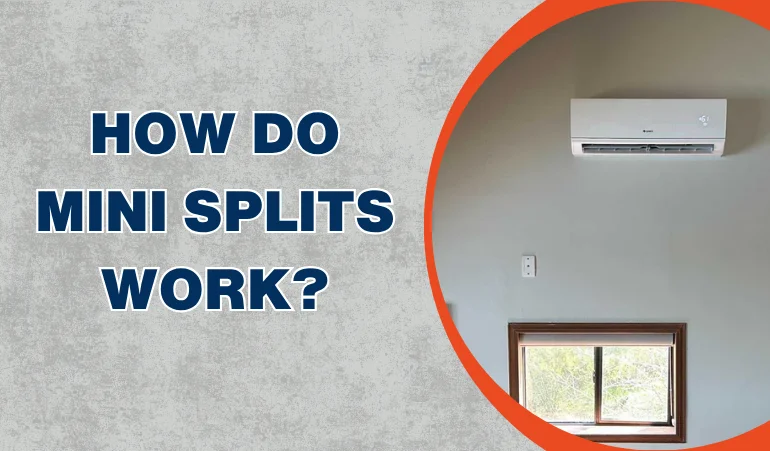
Are you tired of higher energy bills, uneven temperatures, or bulky ductwork? Or you might have an older PA building that lacks a precise duct network. All you need is a mini-split installation. It helps you control every room temperature separately and maintains consistent comfort across your space.
In this blog, we will explain how these sleek, mini-split systems actually work. It will help you understand the operational mechanism, what benefits they provide, and when you need to install them. The blog is primarily designed to educate commercial customers in Pennsylvania.
Mini-split systems are a modern form of HVAC units. They were primarily designed for residential places that lacked ductwork. With time, they gained massive popularity, and customers started using them for commercial facilities as well. In 2026, these systems are equally being used and appreciated at commercial facilities such as offices, restaurants, and retail stores.
The main feature that makes mini-splits different from central AC units or other HVAC systems is that they don’t need ducts to distribute warm or cool air. They do it directly via refrigerant lines.
Mini-split systems feature a ductless design. They use refrigerant lines directly to transfer heat. The following is a brief overview of their working mechanisms.
The indoor unit is mounted inside, on a wall, ceiling, or floor. It is responsible for delivering conditioned air to the room. The following is a brief overview of everything that happens indoors mediated by the indoor unit.
The outdoor unit is located outside the rooms and controls the air-conditioning process. It houses the compressor and condenser, the two key components of an air conditioner. The compressor pressurizes the refrigerant and makes it able to release or absorb heat from the air, which is drawn from the inside. When cooling is needed, the outdoor unit removes heat from the air and expels this heat towards the outside. This process is reversed when heating is needed. Now the outdoor unit takes heat from the environment and adds it to the air, which is coming from the indoor unit. Depending on the preference and the temperature range set by the thermostat, the air is conditioned and sent to the indoor unit from where it is distributed inside the room.
Refrigerant is the medium that runs in insulated refrigerant lines. It is responsible for absorbing the heat. When cooling is needed inside, refrigerant absorbs heat from the air and travels to the compressor. The compressor pressurizes the refrigerant and expels it toward the outside. When heating is required inside, the refrigerant gets heat from the outdoor unit and adds it to the air, which is then delivered inside.
The working mechanism of mini-splits is relatively simple, however, different from other HVAC systems. Here, the role of ductwork is played by the refrigerant lines. There is an indoor unit that distributes air, an outdoor unit that expels or adds heat from the outside environment, and a refrigerant that runs in refrigerant lines and is responsible for changing its state from liquid to gas and then vapor, mediating the release or addition of the heat inside the space.
Contact Lehigh HVAC if you want to install a commercial mini-split system somewhere in Pennsylvania.