Contact Info
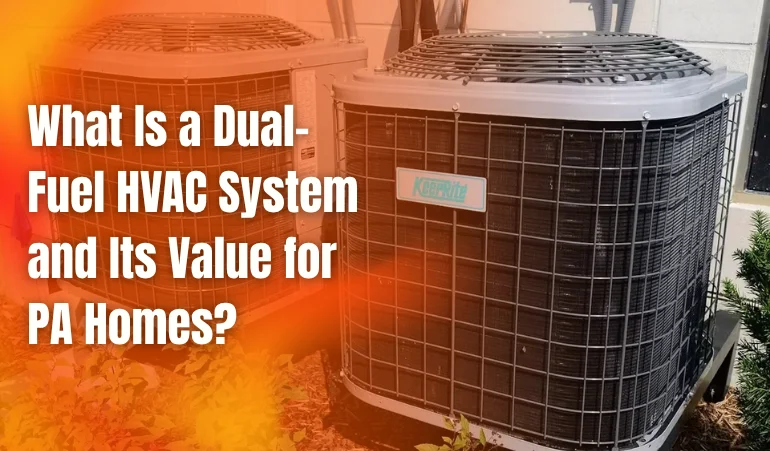
A heat pump itself is a wonderful choice for year-round comfort. It provides cooling in summer and heating in winter and also helps control humidity. But many homeowners integrate this heat pump with a gas furnace for efficient temperature control. This is what is called a dual-fuel system. It is widely used in the United States and has performed well so far. In Pennsylvania, many customers prefer this system due to the multiple benefits associated with it and its energy efficiency.
In this guide, we will educate homeowners in Pennsylvania and the surrounding areas about what dual fuel systems are and whether they are really worth it for Pennsylvania homes.
A dual fuel system is sometimes also called a hybrid HVAC system. It comprises two components.
This unit sits outside. It provides cooling in the summer primarily. It also offers heating in mid-to-slightly cold weather.
It is usually a natural gas or propane furnace. It sits inside and takes control when the temperature in winter drops too low to be handled by the heat pump alone.
The working mechanism of a hybrid system revolves around a central economic point. This point is set according to the efficiency of your heat pump unit and the electricity and gas rates in your region. The idea is simple: to save both cost and the life of your HVAC units. Below is a brief overview of how this system works.
When Temperature is Above the Economic Point
When the temperature is above the set value, the heat pump takes the charge and provides cooling or heating depending on the needs. As the heat pump can handle comfort at this temperature without experiencing undue burden, it can easily balance comfort with energy bills and keep the unit itself in good condition.
When Temperature is Below the Economic Point
When the temperature drops below the value fed to the thermostat, the gas furnace takes over the charge. Now, the furnace brings the heat required inside, and energy being consumed takes the form of natural or propane gas. This switch ensures your system doesn’t experience an extra burden and handles even frosty temperatures efficiently.
Dual-fuel HVAC systems are the ideal choice for many homeowners in Allentown, Bethlehem, Carbon County, and more. At Lehigh HVAC, we have noticed that residential customers are rapidly switching to these systems specifically in this state. The following are some benefits of these systems, often admired by those who get them installed.
As we mentioned earlier, hybrid systems are well-known for their extraordinary efficiency. They use the most economic fuel source and provide reliable comfort to your family members. In summers and mild winters, they use electricity-powered heat pumps. In extreme winters when temperatures drop significantly lower, they switch to a gas furnace and maintain the temperature in a comfortable range inside. In this way, they conserve the maximum possible energy.
The system automatically chooses the cheapest fuel source and switches to it instantly. That’s why these systems incur fewer energy bills. Even in the coldest winter winds during December and January, these systems maintain reliable comfort while other heating units face frequent breakdowns and sudden efficiency declines and are associated with surprising energy bills.
When you install a hybrid unit, you get a complete package. Whether it is summer, winter, or shoulder season, your system is ready to handle it efficiently. Plus, you don’t need any additional units with it. In summer, the heat pump takes the responsibility of providing cold vibes, so you don’t need a separate central air conditioner. In winter, the furnace does its job really well and keeps your family comfortable while others are shivering due to efficiency declines.
Dual-fuel systems are not always good in every aspect. They also have some disadvantages. The following are the dark sides of these HVAC units mentioned.
Lehigh HVAC specializes in professional dual-fuel installation services in Pennsylvania. Our services are backed by certified experts, specialized equipment, and warranties. Get your quote now at 484-961-7044.