Contact Info
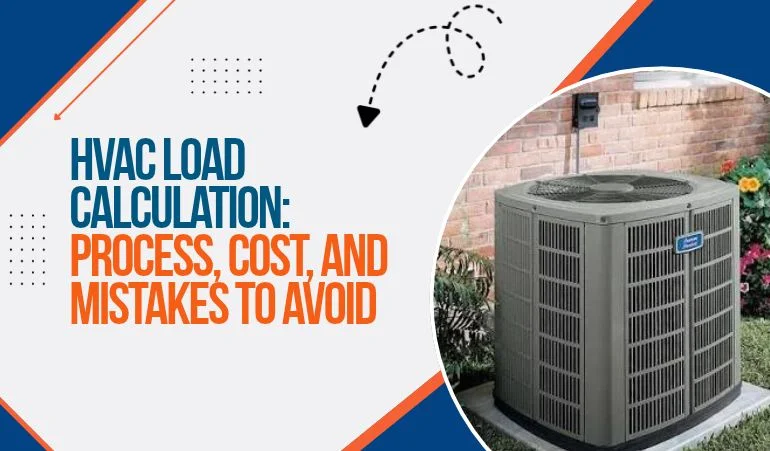
HVAC load calculation is the first step carried out soon after a site survey. It calculates the exact heating and cooling demands of a residential or commercial facility, which then helps determine which specific size of an air conditioner or a heating appliance would be best suited for that space. In Pennsylvania, it is essential because equipment selected after guesswork frequently encounters sudden failures.
This blog post covers a standard process for HVAC load calculation, how much it costs, and what mistakes to avoid.
In Pennsylvania, you can expect to pay $150 to $180 for a residential load calculation and $300 to $400 for a commercial property. These are values for a standard property with a size around 2,000 square feet. However, the actual prices depend on exact building symmetry, number of occupants, and labor rates in the local region.
Calculation Type |
Published Starting Price |
|
Residential Manual J |
$170-$200 |
|
Residential Manual J and Manual S |
$200-$250 |
|
Manual J, D, and S bundle |
$400-$500 |
|
Commercial Manual N |
$300-$600 |
Larger buildings, multiple systems, detailed room-by-room calculations, and additional design documents increase the total bill.
The process differs significantly between residential and commercial buildings because commercial buildings continuously gain heat due to heavy equipment operating, a larger number of occupants, and more regulated temperature control required.
Here are the standard processes for each case.
ACCA Manual J for residential HVAC systems
ACCA Manual N for commercial HVAC systems
Apart from these, ASHRAE frequently regulates standard load calculation processes according to code-compliance rules and climate changes. Make sure the technician you hire is fully familiar with these updated guidelines.
Here are the steps generally included in a standard process.
1. Collect Building Details
At the very beginning, record floor area, layout, ceiling height, and construction materials at the property where you are planning to install a new HVAC system or replace an existing one.
2. Check Windows and Insulation
Check the number of windows, the size of each window, shading, and insulation on the walls, doors, and windows. These factors are important as they can allow direct sunlight and heat inside.
3. Assess Air Movement
Estimate infiltration and required outdoor ventilation. This is important because HVAC regulatory authorities in Pennsylvania now require keeping airflow properly optimized in addition to temperature control.
4. Calculate Heating and Cooling Loads
Based on all the factors measured above, calculate the maximum heating and cooling requirements of the property. To understand peak loads, consider the highest temperature variations in your local PA region.
5. Select Suitable Equipment
Once you clearly know the heating and cooling requirements, convert them into BTU size and then the tonnage required. It helps you understand the exact HVAC equipment size. Beyond size, choose efficiency above 14 SEER2 if it is an AC and AFUE above 90% if it is a furnace. This higher efficiency ensures your system conserves energy and incurs fewer energy bills.
To understand the detailed equipment selection process, explore the resource below.
👉 What Size HVAC System Do I Need? A Homeowner's Sizing Guide for PA
HVAC load calculation seems pretty straightforward. But when it comes to putting it into practice, many small restrictions in the space and minor unexpected issues make the process complex. But if you know what to follow and what to avoid, you can get your project accomplished error-free.
Here are the mistakes you should strictly avoid.
Sizing by square footage alone
Ignoring insulation and sealing
Using incorrect window details
Overlooking ventilation requirements
Oversizing equipment beyond the required size
Ignoring room-by-room loads
Planning an HVAC installation in Pennsylvania? Share your property details with an expert to get an accurate load calculation before choosing equipment. Contact us at 484-961-7044 to book an appointment.