Contact Info
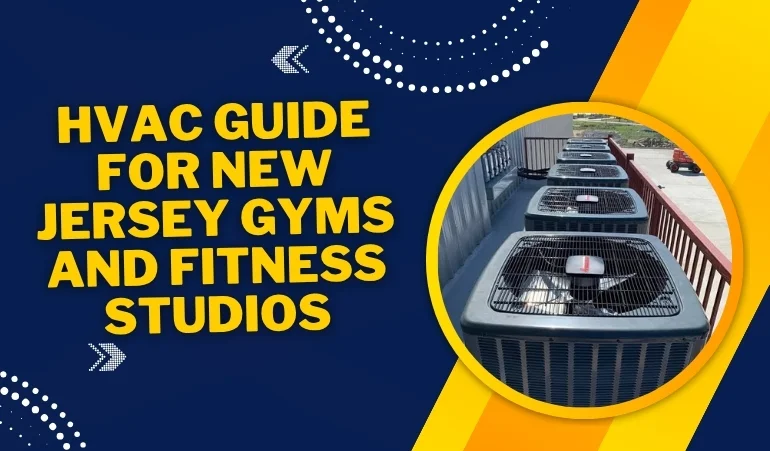
The HVAC approach for gyms and fitness studios should not be the same as for standard commercial properties in this region. This is due to unique challenges associated with these spaces, such as body heat, carbon dioxide, and moisture. The New Jersey climate makes the situation further challenging. A standard HVAC system usually struggles in this setting unless kept with specialized care and maintenance. This is why your HVAC approach for these spaces should revolve around unique, challenging audience demands and New Jersey weather.
This blog aims to educate gym and fitness studio owners on how they can maintain a comfortable indoor environment with their HVAC appliances. It also explores the tips and tricks to increase energy savings and reduce bills.
Fitness facilities significantly differ from standard commercial facilities. Here is what makes them different.
We discussed how fitness houses are not like other buildings. Here is the complete picture.
Moisture is one of the biggest issues in these facilities. Every member releases a significant amount of moisture in the form of sweat into the air. The humidity levels can easily cross 60% if the HVAC is not working efficiently.
Higher occupancy in such facilities remains a problem. Due to a higher number of individuals inside, there is higher CO₂ in the space. If there is not proper ventilation, the occupants may feel stuffiness, unpleasant air, and an uncomfortable environment.
Different rooms have different requirements. Heavy exercise rooms need precise temperature controls. Cardio areas have distinct demands. Yoga rooms and training sections require something entirely different. This is what rejects standard HVAC decisions in this case.
All these challenges demand one solution: an HVAC that is specialized to fitness facilities and kept with special care.
The best HVAC decisions are not those with the lowest investment or the most reliable brands. These are the decisions that keep the facility in conditions that occupants demand. Here is how we plan, install, and maintain HVAC for gyms and fitness studios at Lehigh HVAC.
Everything begins with proper planning and strategy. HVAC contractors should do something more than measure the square footage. Here is what we recommend our technicians do for every fitness facility project.
Once the planning and strategy are complete, it's time to choose an HVAC system. We recommend choosing a unit with high efficiency and robust structure. This is because high efficiency keeps bills under control, and a robust structure withstands NJ's brutal winters. Here is what we recommend for various equipment.
Don’t forget the system after you have installed it. It needs your continuous care and attention. This is what we call maintenance, tune-ups, or servicing. Here are the maintenance steps your HVAC contractor should carry out.
Not every HVAC contractor understands requirements for gym and fitness facilities. And if you hand over your expensive equipment to a jack-of-all-trades, you are at the risk of a bigger disadvantage ahead. That’s why smart businesses only choose professional, certified, and knowledgeable technicians. Do the same if you want to prevent HVAC problems for years.
Give Lehigh HVAC a call if you need expert HVAC professionals for your project.