Contact Info
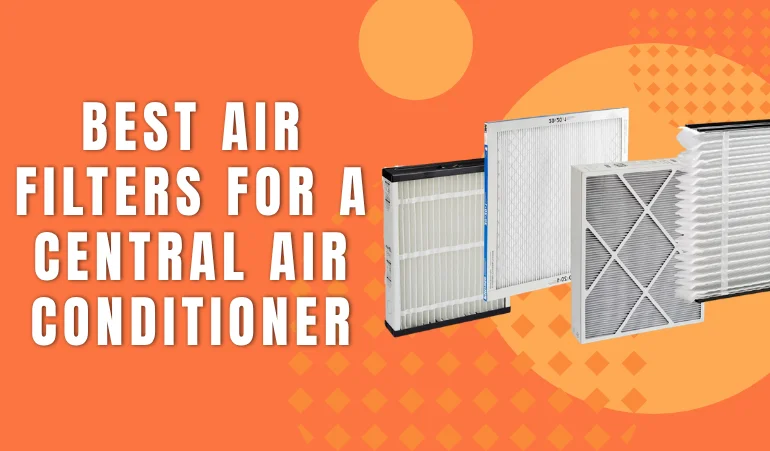
Air filters are an integral part of a central air conditioner. They play two primary functions:
The best air filter is the one that plays both its roles efficiently. But how will you know what filter best meets your central AC needs? This is where Lehigh HVAC comes in.
In this blog, we will guide you on what qualifies as a good HVAC air filter, what to look for in it, and how MERV ratings affect its air quality. The blog is particularly designed for homeowners and property managers across Pennsylvania and New Jersey.
A good HVAC air filter balances particle removal with adequate air flow. The target is to prevent strain on internal components and block the passage of harmful agents and contaminants. The following are some key indicators of a good air filter:
A filter that meets all these criteria is generally considered good for your HVAC needs.
Utilizing our 11 years of experience at Lehigh HVAC, we would recommend the following as the best air filters for central air conditioners in PA and NJ.
It is a high-efficiency HVAC filter designed to capture microscopic particles, including bacteria, viruses, lint, and allergens. It traps particles using electrostatic technology. That's why it minimizes airflow disruption. It is an ideal choice for improving indoor air quality.
This particular air filter comes with different MERV ratings, ranging from 8 to 13. These are high-quality, American-made filters designed to remove common household particles such as dirt, allergens, and mold spores. Being pleated, they increase the surface area for particle removal, and that's why they are accompanied by better efficiency and airflow compared to cheap fiberglass options.
These are high-efficiency, pleated air filters with a capacity of capturing over 90% of airborne contaminants. These contaminants may include dust, pollen, mold, and pet dander. They offer superior filtration and optimal airflow simultaneously, which makes them an ideal choice for residential use, especially for allergy sufferers.
These are high-efficiency, pleated HVAC filters designed for both residential and commercial HVAC systems. Being electrostatically charged, they effectively capture majority of common household dust and debris. They also make an ideal choice where high filtration and unobstructed airflow are needed.
It is an IoT-enabled HVAC air filter system that features a reusable, sensor-laden frame. This frame monitors pressure and quality of the air in real-time via Wi-Fi. Unlike traditional, schedule-based filters, these smart filters alert users to change their filters based on usage and current conditions. They can also detect the airflow blockages and trigger the thermostat to improve indoor air quality.
| Air Filter Brand | MERV Rating | Best For | Filter Lifespan |
|---|---|---|---|
| Filtrete MPR 1900 | MERV 13 | Families with severe allergies or newborns | Up to 3 Months |
| Filter King | MERV 8 - 13 | Commercial spaces & custom-sized units | 3 Months |
| Nordic Pure | MERV 12 | Homes with multiple pets | 3 Months |
| Aerostar | MERV 8 | Budget-friendly standard maintenance | 2 - 3 Months |
| Woosh Smart Filter | MERV 13 | Tech-savvy users & Remote monitoring | Based on Airflow |
Choosing the right air filter is essential to keep your AC system operating at optimal performance and to maintain healthy indoor air quality. Here are some tips for choosing the right filter for your house or a commercial facility.
Check your current filter or owner's manual to choose the exact dimensions. This is critical as a mismatched-size filter doesn't perform its functions well. A small filter leaves some space vacant where allergens and particles can pass through easily.
MERV stands for Minimum Efficiency Reporting Value and is considered the gold standard for grading filters based on their efficiencies. Try to get a filter with higher ratings, provided it stays compatible with your AC system. In general, a filter with an MERV rating of around 13 is considered good for balancing filtration and airflow.
There are multiple innovations in the air filter industry. Modern filters focus on smart technology, pathogen destruction, and nanomaterials to enhance indoor air quality and optimize air flow. Opt for innovative filters such as those built on UV-C light and germicidal technology, carbon captures, and advanced electrostatic filtration.
Choosing the right HVAC filter is just half of the process. The second part happens when your system is calibrated to handle high-efficiency filtration. This is where you need Lehigh HVAC. We have spent over 11 years helping neighbors across Pennsylvania and New Jersey breathe better and protect their HVAC appliances.
Contact us at 484-961-7044 for professional consultation regarding your HVAC system or air filters.