Contact Info
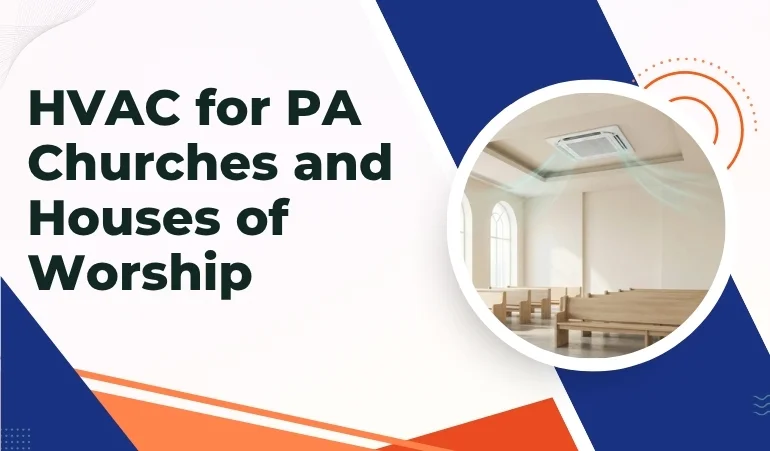
Churches and worship houses are completely different from standard business properties. They usually have little attendance during routine days. At funerals, marriage ceremonies, and religious events, these places experience unusual gatherings. The HVAC system has to maintain comfort during these peak presence days. The other main thing is that religious houses require an extremely quiet environment. This is essential to prevent disturbance during summons, prayers, and speeches. The HVAC operations should be noiseless. All this is usually not required at standard commercial projects.
Unique Pennsylvania’s climate is another problem. HVAC experiences humid summers with temperatures frequently crossing 90°F. On the other hand, winters are extremely chilly with frequent snowfall. All these place a burden on the HVAC system, which must operate without compromising comfort. This blog focuses on best HVAC practices, maintenance steps, and ways to maintain both comfort and quiet in worship houses.
Church buildings differ from standard commercial properties in multiple ways. Here is a brief overview.
Churches and religious schools experience a unique blend of challenges. The tall ceilings raise warm air upward in winter, leaving the crowd below in chill, even when the thermostat is showing everything is normal. The other primary challenge is humidity. Summer humidity can reach 80-90% during the peak days. If not controlled, it can damage the woodwork, stained glass, and pipe organs. Overly dry air is also bad for buildings. It can cause its own preservation issues.
All these problems have a single solution: an HVAC designed and maintained specifically for churches.
The best HVAC approach for worship buildings is not about securing a deal at the best price. It is about choosing the system that is both efficient and affordable. The following are some smart tips in this regard (as recommended by experienced Lehigh HVAC experts).
Before purchasing and mounting the unit, there comes a planning and design phase. And it is not about the equipment only; it is about the ductwork, electrical, and plumbing connections as well. Choose the unit size, layout, installation technique, unique placement, and ductwork design specifically for the unit you got. It ensures your space remains comfortable without putting any burden.
Once you are done with the planning and layout, choose an energy-efficient unit that meets the space requirements. If it is an air conditioner, prioritize the unit with SEER ratings of 14 or above. And if it is an oil or gas furnace, choose the unit with AFUE 90% or more. Choose a variable-speed unit if humidity is a major problem in your region instead of temperature. If your focus is more on zonal comfort and personalized temperature control, a mini-split system could be a great choice.
Smart thermostats have a benefit: they make HVAC output actually match the attendance and the requirements. Instead of just trying to achieve the temperature set on the thermostat dashboard, they automatically regulate the temperature more tightly when there is a higher presence in the worship house. In routine days when most of the rooms stay empty, it automatically widens the temperature range. This is where smart thermostats help conserve energy and prevent premature equipment damage.
HVAC maintenance is not just like the standard one. It focuses more on quiet operation, cooling the wider space, and prioritizing comfort in the specific zones.
Here is what to ensure.
Not every HVAC contractor understands the unique HVAC needs for churches and worship houses. Only a qualified provider knows how to handle high ceilings, unplanned gatherings, and high humidity, along with sweltering summers and freezing winters. This is why the need for a professional HVAC partner comes in.
In Pennsylvania, Lehigh HVAC has been serving churches and houses of worship for over 11 years. We take pride in having the best customer satisfaction rate in the region. If you need any HVAC service, contact us at 484-961-7044.