Contact Info
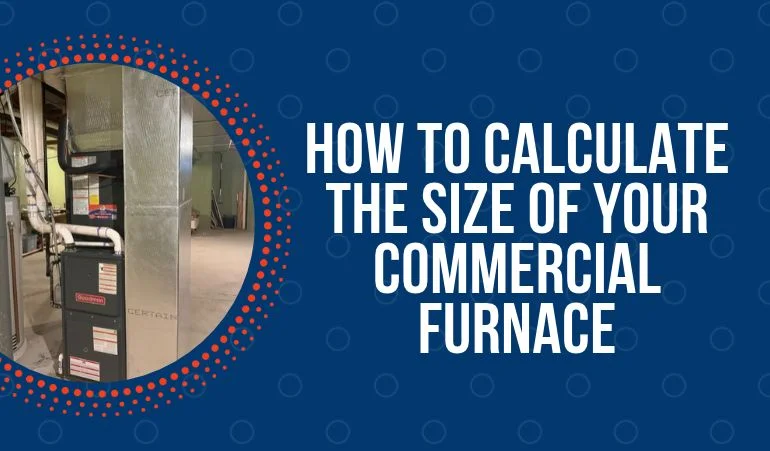
Commercial furnace installation in Pennsylvania is a significant investment that needs proper planning and assessment before finalizing a brand, model, equipment, size, and efficiency. The best process to choose the right furnace for your commercial property is to calculate the right size based on the square footage of the property, building symmetry, and number of occupants inside. If you follow a shortcut and choose equipment based on guesswork or assumptions, you are indirectly inviting major headaches ahead. Lehigh HVAC technicians report that mismatched size caused around 30% of short-cycling issues in HVAC systems in New Jersey by the end of 2026. The same applies to furnaces.
This blog covers a step-by-step process you can follow to calculate the right size of your commercial furnace. While it follows ACCA Manual-N guidelines and ASHRAE transfer function methods, it is created specifically for commercial HVAC systems in Pennsylvania.
Commercial buildings gain a lot of heat daily coming from heavy equipment, occupant loads, and lighting, which is not usually a significant factor in residential buildings. That’s why commercial properties require a commercial load calculation standard to find out the right equipment size.
Here are the two standard approaches you can follow.
ACCA Manual-N
It is a standard procedure for calculating block and room loads in commercial and light-commercial spaces.
ASHRAE Transfer Function Method (TFM)
It is used for calculating complex heat flow rates in larger commercial spaces.
Before proceeding with the actual calculations, gather accurate details about your business property. Here are some of the details you need to gather.
Square Footage & Ceiling Height
It includes the total volume of the conditioned space. It is important because commercial spaces often feature high ceilings that increase cubic footage.
Climate Zone
It includes local outdoor design temperatures that typically range from mild Zone 1 to freezing Northern zones, depending on the region in Pennsylvania you live in.
Building Envelope
It includes insulation R-values for walls, roofs, and floors, plus window types and solar orientation in the business property.
Internal Loads
It includes the number of occupants, the type and quantity of lighting, commercial kitchen appliances, and the heat output of machinery.
Ventilation & Air Changes
It includes fresh air intake requirements that are mandatory by local municipalities in Pennsylvania.
The next step is to calculate input fuel requirements and the output required in the property.
Heating Output (BTU/hr)
It is the amount of heat the furnace must deliver to your commercial space to keep indoor temperature within a comfortable range.
Annual Fuel Utilization Efficiency (AFUE)
It is the standard used to measure the efficiency of commercial furnaces. The higher the AFUE, the better the furnace operates and the more fuel it conserves while operating.
You can calculate the annual fuel utilization efficiency of a commercial furnace by dividing the required heating output BTU by the furnace's efficiency rating.
Here is the formula you can use.
Required Input BTU=Calculated Output BTUAFUE Decimal
Preventing general rules of thumb is essential, as it can lead to mismatched sizes. Many online furnace size calculators are in use, and multiple commercial customers use them to make final decisions. This option is not a wise choice. We don’t oppose using such calculators. Rather, we ensure you don’t rely on them blindly until a certified HVAC contractor confirms the same thing.
A single blind decision can cost you thousands of dollars. Instead of relying on street technicians or choosing the furnace based on your assumptions, consult a certified engineer. If your commercial facility is anywhere in Pennsylvania, you can contact Lehigh HVAC for expert assistance from initial site survey to equipment selection, sizing, risk-free installation, and post-installation support. Discuss further details at 484-961-7044.