Contact Info
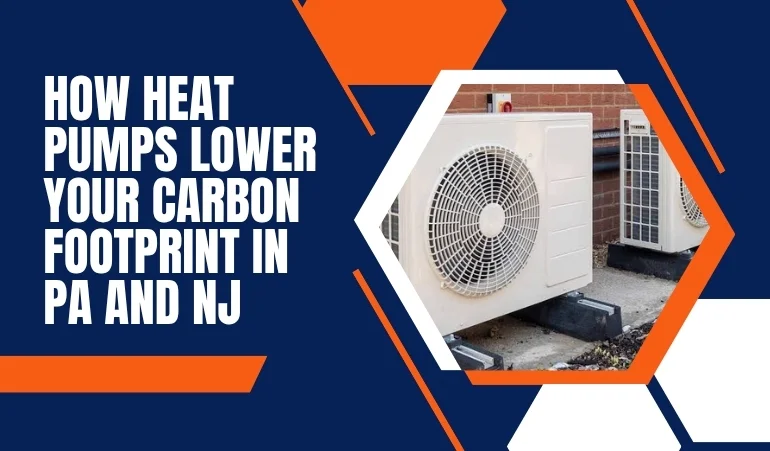
HVAC systems are essential for every space where humans live, work, or spend time. But increasing HVAC demands, specifically of those operating on fossil fuels, are a nightmare for the climate. On one hand, they are depleting natural resources. On the other hand, their emissions lower air quality. The carbon footprint is already touching its unbearable levels. If it is not controlled, it can soon make life uncomfortable for the creatures. To reduce the carbon footprint, manufacturing companies have introduced heat pumps as a powerful alternative for traditional heating and cooling systems.
Heat pumps operate on modern technology. They are popular for energy efficiency, year-round comfort, and extraordinary performance. Another benefit is that they reduce the carbon footprint compared to traditional HVAC systems. In this blog, we will understand how heat pumps support green planet initiatives and reduce the carbon footprint.
Let’s understand how heat pumps are different from traditional HVAC systems. At its core, a heat pump operates on electricity instead of burning fossil fuels. It uses naturally occurring heat resources such as ambient air, water bodies, and the ground. They are highly efficient, and that’s why they can generate several units of heat output by consuming a little input of electricity. This duo of efficiency and reliance on electricity makes these systems environmentally friendly, leading to a reduced carbon footprint.
Heat pumps reduce greenhouse emissions in many ways. Here is a brief overview of some of their benefits.
This is the direct benefit. As heat pumps don’t rely on oil, gas, and propane, they don’t leave harmful combustion gases in the environment. The electric energy that heat pumps use is not involved in any combustion process. Plus, the byproducts of electric heating and cooling are not as hazardous as those in traditional systems.
Heat pumps rely on renewable energy resources. The popular ones among them include wind, water, and solar energy. There is no fear of depletion of these resources. It means no matter how much the demand for these systems increases, they won’t have direct greenhouse gas emissions in the environment. Additionally, the use of these resources is relatively clean and supports healthy environment initiatives.
Even if your HVAC is associated with the grid, which uses fossil fuels as the primary source, heat pumps still have a lower carbon footprint. This is because these systems themselves have no emissions. Department of Energy studies state there is a 30 to 60% reduction in the household carbon footprint just by switching to heat pump models for the household heating and cooling systems.
Heat pumps are much more efficient than traditional oil- or gas-based systems. They deliver up to 3 or 4 units of output energy after consuming one unit of energy. This is a double benefit. It results in lower energy bills and preserves natural resources .
Though heat pumps are highly efficient and environmentally friendly, there is not a 100% win-win. There are also some challenges and obstacles associated with these systems.
Standard air-source heat pumps have higher upfront costs compared to any standalone system such as an air conditioner, furnace, or boiler. This makes these systems rarely affordable for average-income families. The costs can, however, be covered through rebates and energy upgrade incentives through local utilities and state-level programs.
When the temperature in winter drops below the freezing point, these units struggle to maintain the desired warmth. You may need to add a compensatory mechanism or an additional heater to compensate for the lack of warmth.
As heat pumps rely on electrical energy, they lack the freedom associated with oil- and gas-based appliances. The moment the power drops, the system stops immediately. If multiple houses in a region are operating heat pumps simultaneously, there is a risk of high load on the local grid.
Heat pumps have gained popularity for being extraordinarily energy-efficient, environmentally friendly, and offering year-round comfort at reasonable energy bills. These are the advantages for both the environment and the customers, as it has higher output and reduces the carbon footprint. It has some challenges as well, including higher upfront costs, lower performance in extremely cold weather, and reliance on electricity.
If you want heat pump installation, repair, or replacement services, choose Lehigh HVAC, as we are both reliable and affordable. Feel free to discuss more.