Contact Info
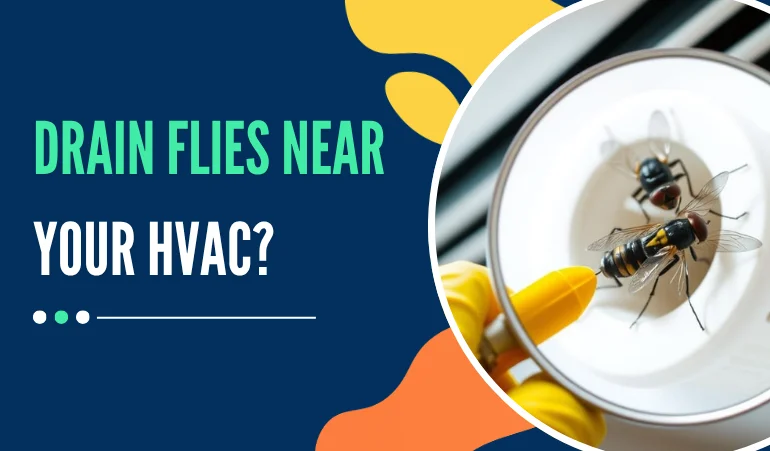
Summer in Pennsylvania or New Jersey, and the humidity is at its peak. Your air conditioner is standing strong against both the temperature and the moisture. Well, everything is good. Suddenly, you start seeing tiny flies coming from your vents. Your HVAC system might be harboring them.
These tiny, uninvited guests indicate some issues in your condensate drain lines. There could be standing water, fungal growth, and clogged drain lines. These are not a good sign for your HVAC system's health, at least.
In this blog, we will discuss what drain flies are, why they grow in HVAC drain lines, how to get rid of them, and tips to prevent them in the future.
HVAC drain flies are small, fuzzy, dark-colored insects with an average length of 1/16 to 1/4 inch. They find their best shelter in damp, moist environments and multiply rapidly. Their food comes from organic matter buildup, and they are often seen hovering near indoor vents. Although harmless directly, these flies are extremely annoying and often a sign of standing water in drain lines.
As mentioned earlier, these tiny insects are often found in damp, moist places with organic matter. In your house or commercial facility, they can be found in:
Drain flies are attracted to moisture, mold, and organic sludge. If your HVAC system offers this environment, tiny flies quickly start breeding there. Here are some common reasons behind this growth.
Clogged Drain Lines: When drain lines are blocked, water accumulates in the pan. It provides a sludge-filled habitat for larval growth.
Biofilm Development: Organic matter and dust collected in damp areas break down and make a gelatinous film, or biofilm, on surfaces, which is food for larvae.
Gaps in Ductwork: Poorly sealed ductwork or gaps left due to faulty installation can create a moist environment and attract insects.
Neglected Maintenance: When you overlook cleaning the drain lines, filth and organic debris accumulate and promote infestation.
To wipe out insects, you need a two-step approach. First, eliminate the existing colonies. Second, prevent future growth. With the right cleaners and precise actions, you can restore your clean, insect-free drain lines. Here is what you have to do.
Turn Off the HVAC Unit: Turn the system off. It prevents electrical hazards and damage to small parts. Alongside, it prevents any safety hazards.
Locate the Drain Line: Find the PVC drain line. Usually, it will be located near the outdoor unit.
Clean the Drain Line: Use a shop vac to remove the standing water, larvae, and particulate matter.
Flush the Drain Line: Prepare a 50/50 mixture of warm water and vinegar. Pour it directly on the drain line to break down organic slime. You can also use an enzyme-based cleaner for this purpose.
Clean the Drain Pan: Clean the condensate pan completely with soap and water. It will remove sludge and egg deposits.
Use Traps for Adult Flies: Prepare a mixture of apple cider vinegar, a drop of dish soap, and warm water in a shallow dish. Place it near the HVAC unit to trap adult flies.
Use a brush: Remove the slime inside the pipe physically with a cleaning brush.
Regular Cleaning: Clean the drain lines periodically with vinegar and water.
Control Humidity: Maintain normal humidity levels to discourage insect breeding.
Check for Leaks: Inspect ductwork for leaks, cracks, and gaps. If found, seal them immediately, as they cause a water buildup.
DIY methods are useful when the infestation is new. You can use chemicals like vinegar or enzymatic cleaners, and there is a maximum chance that you'll wipe them out. Here is when to do it yourself.
Using an enzymatic cleaner and flushing with boiling water often breaks the breading cycle. Try it first.
Call a professional when you can't handle it via DIY. Here is when calling a professional makes sense.
Drain flies are often seen around HVAC vents when there is standing water and organic debris buildup. These tiny flies can be very annoying and sometimes accompany foul odors from the unit itself. To eliminate them, you need to clean your drain lines, drain pan, and ductwork. Ensure regular maintenance to prevent them from breeding again in your HVAC appliances.
For any HVAC issues, contactLehigh HVAC. Our team will provide you with a professional service on the same day and at an affordable price.