Contact Info
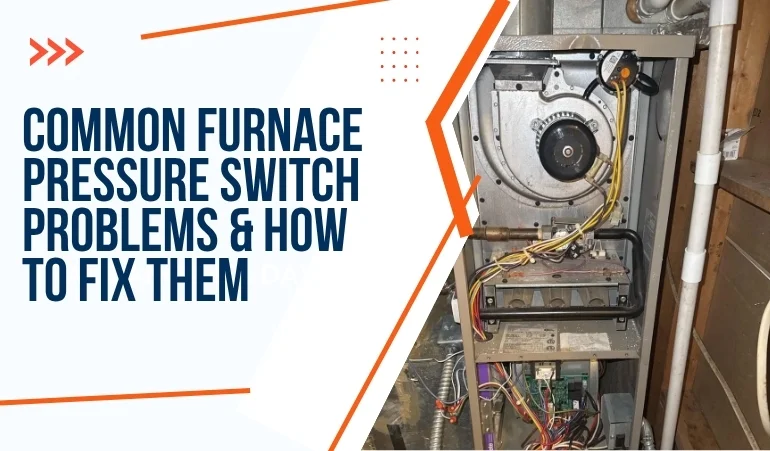
If your NJ home’s furnace doesn’t start at all, trips the circuit breaker, or turns off repeatedly after running for 30 to 60 seconds, a pressure switch could be the culprit. This tiny safety device is intended to keep the furnace working safely and efficiently. But if the switch is faulty, it can stop the heating process, and the system will be nonfunctional.
Having the right set of information about this small yet crucial component can prevent your family from the next inconvenience. Before the technician arrives, you can take steps to prevent major damage and prepare the system for fast repairs. This blog educates New Jersey homeowners about common furnace pressure switch problems and how to fix them.
A furnace pressure switch is a vital safety switch in both oil and gas furnaces. Its main function is to detect and ensure proper airflow before the burner ignites. The secondary, and even more important, function is to act as a gatekeeper and prevent hazardous carbon monoxide and exhaust fumes from entering your living space. When the furnace is off, this switch is open. It closes when a heating signal arrives, and there is a complete vacuum. If the vent pipe is blocked, the vacuum is not achieved, the pressure switch opens, and the heating process doesn’t start.
A furnace pressure switch usually fails to close due to external blockages, blocked tubing, or a failing inducer motor. The solution is in correcting the cause. If the damage is severe, replacement is needed. The following are some common pressure switch problems that we frequently encounter while working on Lehigh HVAC projects in New Jersey.
If the exterior pipe is blocked due to leaves, snow, ice, or insect nests, the system fails to create a vacuum, and the result is a failing pressure switch.
Dirt, grime, or calcium buildup can clog the barbed port where the rubber hose connects to the furnace. The result is the same: the pressure switch fails to close and initiate the heating process.
Condensation can block the condensate drain line due to water droplets and prevent the pressure switch from closing. This issue is more commonly observed in high-efficiency units.
This happens when the inducer motor doesn’t spin at the required speed to pull out the negative pressure from the space.
The right approach depends on identifying the underlying cause and fixing it. If it is due to a clogged drain line or buildup, a thorough cleaning can likely restore normal heating system operation. But if the component has seen its good days or there are visible signs of cracks and damage, a replacement is likely the right deal.
Here is a step-by-step approach Lehigh HVAC recommends for fixing such problems.
This is the first and most essential step to prevent accidents and safety hazards. Shut off the system at the circuit breaker level before touching any components.
Check the outside exhaust and intake terminals for any obstructions and dirt buildup. Wipe away all the buildup you find. Using a water hose, even with gentle pressure, is strictly prohibited for cleaning it.
Pull off the sensing tube and look for signs of cracks, holes, or water inside. Blow it out or replace it if it is old and in compromised condition.
Take a small, stiff piece of wire to clean the metal or rubber port by gently inserting it and removing the internal buildup.
Check the functionality with a multimeter. Inspect whether the pressure switch closes and shows continuity when the inducer motor turns on.
If your furnace struggles to keep your home warm, don’t wait for a complete failure. Schedule a repair service with Lehigh HVAC. For further information, contact us at 848-361-4707.