Contact Info
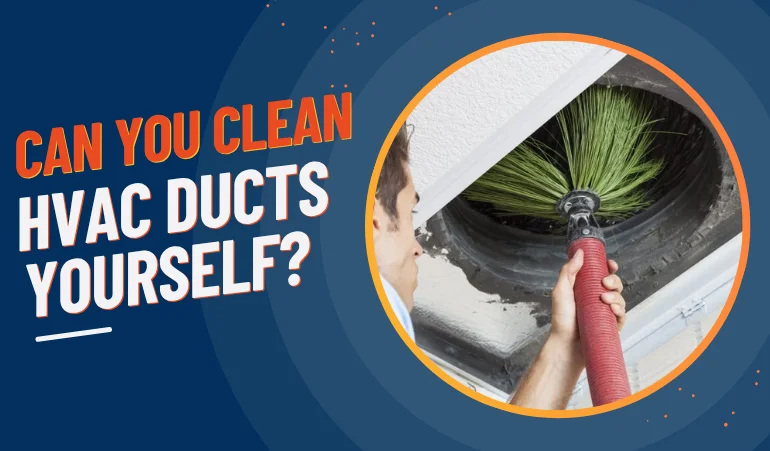
Over time, HVAC ducts accumulate dirt, dust, and small particles. This buildup can compromise indoor air quality, reduce efficiency, and result in faster component wear. The solution lies in professional duct cleaning with precise technique and state-of-the-art instruments. Many homeowners and facility managers try DIY cleaning and find it useful. It doesn't mean a DIY would yield the same results in every scenario. The cleaning strategy varies depending on the reach, and so do the results.
In this blog, we will disclose the actual picture of whether you should clean your HVAC ducts yourself or hire a professional. And how to finish it meticulously if you handle it yourself.
HVAC air ducts are a network of conduits used to distribute, supply, or remove air from a heating, ventilation, and air conditioning system. They are usually made of steel, aluminum, or flexible plastic. As air continuously circulates through these channels; dirt, dust, and pet dander slowly accumulate there. This buildup needs to be removed regularly. Otherwise, the obstruction in the air puts pressure on HVAC performance and leads to major breakdowns.
HVAC duct cleaning is essential for improving air quality and maintaining optimal equipment efficiency. It removes allergens and contaminants from the space and promotes a healthy lifestyle. At Lehigh HVAC, we have noticed reduced allergic complaints after timely HVAC duct cleaning in the Pennsylvania and New Jersey regions. Here are some duct cleaning benefits.
What If You Neglect It
If you neglect regular HVAC duct cleaning, you are inviting residential HVAC repairs orcommercial HVAC repairs directly. Dirty and clogged ducts obstruct the airflow, which puts pressure on the vital HVAC components such as the compressor, blower motor, heat exchanger, etc. The health concerns and the fire hazard due to the buildup are additional. Here is what else it causes:
The short answer is yes. You can clean your HVAC ducts, but only if there are no safety hazards associated, and it is limited to accessible parts, such as supply and return vents. You also need the right tools and skillset to accomplish the task efficiently. This is the surface-level cleaning only, and it also includes several benefits. For example, it can reduce visible buildup, improve airflow, and also increase the efficiency to some extent.
This duct cleaning only makes sense as part of the routine maintenance. For complete, deep duct cleaning, you need a professional service instead. Only a professional can handle those critical components and clean them efficiently without any damage. Trying deep cleaning yourself may risk severe damage to the ducts or missing complex issues such as leaks and mold growth.
DIY duct cleaning is effective to improve airflow when there is an obstruction. This simple maintenance, comprising basic equipment, can sometimes completely fix the problem. But it doesn't mean that DIY is effective in every case. Here are some conditions in which this kind of duct cleaning gets things right.
Accessible Surface Cleaning: You can effectively clean registers, vent covers, and the reachable areas using a Shop-Vac with a brush attachment.
Surface Debris Removal: You can successfully dislodge dust and loose debris in your ductwork within accessible areas. Using dryer vent cleaning brushes attached to a drill is recommended to accomplish this.
Improved Airflow: Airflow is significantly improved when you remove buildup from your vents and ductwork.
Cost-Effective Maintenance: You can prevent the high costs of professional cleaning services with this simple, DIY cleaning practice.
DIY duct cleaning fails or causes damage when tried with unsafe practices, in inaccessible areas, or when safety hazards are involved. Here are some pitfalls.
Contaminant Spreading: If you use a standard vacuum without negative air pressure containment, you may push debris further inside instead of removing it safely. This buildup will then be blown through the vents.
Structural Damage: DIYers often use harsh cleaning agents and brushes that can damage the sensitive components. For example, you are at risk of developing punctures, tears, and cracks inside the ductwork and insulation. If this kind of severe damage happens, you might need new HVAC ductwork installation.
Neglecting Key Components: There are certain critical components, such as the return air boot, trunk lines, and the air handler. These parts are often neglected during a do-it-yourself method. However, they demand thorough cleaning.
Safety Hazards: Inexperienced cleaning practices can lead to several safety hazards. For example, it can promote mold growth due to introduced moisture, wiring damage, and contaminant dispersion into the living space.
Ineffective Tools: DIYers often lack a specialized toolkit. As a result, they may remain limited to superficial cleaning only. Some sharp-edged tools can damage the ductwork linings, leading to leakage issues.
|
Category |
Where DIY Gets Right |
Where DIY Gets Wrong |
|
Reach |
Cleaning register grates and vent covers. |
Reaching deep into the main trunk lines. |
|
Equipment |
Using household shop vacs for loose dust. |
Lacking high-powered negative pressure. |
|
Cost |
Zero labor costs; uses existing tools. |
Potential for expensive duct damage. |
|
Visible Debris |
Removing pet hair and lint near openings. |
Clearing microbial growth or heavy clogs. |
|
Frequency |
Good for monthly touch-up hygiene. |
Insufficient for once-a-decade deep cleans. |
|
Mess Control |
It's easy to vacuum small localized areas. |
Pushing dust further into the system/home. |
|
Inspection |
Spotting visible mold or rust near vents. |
Identifying leaks or blockages in hidden runs. |
DIY is good for light cleaning. For complex, deep cleaning, hiring a professional is recommended. The best practice, however, is to mix both. Use DIY cleaning as part of your regular maintenance plan. In the meantime, get your systems deep-cleaned by professionals periodically. This hybrid approach ensures you enjoy high performance and reliable operation of your HVAC system.
Call Lehigh HVAC for professional duct cleaning services.