Contact Info
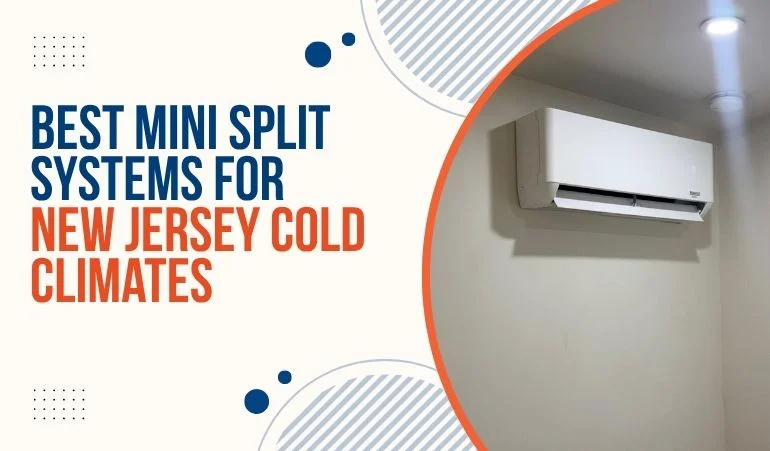
In mid-winter in New Jersey HVAC systems have to perform at their peak. Many outdated systems run into issues. Some lower-capacity models leave families on cold winter nights without warmth. Even slightly mismatched-size units struggle to keep the place at the desired temperature. To make sure such a nightmare never comes true for you, you need to choose the best HVAC system according to your residential HVAC in Nj or commercial HVAC in NJ space needs.
While mini-split systems are widely used and preferred in this region, choosing the right ductless system can be the best choice. This guide explains the best mini-split options for New Jersey's winter climate.
Before we get into the details, here is what we think are the top options for New Jersey winters. These are the systems compared for 12,000 BTU, which is generally an ideal solution for spaces between 400 and 600 square feet. For larger homes or spacious commercial landscapes, choose systems with higher BTUs.
System |
SEER2 |
HSPF2 |
Low-Temp Heating |
Price |
|
Mitsubishi M-Series FX Hyper-Heat |
Up to 29.9 |
Up to 12.4 |
Down to -22°F |
$3,159 |
|
Fujitsu AIRSTAGE Orion XLTH |
30.5 |
12.7 |
Down to -15°F |
$2,908 |
|
Daikin AURORA |
Up to 21 |
Up to 10.5 |
Down to -13°F |
$2,290 |
|
Bosch Climate 5000 Gen 4 Max |
25.4 |
10.5 |
Down to -22°F |
Quote-based |
|
MRCOOL DIY 5th Gen Hyper Heat |
23.5 |
10.0 |
Down to -22°F |
$2,532 |
Prices are checked from current online listings as of September 2026 and can change. Installation, electrical work, permits, line-set modifications, and other labor are not included.
This system is designed exclusively for homes that are located in extremely cold areas with freezing temperatures and snowfall. They work quite well in sub-zero winters, as they use the MUZ-FX12NLHZ outdoor unit with the MSZ-FX12NL indoor unit.
Cooling capacity: 12,000 BTU
Heating capacity: Up to 23,500 BTU
SEER2: 29.9
HSPF2: 12.4
Heating operation: Down to -22°F
Voltage: 208/230V
Refrigerant: R-454B
Installation: Professional
Warranty: 10 years with registration
It is another good option for cold New Jersey climates. It uses the ASUH12KZAS indoor unit and the AOUH12KZAH1 outdoor unit. Fujitsu rates the system for heating down to -15°F. It also has a built-in base pan heater that prevents condensate from freezing. The current Orion XLTH also uses R-32 refrigerant and inverter technology.
Cooling capacity: 12,000 BTU
Rated heating capacity: 16,000 BTU
SEER2: 30.5
HSPF2: 12.7
Heating operation: Down to -15°F
Voltage: 208/230V
Refrigerant: R-32
Indoor sound: As low as 23 dB
This unit is available for standard heating; however, cooling is also available in certain capacities. Daikin states that AURORA can maintain up to 100% heating capacity at 5°F and operate continuously down to -13°F. The system also uses inverter technology and R-32 refrigerant.
Cooling capacity: 12,000 BTU
SEER2: Up to 21
HSPF2: Up to 10.5
Heating operation: Down to -13°F
Heating capacity: Up to 100% at 5°F
Refrigerant: R-32
Compressor: Swing inverter
It is another worth-considering option for New Jersey winters. It uses R-454B refrigerant and requires professional installation for smooth operation. Various clients at Lehigh HVAC have reported reliable performance of these models at sub-zero winters.
Cooling capacity: 12,000 BTU
SEER2: 25.4
HSPF2: 10.5
Heating operation: Down to -22°F
Voltage: 230V
Refrigerant: R-454B
Installation: Professional
Type: Single-zone
This one takes a different approach. Unlike the dealer-installed Mitsubishi, Fujitsu, Daikin, and Bosch systems above, MRCOOL designed this line around homeowner installation using its pre-charged Quick Connect line set.
Cooling capacity: 12,000 BTU
Heating capacity: 12,000 BTU
SEER2: 23.5
HSPF2: 10.0
Heating operation: Down to -22°F
Voltage: 208/230V
Refrigerant: R-454B
Line set: 25 feet included
Maximum coverage: Up to 550 sq. ft.
Wi-Fi compatible
Energy Star certified
Here in the table below, we have put these units side-by-side. Understand features and choose the right one.
Feature |
Mitsubishi FX |
Fujitsu Orion XLTH |
Daikin AURORA |
Bosch Climate 5000 |
MRCOOL DIY |
|
Cooling |
12,000 BTU |
12,000 BTU |
12,000 BTU |
12,000 BTU |
12,000 BTU |
|
SEER2 |
29.9 |
30.5 |
Up to 21 |
25.4 |
23.5 |
|
HSPF2 |
12.4 |
12.7 |
Up to 10.5 |
10.5 |
10.0 |
|
Lowest heating temp. |
-22°F |
-15°F |
-13°F |
-22°F |
-22°F |
|
Refrigerant |
R-454B |
R-32 |
R-32 |
R-454B |
R-454B |
|
Installation |
Professional |
Professional |
Professional |
Professional |
DIY-oriented |
|
Approx. equipment price |
$3,159 |
$2,908 |
$2,290 |
Quote |
$2,532 |
Call Lehigh HVAC for professional mini-split installation regardless of which unit you choose. Contact us at 848-361-4707 for a site survey or service bookings.