Contact Info
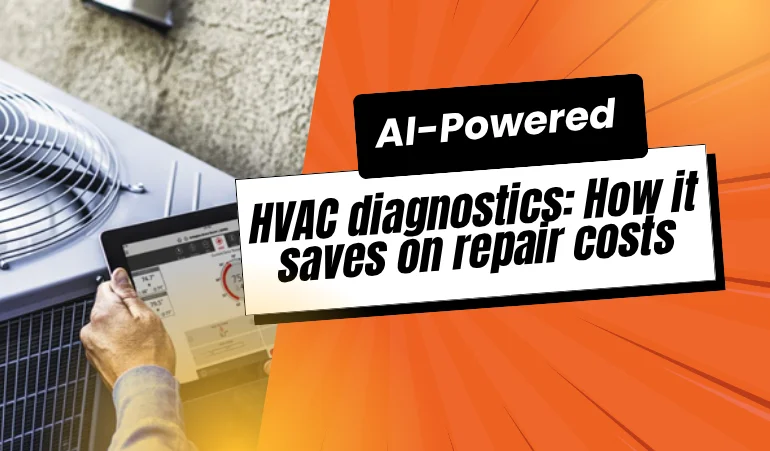
In 2026, HVAC systems will not be limited to thermal comfort. They are responsible for indoor air quality, humidity control, and maintaining a comfortable living space. When broken, your comfort and health are both at risk. Unfortunately, most HVAC systems in Pennsylvania and New Jersey still rely on manual, calendar-based inspections. It can leave you uncomfortable at unexpected times and push you towards costly HVAC repairs.
With the evolution of AI, there is a complete change in HVAC inspection. IoT sensors, machine learning algorithms, and AI-powered diagnostics can now quickly figure out complex anomalies harboring in your residential or commercial HVAC systems. This not only brings accuracy; it also accompanies cost-effectiveness. A little investment today can prevent you from major repairs tomorrow.
In this blog, we will learn about AI-powered HVAC diagnostics and how they can help you reduce repair costs.
AI systems use multiple components and learning models directly attached to your heating or cooling appliance. These systems closely monitor your preferences, climate strain, and energy consumption. When there is an unusual interruption in this normal pattern, these components send an immediate signal.
The following are some worth mentioning components in this flow.
Sensors are attached to the core components such as compressors, fans, coils, and chillers. These sensors monitor machine performance, including temperature, pressure, and motion. As a result, they generate a massive stream of real-time data. This date is directly fed into machine learning models, which use it to detect anomalies, predict future interruptions, and provide recommendations to improve appliance performance.
Installing IoT sensors in HVAC systems can be simple to complex. Residential HVAC systems cost $120–$500 with only minor modifications. Commercial HVAC units cost $3,000–$24,000+ with some complex retrofitting procedures.
Cloud processing is the next step in AI-powered diagnostics. It refers to remote, internet-based analysis of real-time data for predictive maintenance and anomaly identification. It detects performance degradation, increased energy consumption, and reduced downtime. The installation costs vary widely. They are around $6 to $10 for simple retrofits. However, comprehensive systems may cost $400–$15,000.
Machine learning models set a baseline of operations for different components. For example, it establishes relationships between compressor current and temperature, suction pressure and load, and vibration frequency and bearing wear. Machine learning models then detect variations to this normal pattern and identify malfunctions. They also predict future issues based on the current operations and an estimated timeframe for which a particular issue will arise.
After detecting patterns, anomalies, and malfunctions, the AI systems generate an actionable work order mentioning the possible failures, estimated time to failure, and recommended action plan. For example, it can provide you with a complete list of what to do first and which actions to take later on. It shows a clear picture of HVAC maintenance and repairs to technicians.
AI can detect what human eyes could miss. It relates various components to each other, builds relationships between them, and detects any variation from the normal pattern. In general, AI can detect:
AI analyzes patterns in superheat and subcooling data. As a result, it finds anomalies in the refrigerant, such as refrigerant leaks, less charging, or overcharge issues. It can also tell you the precise time after which your system will completely stop its operations.
AI monitors factors such as motor winding temperatures, electrical current draw, and vibration frequencies. As a result, it identifies potential issues in compressor performance, such as wear and tear, energy consumption, and valve failure. It makes you ready to take prompt action before failure happens.
AI compares real-time temperature, humidity, or sensor readings against digital twin models. As a result, it identifies issues such as drifting calibrations or poor sensor control. This precise diagnosis helps you fix this issue with a simple recalibration instead of spending a huge amount on complete HVAC inspections and repairs.
AI calculates the differential pressure between filter banks and coils over time. When this pressure goes abnormal, or there is an efficiency drop due to these components, it immediately shows red flags. Not limited to this, it also gives a list of recommended actions to get this issue fixed.
AI analyzes pressure-independent control valve drift, fan speeds, and airflow rates. As a result, it identifies damper faults and misbalanced airflow. This precise diagnostics helps you to replace your air filters, clean dirty coils, or remove obstructions in airflow, whatever is needed, instead of a complete HVAC checkup and complex repairs.
AI monitors overall energy consumption (kWh) compared to occupancy and external weather data. As a result, it identifies issues such as equipment using more than required energy due to component malfunctions, reduced efficiency, and system operating at inefficient operating sets.
AI systems provide real-time data-driven insights for better predictive maintenance, problem detection, and prioritizing actions. It helps prevent emergency repair calls, higher operational costs, and unexpected breakdowns. Here are some advantages of implementing AI-powered diagnostics.
Implementing AI in your HVAC systems is the future of the HVAC industry. AI analyzes your system's normal operation, establishes relations between different components, and figures out even subtle variations instantly that humans can otherwise miss. AI also provides real-time updates about the health of your comfort appliances and suggests the best course of action to fix them. In short, AI-powered HVAC diagnostics can reduce emergency breakdowns, increase efficiency, and help in faster, accurate repairs.