Contact Info
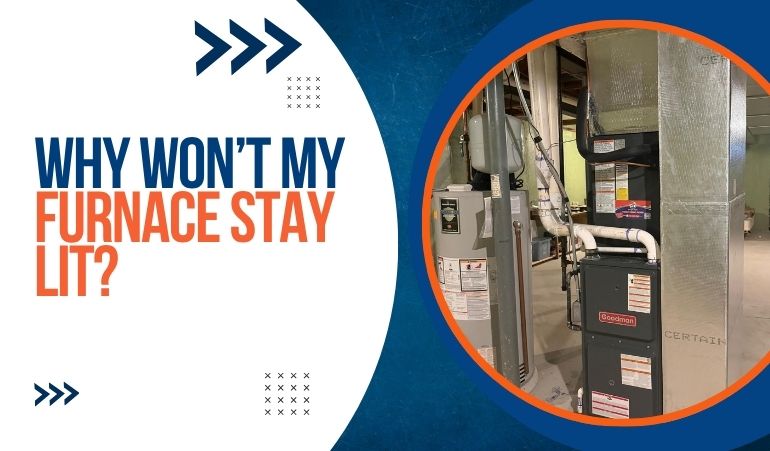
A furnace can stop working due to various issues. There may be an issue in the heat exchanger. Or the blower motor might be faulty. The same is the result: the unit has just seen its best days. Sometimes, the issue is not with the critical components. Rather, it is the components that we usually give the least importance: the ignition chamber. Here in this post, we will discover the common reasons why your furnace won’t stay lit sometimes. It also covers the common fixes to this problem.
Before specifically diving into the causes of why a furnace won’t stay lit, let’s understand how a furnace works normally. Here is the process in simple terms.
The thermostat detects a drop in room temperature and signals the furnace to turn on
The draft inducer fan turns on to clear remaining gases and ensure safe airflow
The igniter or pilot light ignites the gas entering the burner assembly
The flame sensor confirms the presence of a flame to keep the gas valve open safely
The heat exchanger warms up as the flames burn inside it
The blower motor pushes air over the hot heat exchanger and distributes warm air throughout the home
The system shuts down automatically once the thermostat registers that the desired temperature has been reached
If something doesn’t work accurately during this process, the furnace stops working as intended. If the problem is small and doesn’t involve critical components, you can fix it yourself. But if the issue is in critical components, a professional heating repair service is required to fix the cause.
The flame sensor is a very critical component of a furnace. It detects the flame and allows the furnace to generate and distribute heat, as explained in the normal working mechanism. If the flame sensor is clogged, it can’t detect the flame. The result is that the furnace won’t stay lit, even if every other component is doing its job.
Modern furnaces come with safety features. This means if the furnace temperature increases beyond limits, that safety switch is triggered, which then blocks the furnace operation. This exact mechanism works when, for some reason, the furnace overheats. The safety switch doesn’t allow normal operation until you fix the primary cause that overheats the unit.
Thermostats send signals to the furnace’s core components to generate and distribute heat and to stop operation. These signals are triggered by the current room temperature. When the temperature is lower than the required range, the thermostat directs the control panel to start fuel ignition and send warm air into rooms. When the temperature is within the required range, this process stops. If the thermostat is itself faulty and doesn’t measure the actual room temperature, it forces the system to work continuously regardless of the current temperature inside rooms. The result is an overheating system, a safety switch trigger, and system shutdown.
With attention, the right strategy, and a meticulous approach, you can fix many issues yourself. For a complete solution, call a licensed company, such as Lehigh HVAC. Here is what you can try to fix yourself.
Check and replace dirty or clogged air filters to restore proper airflow
Verify that the thermostat is set to heat mode and set above the current room temperature
Inspect the gas supply valve to ensure fuel is properly reaching the furnace
Gently clean soot or residue buildup off the flame sensor rod
Ensure all air vents and return registers throughout the home are wide open and unblocked
Reset the circuit breaker to clear temporary electrical trip issues
Contact a professional when basic troubleshooting fails, or the system involves some safety issues. The professionals bring with them the right equipment and tools and, beyond that, the experience and knowledge. In a commercial furnace repair service, every component is inspected, repaired, and verified, so you can enjoy the comfort you deserve. If you are anywhere in Pennsylvania, you can call Lehigh HVAC with confidence to fix your heating issues. Book an appointment at 484-961-7044.