Contact Info
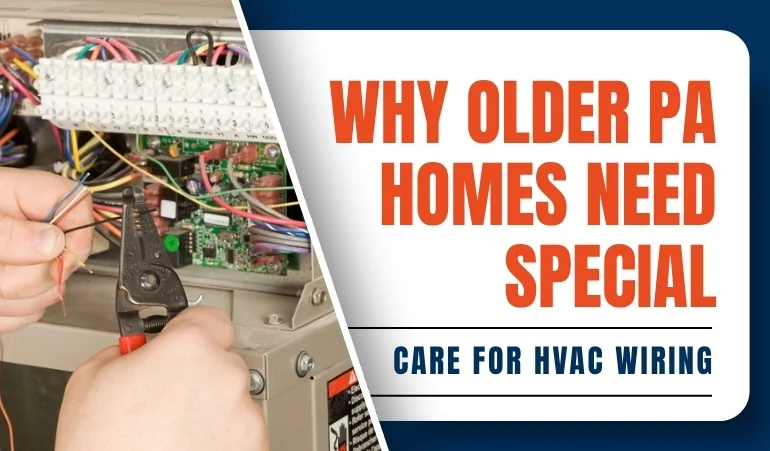
When we talk about HVAC, we are not just considering the equipment responsible for cooling or heating our homes. We are also considering associated components that are somehow integrated with the HVAC, such as plumbing and electric systems. An electrical system is especially of great importance, as without a continuous and sufficient electrical supply, none of the components perform smoothly. A sudden electrical surge can render your complete HVAC unit non-functional.
That’s why electrical upgrades and HVAC retrofitting go hand in hand. What happens in older PA homes is a different picture. Older PA homes are built around the traditional architectural styles and building symmetries. The electrical systems are also according to traditional standards and are not quite compatible with the modern HVAC standards. This is why they need special care for HVAC wiring. And in this blog, we will be discussing all that stuff.
As we mentioned earlier, older PA homes are built around traditional architectural styles. The circuit boards, wires, and other electrical components were all produced according to the standards of that time. Modern HVAC systems demand highly sophisticated electrical networks that ensure a reliable power supply. And this is what makes it essential to provide special care for HVAC wiring in older PA homes.
Special care doesn’t mean scheduling maintenance too often or increasing the number of circuit boards. It is a well-regulated process encompassing multiple key areas. The following is a brief overview of what is included in this special HVAC wiring care.
A professional technician checks whether your electrical system can actually meet HVAC demands. This step is extremely important, as most of the systems with older wiring never meet the standards. And this is where some of their components get replaced, repaired, or just retrofitted.
The technician inspects the circuit and breaker to confirm whether the current circuit meets HVAC requirements. If there are already multiple appliances attached to the same circuit, the technician will dedicate a separate circuit for the HVAC system exclusively. The same happens if the breaker trips frequently or doesn’t meet safety standards. The technician evaluates the breaker, checking whether it ensures safety, and then takes the necessary measures. If the current breaker doesn’t look safe, it is replaced or upgraded.
Wiring is also inspected for its performance, conductivity, age, and damage. If the wiring is of low quality, poorly sized, or just damaged, it may create safety concerns and complex HVAC issues. If the wiring is not found satisfactory, it is replaced according to the appliance requirements.
Proper grounding is essential to prevent electrical shock and equipment damage. It is specifically important in older homes in Pennsylvania, where grounding is often compromised. If the technician finds the current ground unsatisfactory, he takes specific measures to improve it so the HVAC operations remain safe.
Finally, the system is checked for code compliance and regulatory requirements. The technician ensures both your HVAC system and associated electrical components are up to standard. This is what makes your old PA HVAC system functional, compliant, and safe for operations.
Not sure about your home’s HVAC wiring? Schedule a professional inspection with Lehigh HVAC, where our expert technicians analyze everything inside and out. We give you a detailed report about current wiring health and the best, affordable fixes. Get in touch with us today at 484-961-7044.