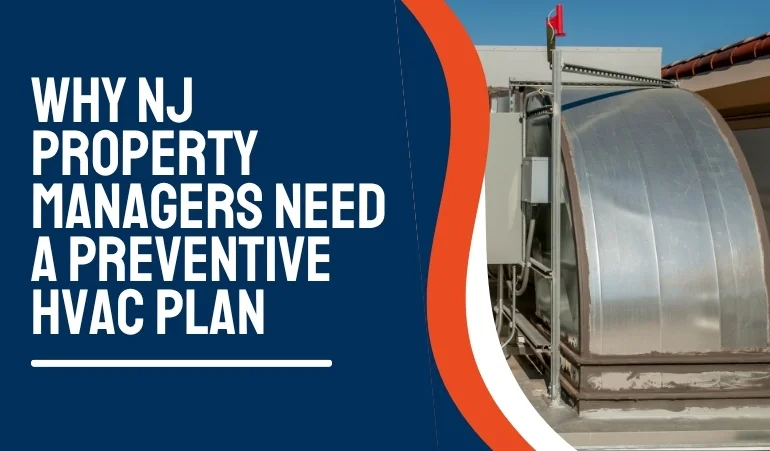
New Jersey weather puts heavy seasonal stress on HVAC systems. If not tackled the right way, this climate stress soon leads to HVAC failures, which become tenant complaints. Emergency costs and liability risks are beyond this. A preventive HVAC plan ensures
you never face these issues. It catches early problems and fixes them on time before they escalate into bigger ones. It also ensures your tenants remain comfortable through both humid summers and cold winters.
Why a Preventive HVAC Plan Matters in New Jersey
In New Jersey, HVAC is not just cooling and heating equipment. It is a full infrastructure that handles humidity, controls temperature, and maintains healthy indoor air quality. When one of them disturbs, the result is lower retention, higher operating
budgets, and dissatisfaction. A preventive maintenance plan is designed to handle these issues before they come to tenants' notice.
And this is why it prevents issues that could otherwise ruin both budget and reputation.
Benefits of Preventive HVAC Plan for NJ Businesses
For NJ businesses, a preventive HVAC plan is just about scheduled maintenance. It is a key to peace of mind. The business owners can have peace of mind, knowing
their HVAC systems are in good hands and being serviced on time.
Here are some benefits of a preventive HVAC plan for businesses.
- Lowers monthly energy consumption by fifteen to twenty percent
- Prevents costly emergency repair bills and sudden system failures
- Extends the operational lifespan of commercial HVAC assets
- Improves indoor air quality to keep tenants comfortable and healthy
- Ensures compliance with New Jersey commercial building safety standards
- Simplifies annual budget forecasting by preventing unexpected capital expenses
- Reduces after-hours service calls and resident maintenance complaints
- Provides detailed service reports for accurate building maintenance tracking
What a Preventive HVAC Plan Includes
A solid preventive HVAC plan doesn’t just cover maintenance and tune-ups. It provides 360-degree coverage, ensuring all your HVAC components and accessory supplies remain in top condition. Here is what a preventive plan from a professional agency
should look like.
- Routine air filter inspection and replacement
- Deep cleaning of evaporator and condenser coils
- Refrigerant level verification and system leak detection
- Inspection and tightening of electrical connections
- Clearing and flushing of condensate drain lines
- Lubrication of motors, bearings, and other moving parts
- Belt inspection, adjustment, and replacement
- Thermostat calibration and building automation system (BAS) setpoint verification
It is just a basic checklist. The actual steps and services can be many more, depending on the agreement you make and the property you are managing.
Get Into a Preventive HVAC Plan with Lehigh HVAC
Lehigh HVAC is a professional agency, licensed, experienced, and certified for HVAC practices in New Jersey. Our factory-trained technicians ensure you get the best HVAC services at an affordable
price and at your earliest convenience. From Edison to Plainfield and East Brunswick,
no area is far from us.
For your commercial property, we offer various flexible preventive maintenance plans depending on the property size and your budget. Contact us today if you are ready to onboard with a professional HVAC partner. The number is here: 848-361-4707.
Frequently Asked Questions:
Yes. A preventive HVAC maintenance plan helps reduce overall operating costs by identifying small issues before they become expensive repairs, improving system efficiency, and reducing the likelihood of emergency breakdowns.
Regular maintenance prepares your HVAC system for New Jersey's changing seasons through seasonal tune-ups, system inspections, airflow optimization, and adjustments that improve reliability during both hot summers and cold winters.
Preventive maintenance helps minimize unexpected HVAC failures, maintain consistent indoor comfort, and reduce service interruptions. Reliable climate control improves tenant satisfaction and encourages long-term occupancy.
Routine maintenance keeps HVAC components clean, properly lubricated, and correctly calibrated. By reducing unnecessary strain and wear, a maintenance plan helps extend the system's service life and delay costly replacements.
A preventive maintenance plan improves energy efficiency, reduces equipment downtime, prevents costly emergency repairs, and keeps HVAC systems operating at peak performance, resulting in lower utility bills and overall operating expenses.