Contact Info
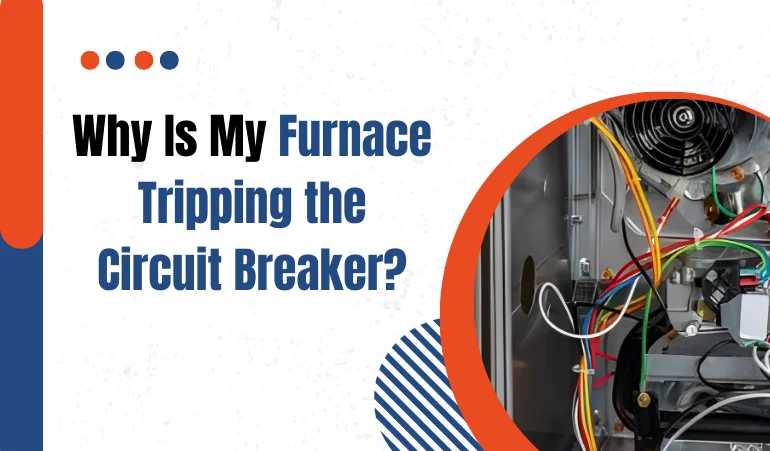
Whether you have a natural gas or an oil furnace, it needs electricity to operate. Many parts, including the blower, control panel, and thermostat, rely on electrical power to perform their functions. Multiple times, a furnace trips the circuit breaker, you reset it, and the furnace starts operating normally again. This is what you don’t take seriously. But if this happens so often, or your furnace is tripping the circuit breaker continuously, there is something wrong with your heating appliance. Apart from the mistakes during furnace installation, there are several other reasons for this particular issue. This blog is all about those causes that lead to frequent tripping of the circuit breaker.
All the guidelines, tips & tricks, and statistical figures are with respect to Pennsylvania and New Jersey, and the purpose of the blog is to educate the HVAC customers in these regions. We expect that, after scanning this guide, you’ll be able to associate tripping of the circuit with a specific fault in your furnace and take the best course of action to combat it.
Before we specifically discuss the causes of tripping circuit breakers, let’s first understand what a circuit breaker is, how it works, and when it trips. A circuit breaker is, in fact, something more than a tinny switch to block or resume the electrical output to HVAC appliances. It is a key safety element, ensuring your appliances and property remain protected when there is something wrong.
Circuit breakers are designed with unique functions. They detect abnormality in the current flowing toward associated appliances. When equipment is faulty, it consumes more electrical energy than normal. This behaviour is detected by a circuit breaker, which in turn trips and cuts the electrical supply to prevent major hazards.
There is a wide spectrum of faults in the furnace that can lead to circuit breaker trips. The few, most common of them are explained here:
When the circuit breaker falls, assess the airflow immediately. Most often, the culprit is obstructed or insufficient airflow that leads to major furnace problems, including frequent failures. A furnace relies on smooth airflow for its efficient operation. If the pathways are blocked, it puts a strain on the system. The system works harder than expected and consumes more electrical power. This cascade of issues ends in tripping the circuit breaker, which is the most evident signal.
Primary Causes: Obstructed airflow arises most often due to clogged air filters, blocked return grilles, and closed supply vents.
How to Fix It: Locate the primary source of blockage and remove the obstruction. Additionally, keep replacing air filters regularly to prevent such issues.
If the furnace and any other electrical appliance are connected to the same circuit, the chances for breaker trips increase. When both appliances run simultaneously, the electrical power requirements are not met. This results in the circuit breaker going off, no matter if you reset it.
Primary Causes: Linking multiple appliances to the same circuit where the furnace is linked.
How to Fix It: Don’t use other appliances or lights on the circuit where the furnace is running. The ultimate solution, however, lies in dedicating a separate circuit to the furnace only.
Not always is a furnace the culprit. Sometimes, the circuit breaker itself has problems. Your facility’s circuit breaker might be damaged, old, or some of its connections might be loose. Make sure to confirm the normal operation of your circuit breaker before investing a lot in costly furnace repair services.
Primary Causes: An aged, weakened, worn-out, or broken breaker with loose connections can be the actual problem.
How to Fix It: The circuit breaker should be inspected, repaired, or replaced based on the type and extent of damage.
An incorrect thermostat setting or a faulty thermostat itself can cause multiple issues, including circuit breaker trips. The thermostat sends incorrect signals to core parts, which alter the heating accordingly. If these signals are not according to temperature needs, the france stop working as a result. The same is the scenario when a control board is faulty and sends incorrect signals.
Primary Causes: Wiring issues, corroded terminals, faulty sensors, and dust accumulation can create these kinds of problems.
How to Fix It: Verify the thermostat function at lower temperatures. If it works normally, look for issues in the control board.
Many times, a single, faulty component in the furnace is creating all the mess. From a faulty boiler to vents, blower, and sensor issues, everything is somehow connected to the circuit breaker. A minor fault in any part can be reflected in tripping the circuit breaker.
Primary Causes: Seized blower, shorted igniter, worn-out capacitor, etc have up to some extent links with circuit breaker trips.
How to Fix It: Keep all components of a furnace in good condition to prevent this problem. It is also the key to staying ahead of heating repair services.
How can we conclude this post without providing you with the tips and tricks to keep such problems at bay? Here is how you can keep your furnace and circuit breaker in good condition, free from all issues.
We expect you now understand why your furnace trips the circuit breaker and how you can get it fixed. Remember, trying a DIY is not recommended at all, especially when the culprit is an electrical component or internal part of the furnace. A slight mistake from your side can jeopardize the safety of equipment, property, and human beings. That’s why, take a smart move, call your local HVAC pros, and get it fixed the right way.
In the entire Pennsylvaniaand New Jersey, Lehigh HVAC offers satisfactory HVAC services, including furnace problems. We are available for both standard service and emergency assistance. Plus, we offer 0% financing options so you can pay easily.
Contact us at 484-961-7044 when you need HVAC assistance next time.