Contact Info
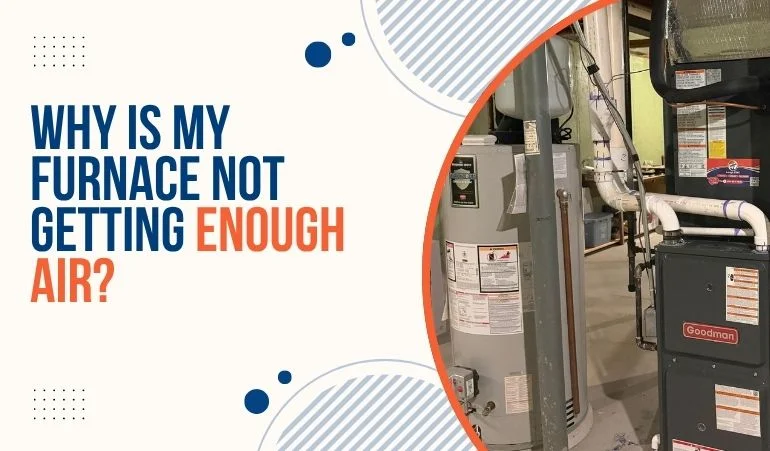
If your furnace is running but not blowing warm air as intended, it might be due to the furnace being starved of air. During normal operation, a furnace blows warm air inside the rooms and gets cold air back through return air ducts. This return air is then heated through the heat exchanger and blown back to the rooms where heat is required. When there is a blockage in the return air pathway, the furnace is unable to get enough air, which it can heat and distribute. The result is that you feel weak or lukewarm air coming from the vents. The condition is serious, as it can leave your family members in the cold while the system is running and consuming fuel. In this blog, we will uncover the reasons why a furnace is not getting enough air back and how to troubleshoot this issue.
The primary cause is any blockage in the pathway of air returning to the furnace. The secondary causes can be diverse. Here is a brief overview.
A clogged or dirty air filter blocks the air returning to the system. As a result, the system can’t receive enough air. The same happens if you use very high MERV air filters, but the furnace is not actually built for them.
Furniture, rugs, or other household articles lying very close to the return air vents create a blockage in the airflow. The result is again the same: low returning air, weak airflow, and lukewarm air for the residents.
A failing blower motor is another cause of weak returning air. It might be due to a bad capacitor, a poor or dirty blower wheel, or outdated associated components. If this is the case, the motor fails to push air freely and fails to feed the furnace with enough air.
If return ducts are narrow or undersized, or there are animal nests inside the return flex lines, the furnace fails to pull enough air from the rooms. Not limited to airflow only, it creates multiple other issues as well, including premature equipment damage and aging.
Though the actual issue can only be inspected and corrected after a professional furnace service, here are a few tips to fix this issue.
Check air filters and replace them if you notice even a slight buildup or suspect restricted airflow.
Check the MERV ratings. If found not suitable for your furnace, replace the filters and choose a compatible MERV rating.
Ensure all the supply vents and return grilles are completely open and away from obstructions.
Check if the blower is making unusual sounds. If so, inspect the faulty component and replace it.
Schedule professional furnace maintenance service at least once every year.
To make the decision easier for homeowners, here is a brief comparison of when you can fix it yourself and when you need to call a professional.
|
When to Fix It DIY |
When to Call a Professional |
|---|---|
|
Replacing dirty or clogged air filters |
Blower motor or capacitor replacement |
|
Clearing obstacles around return vents |
Modifying or resizing undersized ductwork |
|
Opening fully closed supply grilles |
Diagnosing electrical or control board issues |
|
Checking basic thermostat settings |
Annual comprehensive furnace maintenance |
If your furnace doesn’t blow enough warm air to keep rooms at a comfortable temperature, a professional service can restore normal operation on the first visit. Lehigh HVAC In New Jersey, Lehigh HVAC provides on-demand furnace repair services, so you are never left in the cold again. Schedule an appointment at 848-361-4707.