Contact Info
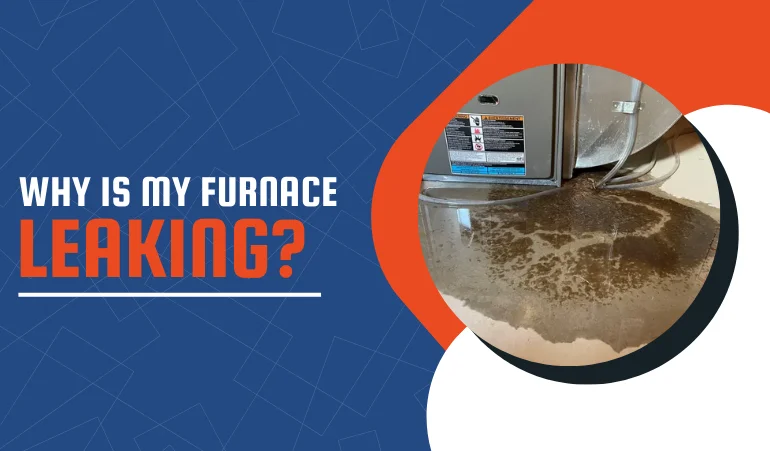
Ever noticed water leaking from your high-efficiency furnace? If it is in a small amount, there is nothing to worry about. But if water is pooling on the floor or dripping through the cabinet, there is something wrong. The reasons vary, and so do the consequences. Immediate visual inspection is recommended in this case. With this, you might capture potential issues at their initial stages. If the fault lies in some internal component, calling a local pro is a good choice.
Here is a brief overview of why your furnace might be leaking and what you can do to fix it.
You might have seen the water draining from your home’s furnace? Have you ever thought where this water comes from? This is a fantastic question.
The water from your furnace is not accidental, nor is it fed to the equipment. It is a byproduct of the condensation, a necessary step in the furnace mechanism. The furnace produces hot gases from burning fuel. These gases pass from the primary and secondary heat exchangers, where their heat is extracted. In the secondary heat exchanger, especially, the gases are extremely cooled. At this stage, gas first converts into vapor and then liquid, which is then drained outside via multiple connected drain lines.
Furnace leakage is one of the common problems for homeowners in Pennsylvania and New Jersey. Some customers consider it due to a mistake during residential furnace installation. Some others perceive it as an alarming sign that the equipment now needs a replacement. Every few miles away, the customers' point of view and myths change regarding this problem.
Here, we have tried to explain the most common causes. So the next time you have a leaky furnace, you take the right steps and prevent major problems.
This is one of the most common causes of a leaky furnace. In a furnace, the water must be removed regularly. A clogged drain line blocks this natural process. As the pressure increases, water seems to seep through various parts. This problem may also lead to some major issues, such as fissures in the drainage system, complete system breakdown, and air quality issues.
The Solution: This issue is fixed by flushing and thoroughly cleaning the condensate drain line.
A faulty heat exchanger is also responsible for furnace leaks in many cases. The heat exchanger in this context is the secondary one, as it is associated with extracting extra heat from the hot gases. As the gases pass, they are converted to liquids, depending on the pressure and the amount of extracted heat. If the secondary heat exchanger doesn’t perform the right way, the chances of leakage are increased.
The Solution: Repair or replace your heat exchanger depending on the type and complexity of the problem. Hire certified pros to prevent errors.
Dirty and clogged air filters are the primary cause of multiple HVAC heating repairs. In the furnace case, they are also contributing factors. When the filters are clogged, a furnace works harder than expected. The result is extra load, extra condensation, and leakage. At this stage, you must also know that dirty filters are for more than just leakage issues. They can reduce efficiency, increase energy bills, and decrease the lifespan of the appliance. That’s why we recommend keeping a close eye on the filters, so you can stay ahead of HVAC breakdowns.
The Solution: Replace your air filters regularly, preferably every three to six months. In case your filters are reusable, make sure they are cleaned, maintained, and optimized.
You might have noticed water dripping around the base of your furnace. Many customers link this issue to a fault in residential heating installation and look for a replacement. However, the primary culprit is a malfunctioning humidifier in many cases.
With time, the surface of the water pad in the humidifier is scaled up due to the accumulation of minerals and buildup. As a result, the water drops splash instead of being soaked. These splashes lead the drops to miss the drain line and seep through the base.
The Solution: Replace the water pad if it is faulty. If it doesn't work, call your local HVAC pros to inspect and fix associated issues.
This issue is more prevalent in the summer, especially. The evaporator coil is the part of an air conditioning system; however, it is also directly attached to the furnace. When this coil freezes, it is turned into a block of ice, which stops the pathway of the water. This problem happens mostly when there is poor airflow or low refrigerant.
The Solution: First, thaw the ice safely. Next, fix the root cause. It is a risky process; hiring a professional is recommended.
Prevention is always better than a cure. That’s why keeping a close eye is essential. When you fix the minor issues on time, there is no chance you have to face major breakdowns. The experts at Lehgih HVAC recommend the following actions to prevent furnace leaking problems.
Now, furnace problems won’t compromise your comfort ever again. Because Lehgih HVAC provides 24/7 emergency furnace repairs at a very affordable price. Call us at 484-961-7044 when there is something wrong with your HVAC system. We will fix it the right way, the first time.