Contact Info
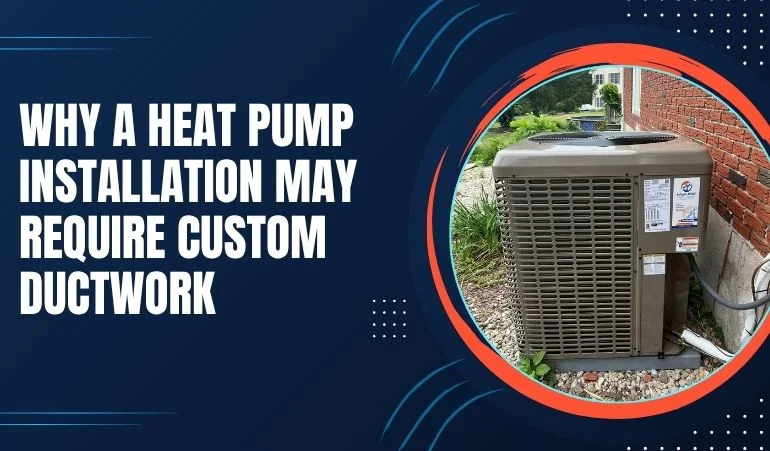
A new heat pump installation requires custom ductwork to ensure proper distribution of air through supply and return air vents. If ductwork doesn’t match the requirements of the heat pump, the home stays uncomfortable even though the equipment is already working at peak performance. Furthermore, precise ductwork is required for the heat pump unit to prevent uneven heating and cooling, undue strain on the equipment components, and overheating critical internal HVAC components.
At Galip Residence in Pennsylvania, Lehigh HVAC installed a 3.5-ton residential heat pump along with custom ductwork according to the home size and BTU requirements. This blog includes when custom ductwork was mandatory along with professional heat pump installation.
Every HVAC system has its unique airflow requirements, and the ductwork must need to be designed around those needs. When you replace an older HVAC appliance with a newer model, ductwork usually fails to distribute air efficiently throughout the space. This occurs because either the older ducts are of smaller size or worn out due to aging and mechanical damage. Regardless of the cause, the system requires custom ductwork designed specifically for its air distribution requirements.
Some homes have ductwork that is specific to one home. For example, if the air handler is positioned differently or if the ductwork doesn’t have easy access, the only solution left is ductwork redesign. It allows the contractor to remove the existing ducts completely and plan new ductwork according to the unique needs of the residential space.
A duct system relies on both supply and return air vents. The supply vents deliver conditioned air to the space, while return air collects hot or cool air from the rooms and sends it back to the air conditioning system. If the return air vents are blocked, the system fails to operate normally. The result is that obstructed airflow makes the component work harder than its capacity and ultimately leads to equipment failure and major breakdowns ahead.
Existing ductwork might have leaks, disconnected joints, or damaged insulation. These issues lead to wastage of the conditioned air through the leaks and result in depriving the actual rooms of comfort. This is what makes custom ductwork design essential. A contractor inspects the existing ductwork and may recommend fixing leaks, reconnecting the joints again, or insulating the complete length of the ductwork. If none of these seems to be working, the contractor advises complete ductwork redesign according to the updated requirements of the space.
Addition of new rooms in the home, changes in the layout, or major renovations usually change the air distribution requirements. If something similar occurs in a residential project, the need for custom ductwork design increases. Technicians understand the updated requirements of the residential facility and recommend increasing the ductwork to the new areas if existing zones have good ductwork access. If the demand for air circulation in existing rooms is also not met, the technicians advise a complete ductwork installation.
In our case at Galip Residence in Pennsylvania, the existing ductwork was not up to the mark. That’s why the team proposed and carried out a complete ductwork redesign.
Before installing ductwork, the contractor needs to pay attention to factors like
Existing duct dimensions and overall condition
Heat pump airflow specifications
Supply and return air requirements
Duct routes and available installation space
Pressure losses through ducts and fittings
Room-by-room heating and cooling requirements
Lehigh HVAC offers professional ductwork services in Pennsylvania. We inspect your existing ducts, evaluate your home’s airflow requirements, and then apply repairs or advise on a redesign, depending on the requirements. In both scenarios, you get your ductwork completely aligned with the HVAC system and optimized airflow. Contact us at 484-961-7044 for further information.