Contact Info
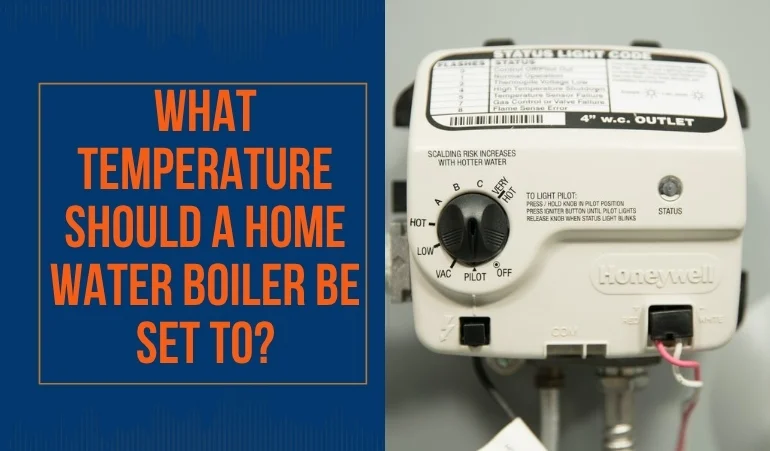
Temperatures in New Jersey winters never stay stable. In the morning, it's ice-cold. In the afternoon, it is a bit sunny. In the evening, it’s again touching 20°F or even lower. As a busy professional or a business owner, you rarely find time to adjust the aquast setting multiple times a day. All you need is a temperature you can set once.
Though the setting depends on whether you live in the coldest areas, such as Ringwood, or moderate cities, such as Newark, Lehigh HVAC recommends a safe setting that is appropriate for most New Jersey areas. Let’s learn what temperature you should set.
The temperature setting for extremely cold months such as December and January differs from months with mild weather. Here is what we recommend for both scenarios.
Winters are brutal in New Jersey. Temperature frequently drops below zero during colder months. It needs an aquastat set at a relatively higher temperature so it keeps your space comfortable. Considering snow, chilly wind, and temperature fluctuations is also important to prevent moments of intense cold. Keeping all this in mind, we recommend a temperature setting for colder months between 180°F and 200°F. It ensures your home or business facility remains warm regardless of what’s happening outside.
The mild-weather setting is slightly lower than the extreme-cold setting. Lowering the required temperature by a few degrees is a smart strategy, as it saves you hundreds of dollars annually without making you feel cold. That’s why we recommend setting it to 120°F to 160°F during these months.
Radiant floor systems are not like standard water boilers. These systems transfer heat to objects and people in the surroundings through infrared rays instead of transferring it through air or water flow. The recommended temperature setting for such radiant floor systems is between 110°F and 115°F for efficient winter comfort.
Water tanks require a consistently elevated temperature regardless of the climate or season. This higher temperature prevents microbial invasion. If these tanks are kept at normal temperature, the moisture creates a perfect breeding ground for algae and fungal species. More importantly, Legionella bacteria grow in these environments, which contribute to serious health concerns.
Don’t set the temperature based on personal preferences. There are certain limitations to keep things in control. If you fail to stay within the range, you might be forced to experience adverse consequences.
If your boiler water temperature exceeds 200°F, it is overheated. It can cause leakage problems, pipe bursts, and severe mechanical damage due to high pressure.
Never let your residential boiler temperature fall below 120°F, even if the climate is highly comfortable outside. A temperature lower than 120°F leads to corrosive condensation inside the unit.
Installing an outdoor reset control is not just an option; it is a necessity for modern homes and business facilities. It automatically adjusts the temperature to the most suitable range based on the climate.
Lehigh HVAC is a professional, licensed heating and cooling agency in New Jersey. We provide expert boiler services, including installation, repair, maintenance, and replacements. From permits to equipment selection, setup, code compliance, and claiming rebates and incentives, we support our clients at every stage. Feel free to contact us if you are looking for a heating partner who genuinely cares for your comfort and peace of mind. Schedule an appointment at 848-361-4707.