Contact Info
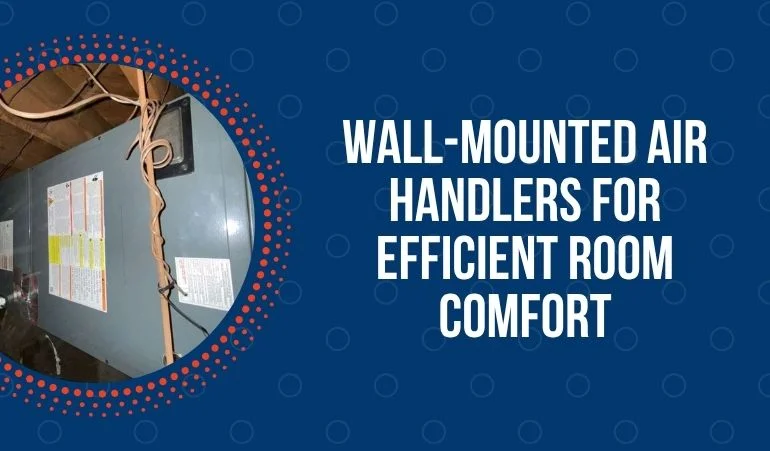
Wall-mounted air handlers provide a perfect solution to avoid adding bulky HVAC systems when you add a new room to an existing house or office. They also find their best application in some boroughs in Pennsylvania where houses are constructed according to traditional architectural styles and lack ductwork. What air handlers do is pretty simple. They receive warm or cool air from the outdoor unit, depending on the needs and the thermostat signal. The air handler's job is to spread that air evenly inside the room. Practically, they help you bypass the need for a separate HVAC system and compensate it with a single indoor unit.
Let’s discover further about these systems in the next sections.
A wall-mounted air handler is an indoor component of a ductless heating or air conditioning system. It works indoors and is connected to the outdoor air conditioner or heat pump through a refrigerant line, electrical wires, and a condensate drain line. The outdoor unit generates or expels heat and sends the conditioned air to the air handler inside. The air handler then distributes that air throughout the home. The extent of the heating or cooling is regulated by the thermostat setting and the sensors that monitor real-time temperature at that location and at that moment.
Wall-mounted air handlers work together with the outdoor unit. Here is the process summarized in simple words.
The indoor unit pulls room air through its filter
The system passes air across the indoor coil
The coil changes the air temperature
The blower sends conditioned air back into the room
The system repeats the cycle to maintain comfort
When cooling is required, the heat is expelled from the rooms to the outdoors. When heating is the demand, this process gets reversed. Now the heat pump absorbs heat from the surroundings and adds it back to the indoor space.
Wall-mounted units are best used in spaces where new ductwork installation or extending existing ductwork is not possible. This happens mostly for older Pennsylvania homes in some rural communities or countryside areas. Here is a brief overview of where they are used.
Older Pennsylvania homes may have rooms that were never connected to the central HVAC system. A wall-mounted air handler can provide heating and cooling without adding new duct runs.
When you add a new bedroom, office, sunroom, or other addition, it may need its own temperature control. A ductless air handler can serve the space without modifying the home's existing ductwork.
If one room consistently feels warmer or colder than the rest of the house, a separate indoor unit can provide more direct temperature control.
Finished garages, workshops, and similar spaces may not have access to the home's existing duct system. A ductless air handler can provide conditioned air without major construction.
Both are similar systems and play almost the same role. But the installation and setup are different.
The table below summarizes a brief comparison.
Feature |
Wall-Mounted Air Handler |
Central Air Handler |
|
Ductwork |
Not required |
Usually required |
|
Installation |
Individual room or zone |
Whole-home system |
|
Mounting |
High on the wall |
Usually indoors in a central location |
|
Temperature Control |
Zone-based |
Central |
|
Best For |
Rooms and smaller zones |
Whole-home conditioning |
|
Installation Changes |
Limited |
More extensive when ductwork is needed |
The benefits are far beyond energy efficiency and zonal control. Here is how these indoor devices can benefit you.
No traditional ductwork is required
Individual rooms can have separate temperature settings
Installation can involve less structural work
They work well in additions and remodeled spaces
Many models provide both heating and cooling
Wall installation saves valuable floor space
Filters are generally accessible for routine maintenance
Multi-zone systems can serve several rooms
You can only expect the uninterrupted performance and energy efficiency from these systems when they are installed by expert, licensed technicians. If you are in Pennsylvania, you can book Lehigh HVAC with confidence at 484-961-7044.