Contact Info
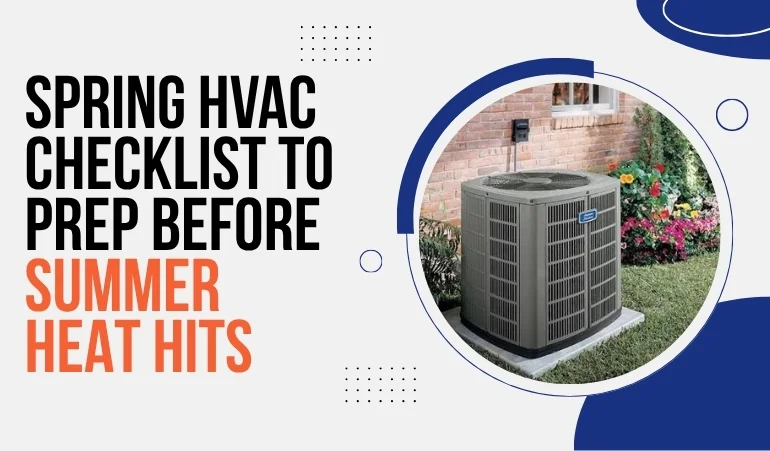
Spring in New Jersey is a shoulder season that lets your HVAC take a break after long operational hours during freezing winter. But it doesn’t mean you forget about it. The best strategy is to get the system ready for sweltering summer days. If you have a dedicated cooling system, fix its issues and bring it to top condition. If you have a single system for year-round comfort, this is the time to get it ready for the cooling season ahead. Both scenarios require a set of DIY tasks and a professional visit. As a result, you have a functional, reliable system ready for uninterrupted performance.
In this blog, we will discuss how you can prepare your HVAC for the cooling season.
New Jersey features extreme temperatures on both sides. Winters bring sub-zero freezes along with snowfall. Summers bring average temperatures reaching 85 to 87 degrees Fahrenheit along with higher humidity. Homeowners can rarely schedule maintenance during peak summer days. The same is true during the colder months. The situation is even more critical for New Jersey businesses, as every minute without working HVAC costs revenue. This is why spring is the ideal time to get HVAC maintenance done for the summer season ahead.
Another main reason for summer maintenance is that service demand is low at this time. You can likely find a reliable HVAC pro at an affordable price and with same-day availability.
To get your system ready for reliable performance, use both DIY and professional maintenance. Here is a quick breakdown of what you handle at each stage.
DIY steps include everything you do yourself to bring your system back to working condition. Here is what to focus on.
Replace Air Filters
This is the basic yet most critical step in HVAC maintenance. Most technicians suggest changing filters every 3 months; there is no standard frequency. You should change them whenever required. The best approach is to inspect filters every 30 days. Check for any visible signs of buildup, poor air filtration, or allergic reactions within your family members. If any of these signs appear, replace filters immediately.
Clean Outdoor Unit
If you have a dedicated cooling system, its outdoor unit usually idles the whole heating season. Shrubs and small plants grow around the unit. Or winter winds might accumulate leaves, tree branches, and other buildup near it. This causes airflow issues that put pressure on the compressor and cause short cycling. That’s why we recommend cleaning at least 5 feet around the outdoor unit to keep airflow optimized.
Clean the Equipment
The first two steps are to keep airflow optimized. This one improves the overall performance. Clean the unit overall. Coils, vents, registers, and the drain line—everything matters here. Use a garden hose with a cleaning agent for condenser coils, but never use high pressure. For cleaning vents and registers, using a vacuum is recommended. Use a mixture of white vinegar and water to flush the drain line to clear algae or fungal blockages.
Professional maintenance requires a technician visit. Hire someone who is both experienced and certified. Choose a local expert because he understands the local climate and how to set up your HVAC the right way. Here is what to expect during a professional visit.
Inspect Refrigerant Levels
The technician looks closely at the refrigerant levels and refrigerant lines. He checks for leaks, cracks, and wear and tear in the refrigerant lines that could affect system performance. If found, these issues are fixed instantly. If refrigerant levels are low, the technician refills them and brings them back to normal levels.
Fix Electrical Malfunctions
Professional inspection isn’t limited to the equipment only. It also includes inspecting electrical components, such as wiring, circuit breakers, contactors, capacitors, and tiny accessories. Any issue noticed is fixed immediately. Technicians also fix loose connections and replace outdated components and frayed wiring.
Complete System Tune-Up
The remaining check-up and diagnostics are performed at this stage. The technicians follow a step-by-step checklist and assess every component. From critical components to ductwork, plumbing connections, and code compliance, they assess everything. In the end, you get your HVAC ready for smooth operation all summer.
Spring has fewer HVAC service demands, easy service availability, and lower service charges. That’s why this is the ideal time to get your HVAC ready for the summer ahead. Start with DIY steps, including filter changes and complete system cleaning. Then schedule a technician's visit for a full tune-up covering equipment, ductwork, electrical, and plumbing components. Finally, check your system and make sure it performs to capacity and your expectations.
Contact Lehigh HVAC for a complete HVAC tune-up before summer.