Contact Info
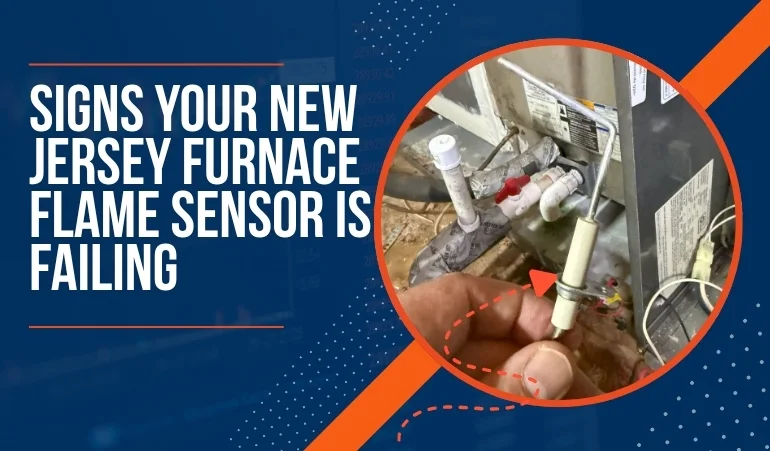
When winter reaches its peak in New Jersey, a furnace is not just an appliance. It is critical equipment to keep your business facility comfortable. If it stops for even a few minutes, it leaves a very bad impression. Customers bounce, sales go down, and so does revenue. Not every furnace malfunction involves core components such as the heat exchanger, ignitor, or burner. Sometimes, the culprit is a small but crucial part: the flame sensor. Knowing what a furnace flame sensor is, how it works, and the warning signs of failure can help you quickly diagnose the issue and restore its normal operation.
This blog educates New Jersey business owners on how to detect furnace flame sensor issues and get them fixed promptly to prevent comfort loss at their business facility.
A furnace flame sensor is a safety device in a furnace. It detects the flame and allows fuel to the ignition chamber. If the flame is not present, it stops fuel delivery to prevent unused fuel from entering that compartment. Sometimes, this flame sensor fails to work as intended due to dirt buildup or other technical issues. Two problems can arise when it fails.
When a furnace has issues, it acts in frustrating ways. You might notice some as unusual patterns, while others are unnoticeable. Here are some signs associated with a faulty flame sensor.
Short cycling is when the furnace turns on, runs for a few seconds, and then turns off. If this continues, the culprit could likely be your flame sensor.
This is when the blower fan runs, but the ignition system doesn’t produce warm air. A faulty flame sensor is usually behind this issue.
Modern furnaces display an error code on the LED showing “No Flame” or ignition problems. If you see similar error codes, it means your flame sensor is not working correctly.
This happens when the furnace locks itself out completely after three to four failed ignition attempts. This is also due to a faulty flame sensor.
If you notice a white, grey, or powdery buildup on the metal rod, it is a direct sign the flame sensor is not in good condition. Clean it or replace the component to restore normal appliance operation.
To fix the issue, first confirm if the flame sensor is the problem. In many cases, another component is the problem, and business owners waste money on replacing flame sensors. To confirm, use the multimeter test. Check if the flame sensor sends the correct signals. If it fails to send signals, it is the main cause. Now you have two options. Either you clean it, or you replace it.
Inspect the sensor. If you notice it is heavily covered by dirt, buildup, or soot, cleaning it thoroughly might restore its normal function. If you notice cracks and corrosion, replacing it is the best bet. Schedule a professional HVAC service for replacement, and make sure to get other associated components inspected as well.
Lehigh HVAC has been serving New Jersey with quick, reliable, and affordable heating services at your doorstep. We serve businesses of all kinds and deal with a wide range of heating equipment. Contact us at 848-361-4707 for a quote.