Contact Info
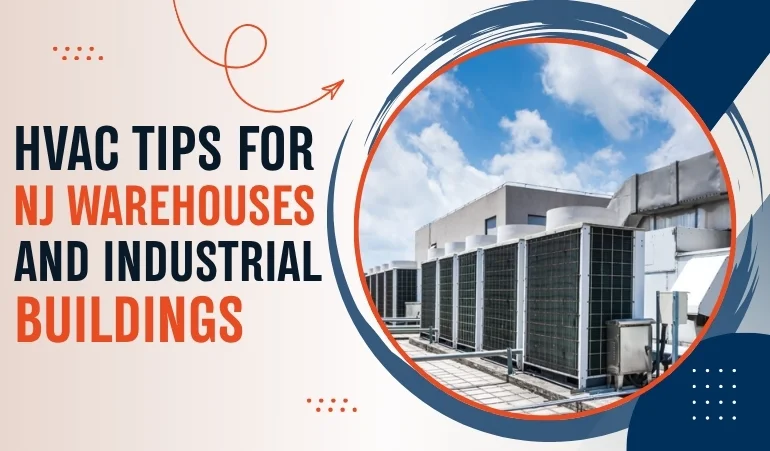
Warehouses and industrial buildings are not just like offices or retail stores. Heating them is something different. Large doors, continuous opening and closing, internal heat from vehicles and equipment, and high ceilings all contribute towards creating trouble for HVAC systems. A standard HVAC system will struggle in an industrial building.
The solution, however, remains in modifying your HVAC according to New Jersey climate demands and the building's requirements. The following are some suggestions from Team Lehigh HVAC for optimizing your warehouse or industrial building’s HVAC system.
Warehouses and industrial facilities are significantly different from small offices or shops. That’s why their HVAC demands are also more regulated and different from ordinary commercial sites.
Here is how they differ.
Creating an HVAC that handles the workload requires multiple steps. Connecting the dots and adding small accessories would actually help maintain the temperature in the normal range and comply with the regulatory guidelines.
Dividing the warehouse into multiple zones is great for preventing energy wastage. You can separate the office, storage area, loading docks, and labor room into separate zones. Then you can keep the temperatures in different rooms as per the requirements. For example, office and labor rooms are highly regulated. While a little energy is used for heating or cooling, storage or inventory areas. It will help you regulate the entire building temperature without wasting energy and creating a spike in energy bills.
Maintaining effective ventilation in the building is essential to balance airflow, regulate humidity, and remove contaminants. Beyond this, a comfortable indoor work environment needs fresh air, and this is what we consider compulsory for health.
EPA estimates that approximately 30% of energy is wasted in commercial buildings due to a lack of insulation. This wastage can be prevented by insulating your building completely, ensuring all the heat stays indoors. Make sure there are no holes, cracks, or gaps through windows, doors, and walls. Additionally, check that there are no leaks in HVAC ducts, from where conditioned air may escape outside.
As we mentioned earlier, a standard system won’t be sufficient for larger commercial buildings, just like warehouses and industrial facilities. This is why you need some additional things to make up for. Here are some of the best associated HVAC appliances that can be helpful.
Motorized Zone Dampers
These are required to create zonal temperature control in various building parts. These dampers are installed in HVAC ducts, from where they allow conditioned air according to the requirements of various areas. There is a central zone control panel that controls the entire distribution of cool or warm air.
Fire Dampers
Fire dampers are usually required as part of the code compliance for many commercial buildings. They automatically close after detecting fire and prevent the spreading of flames.
Exhaust Fans
Exhaust fans are used to expel the harmful gases, fumes, and heat that are produced inside the building. These fans are usually attached to the walls or the ceiling. The pathway for fumes is made by installing fans at a specific angle, so the produced gases are directly lifted up and expelled outside.
Curtains on Doors and Windows
Warehouses have larger doors that keep opening and closing. These doors allow a lot of energy (in terms of conditioned air) to escape outside. Hanging curtains on doors and windows prevents this loss of energy and maintains a comfortable indoor environment.
Lehigh HVAC specializes in complete HVAC services for commercial buildings, including warehouses and industrial facilities. We install, repair, maintain, and service HVAC systems so your industrial spaces stay comfortable and comply with the local codes. Contact us directly at 848-361-4707 to book a service or get an estimate.