Contact Info
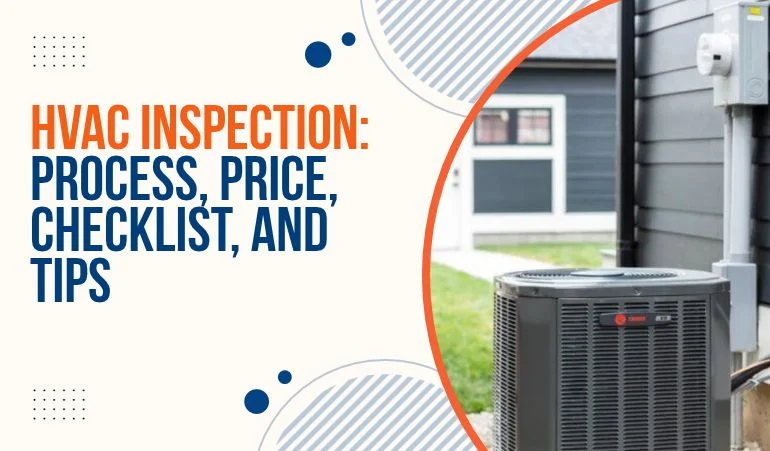
An HVAC inspection includes all the steps and checks carried out to find potential issues in the heating or cooling equipment. It helps homeowners and business owners catch bigger issues at initial stages before they develop into major headaches. In New Jersey, where summers are hot and humid, and winters come with sub-zero temperatures, equipment experiences frequent failures. In this context, scheduling inspection service is highly important to prevent such HVAC failures.
In this blog, we will cover a brief overview of HVAC inspection, including price, process, checklist, and expert tips.
A professional HVAC inspection costs approximately $70–$500 in New Jersey, according to current 2026 prices in the local markets. However, the prices can vary according to local labor rates and service complexity.
Here is how much you can expect for inspection of various equipment.
Inspection Type |
Estimated Cost |
|
Furnace inspection |
$80–$100 |
|
AC inspection |
$75–$150 |
|
Boiler inspection |
$100–$300 |
|
Duct inspection |
$80–$180 |
|
Comprehensive HVAC inspection |
$70–$500 |
These prices are based on Lehigh HVAC data for the year 2026.
The following factors affect the final price.
Number of units and HVAC zones
Equipment accessibility and condition
Inspection-only versus maintenance service
Additional testing, cleaning, or diagnostic work
Contact us at 848-361-4707 to learn more about our HVAC inspection services in New Jersey and the updated prices.
The process may vary based on the equipment you inspect, your approach, and accessibility. Here are the standard steps you can expect.
System Review
The technicians conduct a brief assessment of the equipment's condition, age, and visible signs of wear and tear.
Component Inspection
The technicians check each component carefully. Advanced tools and equipment such as digital multimeters, leak detectors, and scoping cameras are used to detect problems that are impossible to detect with the naked eye.
Operational Efficiency Check
The technicians check how a system performs. They notice and report unusual sounds, odors, frequent short-cycling, or abnormal patterns while the equipment is running.
Safety Checks
The technicians check safety alarms, such as carbon monoxide detectors in the case of furnaces, electrical breakers, limit switches, and refrigerant leak detection setups, and report any flaws in those safety checks.
Reporting of Issues
The inspection service concludes with a report on all possible issues and worn equipment. If you hire a professional inspection partner such as Lehigh HVAC, you also get a detailed report on how to fix those faults and how much you can expect to pay for troubleshooting.
The entire process of HVAC inspection is usually completed in 2 to 3 hours, though the time is more for large, commercial HVAC systems.
Not every HVAC technician carries out the inspection in the same way, and not all inspections detect all flaws. That’s why we recommend you follow the Lehigh HVAC checklist to make sure you inspect every component the right way.
HVAC inspection needs to be scheduled at least twice a year. The best strategy is to schedule it before the heating and cooling seasons to ensure reliable operation during peak days. Here is the recommended inspection schedule.
Early Spring: Inspect AC equipment before summer.
Early Fall: Check furnaces, boilers, and other heating equipment.
Before Buying a Home: Arrange a dedicated HVAC inspection if needed.
Beyond these, we recommend scheduling an inspection service immediately after you notice unusual signs from your HVAC appliance.
Though HVAC inspection costs a few hundred dollars, it has a significant impact on how you get your system fixed. That’s why it should never be scheduled blindly or handed over to street technicians. Here is what we recommend in this regard.
Request a written quote and inspection scope from multiple companies
Verify relevant licenses, insurance, and company certifications
Confirm whether heating and cooling units are both included
Ask for a written report of findings
Check whether diagnostic tests or repairs cost extra
Compare recommendations before approving major repairs
Need an HVAC inspection in New Jersey? Contact Lehigh HVAC to discuss your equipment, inspection needs, and service options.