Contact Info
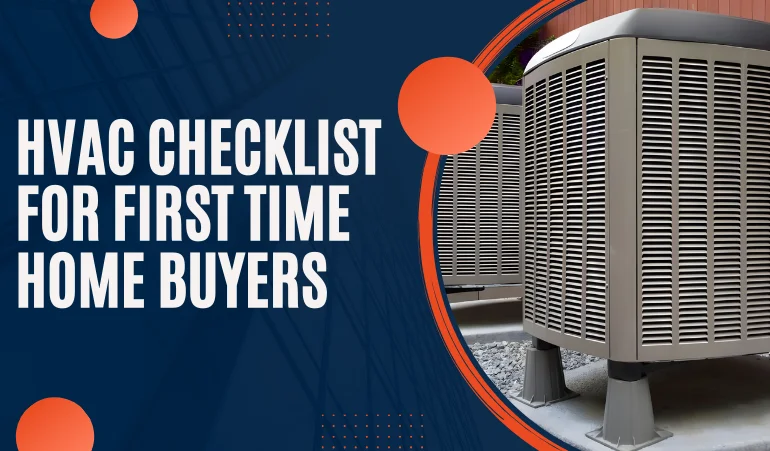
What factors do you consider when buying a home? Preferably, the location, the climate, the overall condition of the home, or the level of renovation. These are no doubt the factors to be considered, and you should inspect them. But have you ever considered an HVAC system at this moment?
Yes, the HVAC system is equally important to be considered at this moment. Especially if you are anywhere in Pennsylvania or New Jersey, you can’t ignore heating and cooling units. Failing to do so can push you towards costly HVAC repairs or jeopardize the comfort of your living space.
Let’s explore the key factors that you should inspect while buying a house.
The age of the system is very important. If the system installed in the house is approaching 20 years, it means you have to invest almost $7,000–$15,000 for a replacement very soon. On the other hand, if the system was installed only a few months earlier, you can have peace of mind for at least some upcoming years. Here is what we recommend checking out:
Install Dates: Check for the date when the unit was first installed. It might be written on the service sticker or warranty papers of the appliance.
Warranty: Check if the warranty of the appliance is still valid.
Maintenance Record: Check the record of maintenance. A good HVAC system must have professional maintenance at least once every year.
Efficiency ratings are also important, as they tell how much you can save in terms of energy bills. A good HVAC system will be of higher efficiency. Here is what to check:
SEER Ratings: If you are inspecting a cooling unit, such as an AC, check its SEER (Seasonal Energy Efficiency Rating). A good system should have an efficiency of around 16 or more.
AFUE Ratings: If you are inspecting a heating unit, such as a furnace or boiler, check its AFUE (Annual Fuel Utilization Efficiency) ratings. A good heating appliance should have 90% or higher efficiency.
HSPF Ratings: If you are inspecting a heat pump, check its HSPF (Heating Seasonal Performance Factor) ratings. An HSPF of 8.2 or higher is generally considered good for homes in PA and NJ.
The company that installed the unit is also important. In Pennsylvania and New Jersey, especially, a new HVAC installation is not an easy task for everyone. The technicians must be certified, licensed, and experienced to set up the unit the right way. A slight negligence by a technician can lead to the wastage of the whole investment. The same applies to the company that is regularly servicing that particular HVAC system.
Here is what you should inspect in this regard:
License and Certification: If the company is certified by NATE, EPA, and HIC, it is reliable. The same is the case if the company possesses a valid license for HVAC practices in your region.
Ratings and Reviews: Explore the ratings and feedback of previous customers about that company. You can check online business listings or social profiles of the company in this regard.
Financing and Rebates: Verify if the company that is servicing the HVAC system offers any financing options, rebates, or incentives for certain qualifying units.
Note: Lehigh HVAC checks all the points described above. We are licensed, certified, reliable, and top-rated in PA and NJ. Furthermore, we offer 0% financing options with GreenSky financing.
This is another very important aspect to inspect the home. The safety features ensure your loved ones are protected from accidental risks. The code compliance ensures you are following all the regulatory requirements of the region. Here is what you should check:
CO Alarms: Check if the safety alarms for carbon monoxide poisoning are installed. They ensure your family members are safe when there is a CO emergency.
Ventilation: Check if there is proper ventilation in the home. Especially the exhaust vents should be properly optimized.
Legal Permits: Verify if all the legal and regulatory permits have been obtained for the specific HVAC replacement or installation.
The story doesn’t end here. There is much more to check according to the home symmetry, building code, and climate. The following are some additional, yet very important HVAC components that are often installed during residential HVAC services in Pennsylvania and New Jersey.
Programmable Thermostats: They automatically adjust the temperature of the house according to the climate. For example, when you are asleep or away from home, the temperature declines automatically by 5 to 7°F.
Indoor Air Quality Appliances: Check if the home contains smart air quality appliances installed. For example, it might contain a whole-house dehumidifier, air purifier, cleaner, UV germicidal lights, and HEPA filters.
Smart Efficiency Components: These components ensure there is no wastage of energy. Check if the home contains zoning systems, smart vents, surge protectors, etc.
Ready to buy a house? Buy it with confidence, call Lehigh HVAC for a detailed inspection. We will conduct a detailed, AI-powered inspection of every HVAC appliance. The report we will provide to you will contain all the details, current performance, and future predictions of your heating and cooling systems. We will also provide you with the cost estimates for how much you have to spend on residential comfort if you buy that house.