Contact Info
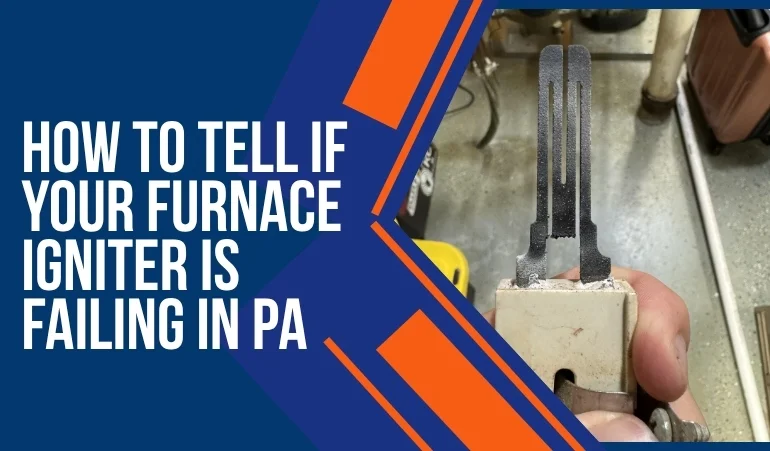
When winter sets in Pennsylvania, a reliable heating appliance becomes compulsory. It keeps your family comfortable when it is below freezing with snowfall. But if your furnace stops, it is more than an inconvenience. Having the right information about your furnace, its components, and failure signs can help you take the right steps and get the problem fixed immediately.
This blog covers a critical furnace component: the furnace ignitor. It explains how the ignitor works, the signs of failure, what to check, and how to keep your PA home comfortable.
A furnace ignitor is a small component made of silicon carbide or silicon nitride that directly engages with the heating mechanism. When the thermostat sends a heating signal, electric current passes through the ignitor, heating it to over 1,800 ℉. The gas valve then opens, allowing fuel to flow to the hot ignitor and light the burners. The flame sensor confirms fuel ignition and lets the blower distribute warm air inside your residential or commercial space.
If the ignitor fails to reach its peak temperature, safety checks shut down the fuel supply and stop the entire heating process.
When the ignitor stops working as intended, it shows some warning signs. These signs help you fix this component without guesswork and scheduling a complete system inspection. Here are 5 of the most critical ignitor failure signs.
If the furnace turns on and consumes fuel, and the blower fans distribute air, but the air is cold, the ignitor is likely failing. The same is the culprit when the furnace doesn't start at all.
If you hear a clicking sound repeatedly followed by furnace shutdown, a faulty ignitor is likely the cause. In this case, the relay board sends power to open the gas valve and signal the ignitor, but the ignitor doesn’t work due to insufficient fuel delivery or an internal issue.
This is a direct visual sign of an ignitor problem. Small cracks in the burner compartments break the electrical circuit and stop the heating cycle. Soot buildup or discoloration also signals the end of life or heavy wear and tear. The right solution is usually ignitor replacement; however, repairs may also work in some cases.
If your heating system runs for 30 to 60 seconds and then turns off, a faulty ignitor is likely the cause. This happens because modern furnaces attempt ignition multiple times before triggering the safety lockout. So if the ignitor fails to maintain temperature, short cycling happens.
Modern furnaces usually rely on a separate circuit breaker. If the ignitor is faulty, it draws more current and trips the circuit breaker. If you detect the circuit breaker tripping frequently, a furnace ignitor could be the culprit.
The aforementioned signs are largely associated with a faulty ignitor. But it is not the only cause of all these signs. Other furnace components, including the heat exchanger and blower motor, can also trigger similar signs.
|
Action |
Signs |
Recommended Next Step |
|---|---|---|
|
Clean Ignitor |
Minor soot, dust, or mild surface buildup without structural damage. |
Gently clean with a soft cloth or brush if recommended by an HVAC professional. |
|
Replace Ignitor |
Visible cracks, severe discoloration, heavy soot, or complete lack of hot surface glowing. |
Schedule an immediate replacement with a new compatible ignitor. |
A faulty ignitor shouldn’t leave your family in the cold. If you notice any of the aforementioned signs or don’t know why your furnace stopped suddenly, contact Lehigh HVAC for quick comfort restoration. Discuss further details at 484-961-7044.