Contact Info
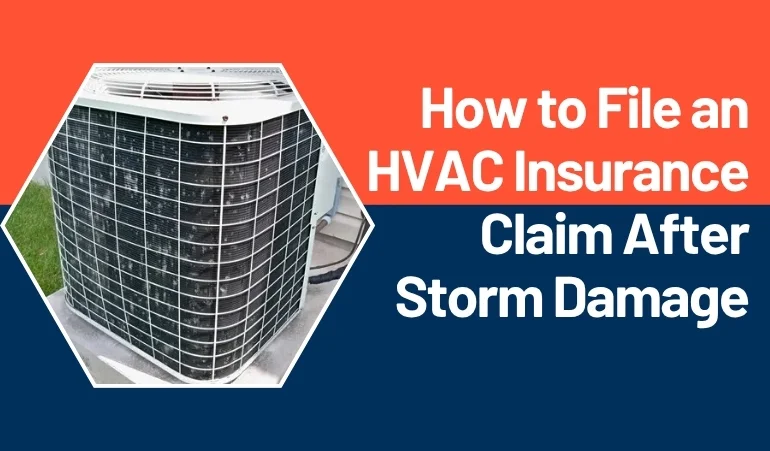
When your HVAC is damaged, shattered, or just faulty after storm damage, all you need is to get paid from the insurance company. But the delays, denials, and lowball offers are always there. To prevent such issues and operational delays and ensure a smooth approval process, you need to file your insurance claim accurately. This blog is created to guide homeowners about how to file an insurance claim so it gets approved immediately.
The guide is specifically focused on Pennsylvania and New Jersey. Plus, the standard practices remain applicable to multiple HVAC-related insurance claims.
Studies reveal that around half of HVAC insurance claims are delayed, underpaid, or denied every year. The more surprising fact is that most claim requests are rejected due to missing documents, delayed response, or lack of solid arguments supporting the claim. This is what makes it essential to fill every box correctly and attach every supporting document carefully. Even a slight mistake on your part can leave your family in the cold or heat.
Here is the blueprint you can follow to prevent issues in your case.
Keep your family's safety as the priority, and equipment safety will follow. Don’t mess with things while the storm is doing its part. Once the storm stops, make sure you take necessary measures to prevent the damage from being worse. But it doesn’t mean you start repairs on your own. Even if you try some quick fixes, keep their invoices secure as proof.
Don’t wait for your insurance advisor to tell you what is damaged. Do it yourself, at least what you can. Take your phone and start recording. Record all the damage with wide-angle as well as close-up shots. Add before-and-after screenshots. Write all the damage in clear, understandable language, keeping in mind that every detail reduces the chance of rejection. For heavy damage, schedule a professional service to check the extent of actual damage.
Not all insurance companies are the same, and not all do offer the same coverage. Most insurers cover storm, wind, lightning, and, to some extent, water damage issues. Clearly understand what your insurance plan covers and try to mention that damage type throughout the document.
Time is the key. File your claim at your earliest convenience. Maintain transparent communication from the very first conversation to the final document submission. Note down every detail in between. Every message, call, and update should be clearly recorded. Additionally, note key details and save for future use, such as your claim number, assigned adjuster, and the related details.
Once the insurance claim is filed, an adjuster will contact you for further processing. The company will likely schedule an on-site visit. Be active during the inspection, answer their queries based on the facts, and never admit it happened due to your fault. Additionally, take notes during the inspection and keep a record of what they observed on site. This positions you from another claim applicant to someone who actually gets his funds.
An adjuster works for the insurance company. He may try to undervalue your losses and try to close the claim while you are underpaid. That’s why you should take at least 3 to 5 independent quotes on your own. It will help you get an actual idea of how much damage has been done and how you can claim it. Keep records of these quotes as well, with all details mentioned clearly.
HVAC insurance claims can take many days, even weeks. In the meantime, you have to maintain close coordination with the company. Answer all their queries with justification, evidence, and accuracy. If they demand some documents, submit them on time. Keep in close contact with the company until you receive your complete funds.
Filing an insurance claim for HVAC damage due to a storm is a careful process. But with the right strategy and step-by-step execution, you can make it relatively straightforward. Start with securing your family and belongings. Then, take photos and videos, and collect as much evidence as you can. The next step is to understand your insurance policy and prepare your claim document aligned with those requirements. Finally, submit the claim and be in close contact with the company until the funds are added to your account.
Feel free to reach out to Lehigh HVAC for a free repair quote.