Contact Info
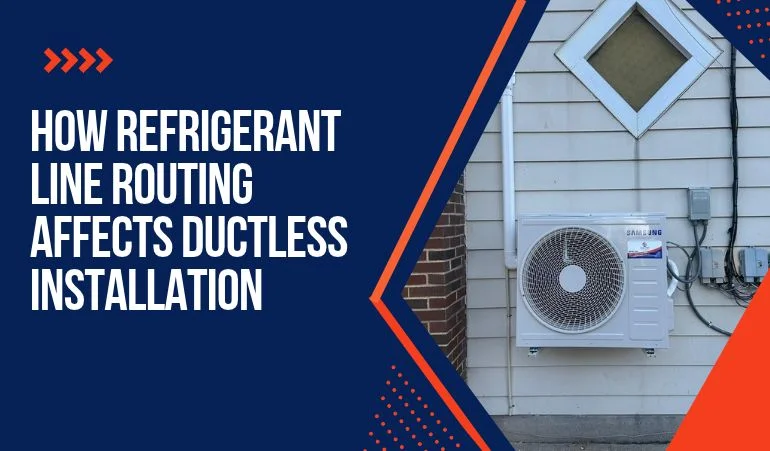
When we look at a mini-split or a VRF system, the role of refrigerant lines seems pretty straightforward. It appears to be a line that connects the indoor unit with the outdoor unit and fits the units in place. But its role is beyond just unit mounting. The length of the refrigerant lines, elevation, and the bends in the pathway all affect how the system performs and how the energy efficiency requirements are met. It also influences how technicians approach the installation project and how the project goes from start to end.
Lehigh HVAC finished a similar ductless and VRF installation project in Pennsylvania. It involved installing VRF systems in a space where installing ductwork was not practical. This blog covers how refrigerant line routing affects ductless installation, with a reference to how the Lehigh HVAC team finished it at a project in Pennsylvania.
The distance between the indoor and outdoor unit influences the total refrigerant line length. But excessive length comes with increased risk of bends, transitions, and connections, which offer resistance in the refrigerant flow. Every piece of equipment comes with a manufacturer's guide with recommended maximum and minimum lengths of the refrigerant lines. When these thresholds are crossed, additional refrigerant recharges are required to bring refrigerant levels to normal. Even if these conditions are met, there are still chances that the system might not perform at its best efficiency.
Outdoor and indoor units are rarely installed at the same heights. Usually, the outdoor units sit slightly higher than ground level while indoor units are installed at various floors. This vertical distance affects how refrigerant flows and how the system operates under different conditions. The technicians consider this vertical distance along with the bends and transitions while planning refrigerant line routing.
Both technicians and homeowners prefer straight refrigerant tubing due to less installation complexity and a relatively smooth refrigerant flow inside the refrigerant lines. However, multiple bends are unavoidable, and the technicians have to plan for them. For example, when the refrigerant lines pass through the walls, bends are made. These bends make the refrigerant flow somewhat less smooth, and as a result, the technicians need to fill refrigerant more than the recommended levels to compensate.
Uncovered refrigerant lines are more vulnerable to damage due to humidity, accidental mechanical damage, and faster wear and tear. That’s why certified contractors always recommend insulating refrigerant lines, so they stay fault-free throughout their lifespans. Technicians keep these factors in mind when planning mini-split ductless installations in a space where installing ductwork is impractical.
Refrigerant lines require drilling holes in the walls and passing these lines through the walls to connect the indoor unit to the outdoor unit. But leaving these holes open is never safe, as it can waste the conditioned air outside and let the outside air come inside. This makes the equipment consume more energy to bring the same level of comfort. That’s why the technicians properly seal the openings in the walls before they leave the client sites. It prevents air leakage to the outside and loosening of the bends and joints in the refrigerant lines.
Lehigh HVAC offers ductless mini-split installation services in Pennsylvania, ranging from single-zone units to VRF systems with multiple indoor air handlers. Our team handles everything, from load calculation to equipment sizing, installation, and integration with the building’s smart control systems. If you are planning for a new ductless installation, schedule an appointment with the Lehigh HVAC today.