Contact Info
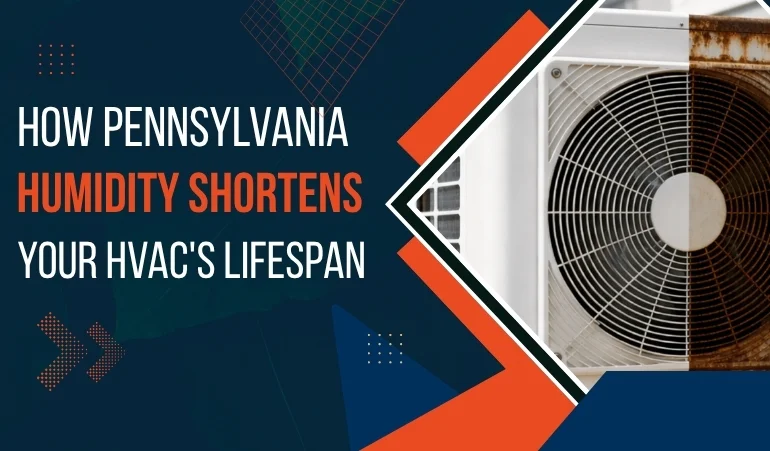
When we are talking about HVAC, we are not just dealing with the thermal control. We are dealing with some other factors, too. Humidity is one of the few critical factors that directly influence whether our indoor environment is comfortable. And this is humidity that goes hand in hand with the HVAC. The fact is that when humidity is high in your PA home, your system struggles to maintain thermal comfort at your desired range. This is because now it does another important thing, which is controlling humidity.
In this guide, we will be discussing what humidity is, why it is a problem for HVAC, how it shortens HVAC lifespan, and how you can protect your HVAC.
Before understanding why humidity is a problem for HVAC, it is important to understand why humidity is a problem for human beings. It will help you understand the core concept.
Humidity is something related to dampness and moisture in the air. It makes the air feel clammy and somewhat comfortable. The thing that makes it not good for our houses is that it creates a perfect breeding ground for pests and fungal colonies. Fungal species such as mold and mildew love humid, dark places to grow. And when these uninvited guests grow, they ruin the house's comfort by spreading foul odors. It can also be severely harmful for human health when fungal spores enter our kitchen, water, or body. Especially, inhalation of fungal spores causes respiratory syndromes.
It could be better said that higher humidity levels are not good for HVAC. This is because our HVAC is designed to maintain complete comfort, not just thermal comfort. It maintains the normal indoor temperature through the air conditioning process. It controls indoor air quality through air filtration. And it controls humidity, too. So when humidity levels are higher, HVAC performs under pressure because now it has to maintain both temperature and humidity in the normal range. And this is what causes premature wear and tear. It can also sometimes even cause an HVAC failure when not addressed for a long time.
We all know that Pennsylvania experiences hot, humid summers. Stats say relative humidity usually spikes between 70% and 100%. While authorities recommend maintaining indoor humidity below 50% to enjoy a healthy lifestyle. HVAC puts its efforts into bridging this gap. And with this attempt, it works under pressure, for which its components experience enhanced wear and tear. The result is premature failure and shortened HVAC lifespan.
Here is how humidity shortens HVAC lifespan.
HVAC works harder to maintain both temperature and humidity in the normal range. This puts extra strain on components, which work under extra pressure and experience breakdowns faster.
When humidity is high, HVAC runs longer cycles to bring it to the normal range, even if the temperature is already in the normal range. These extra cycles, on the one hand, consume more energy and put a higher number on the utility bill invoice. And on the other end, these longer cycles make the system work harder, which shortens lifespan.
When humidity is high, your HVAC pulls gallons of water and drains it thoroughly through the condensate drain line. It causes a blockage in the drain, which again puts pressure on the HVAC. It also promotes mold and mildew growth in HVAC, which blocks the drain pathway.
Damp and humid air makes the pollen, dust particles, and buildup stick to the filter's surface. It creates a blockage in the airflow pathway. This blockage puts high pressure on HVAC and leads to shortened HVAC lifespan.
The best solution to protect your HVAC is to install a whole-house dehumidifier. It is a dedicated system that maintains humidity in the normal range. Apart from this, regular maintenance is also essential to keep HVAC in top condition.
Contact Lehigh HVAC to prevent your HVAC system from the effects of high humidity.